
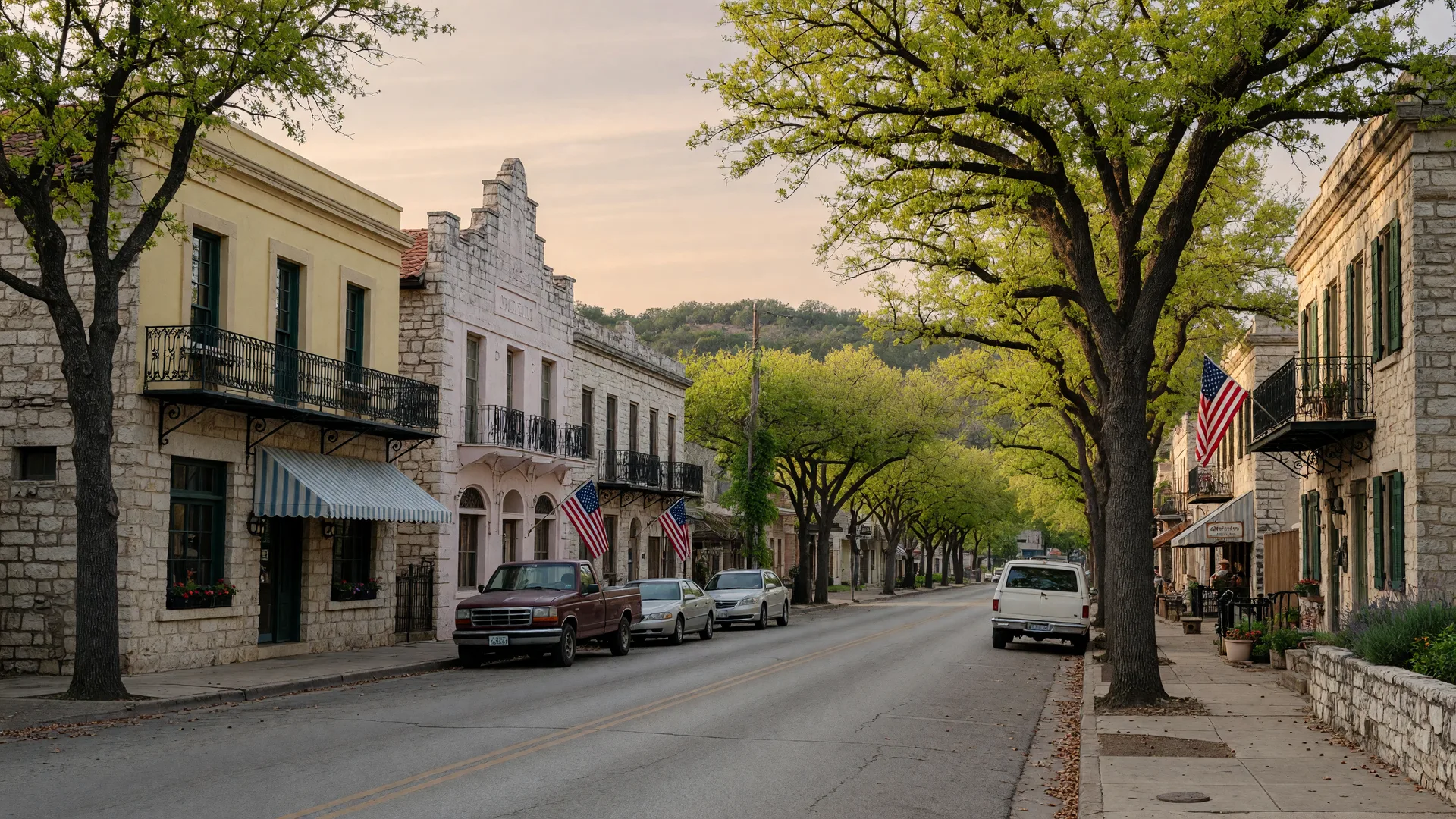
There is no other town in Texas quite like Castroville. While the Hill Country is full of German-settled communities with half-timbered buildings and beer gardens, Castroville offers something genuinely distinct — a settlement founded by French Alsatian immigrants who brought the architectural and cultural traditions of northeastern France to the Medina River valley. The result is a town that feels entirely different from its neighbors, with steeply pitched roofs, stucco-over-limestone walls, and a quiet, unpretentious charm that has been preserved by a century and a half of relative isolation [1][2].
Castroville sits about 42 miles southwest of Boerne in Medina County, with a population of roughly 3,100 residents [3]. It was established in 1844 by Henri Castro, a French empresario of Portuguese Jewish descent who secured a colonization grant from the Republic of Texas. Castro recruited settlers from the Alsace region of France — an area that has historically changed hands between France and Germany — and brought roughly 2,100 colonists to Texas between 1844 and 1847 [1][4]. This makes Castroville the only Alsatian settlement in the United States, a fact that still defines the town's identity more than 180 years later.
For anyone evaluating a move to the Hill Country, Castroville is worth understanding not just as a day-trip destination but as a case study in how cultural diversity shaped this region. The German towns get most of the attention, but the French Alsatian influence in Castroville is equally significant and far less widely known [4][5].
What makes Castroville different
Most Hill Country towns founded in the 1840s followed a similar pattern: German settlers, a central main street, a limestone courthouse or church, and a commercial district that grew around a railroad depot. Castroville broke that pattern in two important ways. First, the settlers were French Alsatian rather than German, bringing a distinct architectural vocabulary of steep roofs, stucco exteriors, and internal floor plans organized around central chimneys rather than gable-end fireplaces [1][4]. Second, the town deliberately refused to grant railroad access in the 1880s — a decision that slowed economic growth but also froze the historic core in place [2][5].
That refusal of the railroad is arguably the single most important event in Castroville's preservation story. While neighboring towns like Hondo and Devine grew into regional shipping hubs with all the commercial redevelopment that entails, Castroville remained relatively untouched by the late-19th-century building boom that reshaped most Texas towns. The result is a historic district that contains 96 structures built between 1844 and 1920, representing one of the most intact concentrations of Alsatian architecture in North America [2][6].
In 2004, Castroville was designated a Preserve America City by the White House and the Advisory Council on Historic Preservation, recognizing the community's commitment to protecting its unique heritage [7]. That designation is not just ceremonial — it reflects genuine community investment in maintaining the historic character of the town's built environment.
How to get there from Boerne
Castroville is approximately 42 miles southwest of Boerne via a straightforward route that takes 45 to 52 minutes depending on traffic [8]. The drive follows US-87 North briefly out of Boerne, then transitions to I-10 West toward San Antonio, and finally Loop 1604 South down to Castroville. The route passes through the rolling ranch country of Kendall and Bexar counties before descending into the Medina River valley.
From downtown San Antonio, Castroville is roughly 30 miles west — about 35 to 40 minutes via US-90 West [8]. This proximity to San Antonio makes it an easy afternoon trip from the city or a convenient stop on the way to or from the western Hill Country. From Bandera, plan on about 40 miles and 45 minutes via RM 1283 and US-90 West. From Kerrville, Castroville is roughly 60 miles south via TX-16 and US-90 West, about an hour's drive.
| Starting Point | Distance | Drive Time |
|---|---|---|
| Downtown Boerne | ~42 miles | ~45-52 min |
| Fair Oaks Ranch | ~38 miles | ~40-45 min |
| San Antonio (downtown) | ~30 miles | ~35-40 min |
| Bandera | ~40 miles | ~45 min |
| Kerrville | ~60 miles | ~60 min |
Distances are approximate and based on standard driving routes via US-90, I-10, and Loop 1604.
What to see and do
Landmark Inn State Historic Site
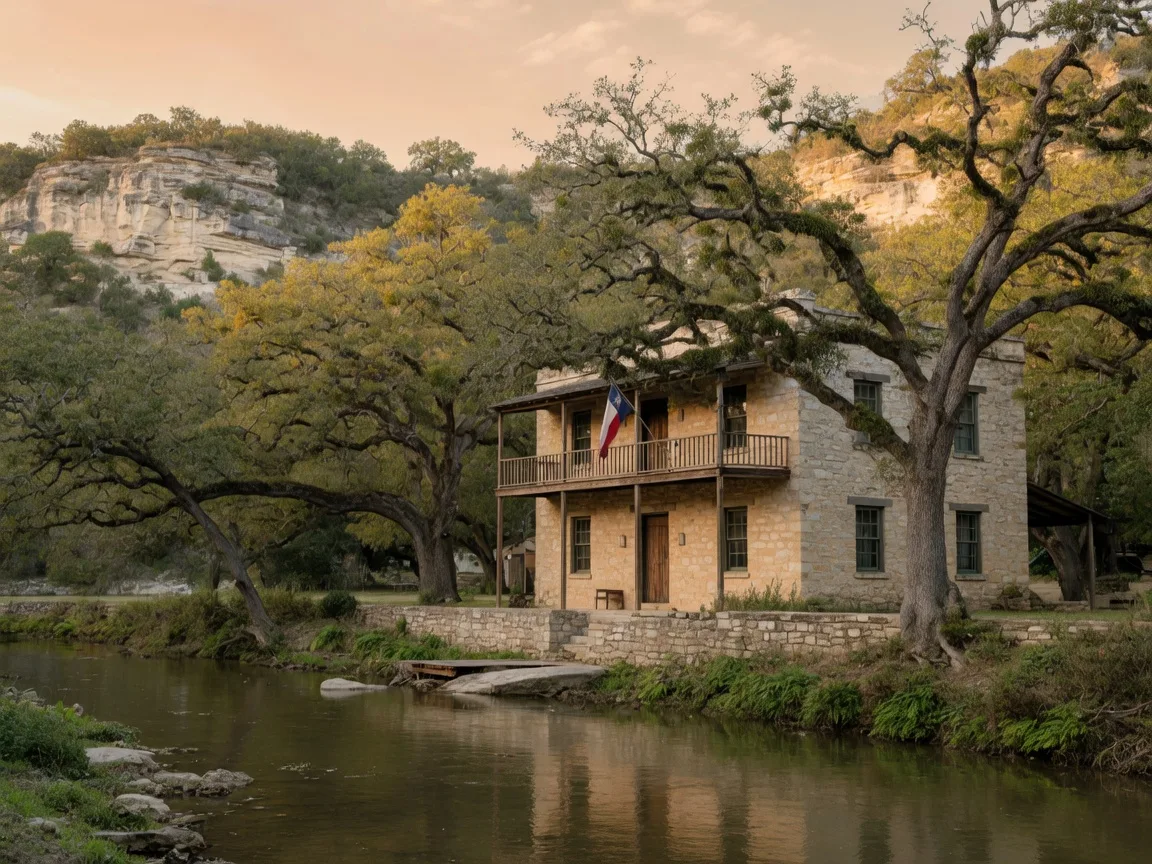
The Landmark Inn is the centerpiece of any visit to Castroville. Located at 402 Florence Street on the banks of the Medina River, this historic site preserves an 1850s inn and grist mill that served travelers on the route between San Antonio and the Mexican border [9][10]. The property covers approximately five acres along the river and includes the original limestone inn building, a restored mill with water wheel, a 1930s-era bathhouse, and several acres of landscaped grounds with a waterfall and fishing access [9].
The inn was originally built by Caesar Monod, a Swiss immigrant who arrived in Castroville in the 1840s and operated the inn as a stopover for stagecoach travelers. The Texas Historical Commission now manages the site, offering guided tours Wednesday through Saturday from 10:00 a.m. to 3:00 p.m. Admission is $5 for adults, $3 for students, and $8 for families [9][10]. The seven-minute introductory film provides useful context before exploring the grounds on your own. The site also serves as an event venue and offers limited overnight accommodations in the restored inn rooms.
Steinbach Haus Visitors Center
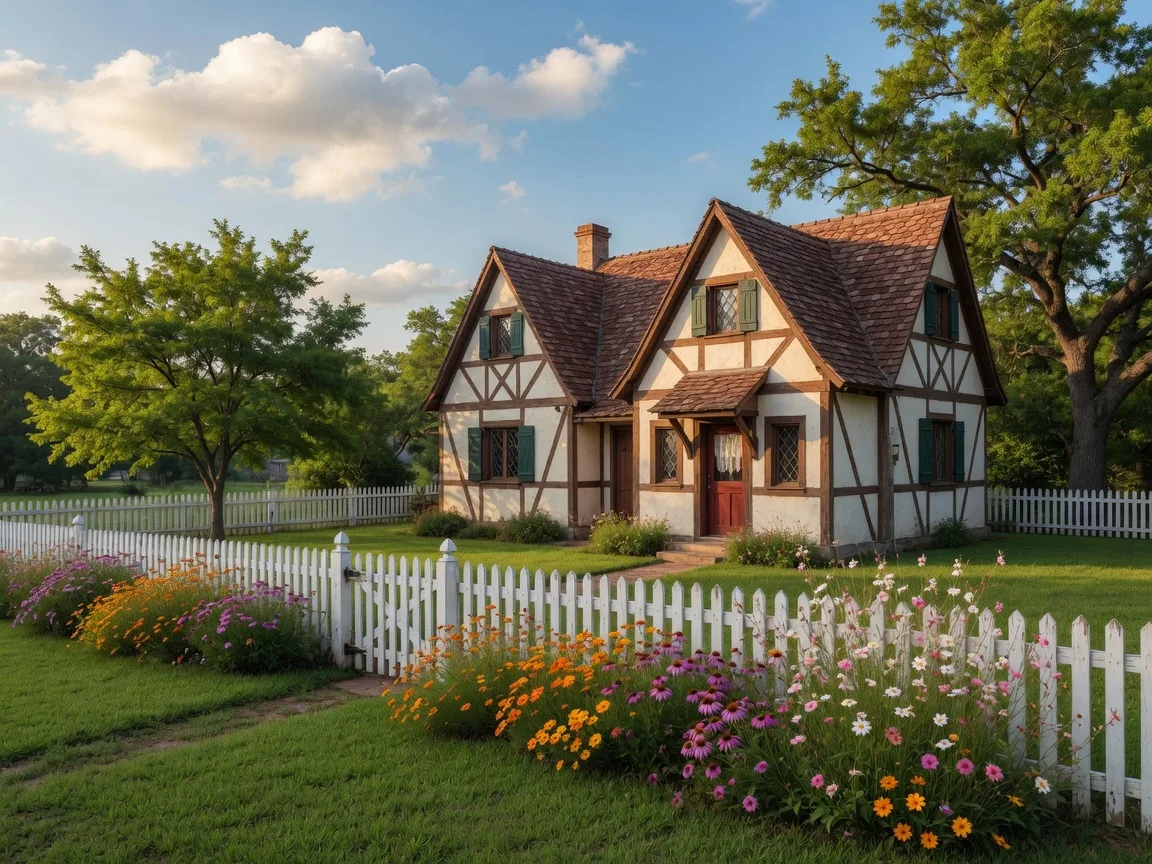
The Steinbach Haus at 203 Travis Street is a remarkable piece of architectural history. The building is a 17th-century Alsatian house that originally stood in Wahlbach, France — built before Castroville even existed. It was carefully dismantled, shipped across the Atlantic in a container, and reconstructed in Castroville as the town's official visitors center and museum [11][12].
The house dates to approximately 1618, making it the oldest structure in Castroville and one of the oldest European-built structures in Texas. Inside, visitors will find antique furnishings, historical exhibits on the Alsatian migration, and a small museum shop. The Steinbach Haus also serves as the starting point for the self-guided historic walking tour, with free map brochures available at the front desk [11][12].
Historic walking tour
Castroville's historic district is compact and designed for walking. The self-guided tour covers more than 50 historic homes, churches, and commercial buildings, with descriptive markers at each stop. Key highlights include: [6][13]
- St. Louis Catholic Church — The heart of the Alsatian community since the 1840s, the current church building dates to 1885 and features a distinctive Gothic Revival architecture with stained-glass windows imported from France [14].
- Former Medina County Courthouse — Now serving as Castroville City Hall, this 1882 limestone building on Houston Square was the county seat until the government moved to Hondo in 1892 [2][6].
- Alsatian-style residences — Scattered throughout the residential streets are dozens of private homes built in the distinctive Alsatian style, with stucco exteriors, steep roofs, and central chimneys. Many still have their original outbuildings and stone walls [1][4].
- Houston Square — The town's central plaza, surrounded by historic commercial buildings that now house boutiques, cafés, and galleries [2].
Castroville Regional Park and the Medina River
Castroville sits on the Medina River, and the regional park provides public access to one of the Hill Country's most reliable water sources. The park features approximately 12 miles of nature trails, picnic areas, a butterfly garden (one of only three in Texas), and fishing access along the river [15][16].
For visitors interested in water activities, the Medina River at Castroville offers swimming holes, kayaking, and tubing opportunities that are generally less crowded than the Guadalupe or Comal rivers further east. The river runs clear and cool through limestone riverbeds, with depths varying by season and recent rainfall [16]. Paradise Canyon, located just outside town, offers additional river recreation and is a popular spot for locals.
Dining and shopping
Castroville's downtown dining scene has grown steadily in recent years, with options ranging from casual cafés to fine dining:
- Castroville Café (309 Lafayette Street) — The most popular breakfast and lunch spot in town, serving coffee, pastries, sandwiches, and daily specials in a historic storefront [17].
- Elevate — Fine dining in the Elsass District, offering a more upscale evening option than most towns of this size can support [17].
- Sammy's Restaurant (202 Old US Hwy 90 E) — A longstanding local favorite known for home-style cooking and generous portions [17].
- Castroville Barbecue Company (1303 Lorenzo Street) — Local barbecue serving brisket, ribs, and sausage with traditional sides [17].
- Rock & Tapas (307 Lafayette Street) — Tapas and wine in a restored limestone building, a relatively new addition to the dining scene [17].
- Medina River Winery — A short drive from downtown, offering Texas wine tastings with views of the Medina River valley [18].
For shopping, Houston Square and the surrounding streets host a mix of antique shops, boutiques, and local artisan stores. Southern Creek Boutique, Rhonda J's Shoppe, Curious Interests Antiques, and All Local Market are all within a few blocks of each other and worth browsing [19].
Annual events worth planning around
Castroville's community events reflect its Alsatian heritage and small-town hospitality:
- Fiorella Friday (first Friday of every month) — Downtown streets close for an evening of strolling, live music, shopping, and dining. This is the most consistent community gathering and a good time to experience the town at its liveliest [20].
- Market Trail Days (second Saturday of March, June, and September) — A seasonal market on Houston Square with local food vendors, live music, and artisan craft booths [20].
- St. Louis Day — An annual celebration of the town's Alsatian heritage with traditional food, music, and cultural programming at St. Louis Catholic Church [20][21].
- Old Fashion Christmas (first Friday and Saturday of December) — Houston Square lights up with a tree-lighting ceremony, carolers, and evening shopping at local businesses. The Christmas Candlelight Open House runs concurrently [20].
Practical tips: hours, fees, and timing
Castroville is a living community, not a ticketed attraction, so most of the historic district is freely accessible any time. Here is what to know before planning your visit:
| Detail | Information |
|---|---|
| Admission (Historic District) | Free — open community |
| Landmark Inn Admission | $5 adults, $3 students, $8 families; guided tours Wed-Sat 10am-3pm |
| Steinbach Haus | Free admission; open daily for visitors and maps |
| Best Time to Visit | Spring (March-May) for poppy blooms and mild weather; fall (Sept-Nov) for comfortable walking |
| Weekday vs. Weekend | Weekends are busier but shops and cafés are fully open; some restaurants close Sunday-Monday |
| Parking | Free street parking throughout downtown; lots available near Houston Square |
| Regional Park | Free access; 12 miles of trails, butterfly garden, fishing, picnic areas |
Hours and pricing may change — confirm current details before visiting, especially for Landmark Inn guided tours and seasonal event dates.
Seasonal activity calendar
A seasonal calendar helps visitors plan their trip to match their interests. Here is how Castroville's offerings change throughout the year:
| Season | Weather | Highlights | Best For |
|---|---|---|---|
| Spring (Mar-May) | 65-85°F, mild | Poppy blooms, Market Trail Days, Fiorella Fridays | Walking tours, photography, outdoor dining |
| Summer (Jun-Aug) | 75-95°F, hot | River swimming, tubing, evening Fiorella Fridays | Medina River activities, indoor museum visits |
| Fall (Sep-Nov) | 60-85°F, mild | Market Trail Days, comfortable walking weather | Extended walking tours, regional park hikes |
| Winter (Dec-Feb) | 35-65°F, cool | Old Fashion Christmas, quiet downtown | Holiday events, indoor shopping, dining |
Castroville's peak season runs March through May when the poppies are in bloom and temperatures are most comfortable for walking. Fall offers a quieter but equally pleasant alternative.
Why Castroville matters if you are considering the Hill Country
For people evaluating a move to the Hill Country, Castroville offers a perspective that most other towns cannot: it demonstrates how cultural diversity shaped this region in ways that are still visible and accessible more than 180 years later. The German settlements of Fredericksburg, Comfort, and New Braunfels get the majority of tourist attention, but the Alsatian story in Castroville is equally important and far more unusual — it is the only community of its kind in the United States [1][4].
Castroville also illustrates an important lesson about the relationship between preservation and growth in small Texas towns. The decision to refuse railroad access in the 1880s — which seemed like a backward step at the time — is the reason the town looks the way it does today [2][5]. That same dynamic plays out across the Hill Country in different ways: communities that grow too fast often lose the character that made them attractive in the first place. Castroville is a living example of a town that chose preservation over rapid expansion and ended up with something genuinely irreplaceable.
For families relocating from out of state, Castroville offers something else: proof that the Hill Country has more than one cultural identity. The German heritage is well-known and well-marketed. The Alsatian heritage is a deeper cut — the kind of local knowledge that gives someone a fuller understanding of the region they are moving to. A day trip to Castroville is not just a pleasant afternoon by the river. It is a chance to see a side of Texas history that most people miss entirely.
Pairs well with
Castroville's location southwest of San Antonio makes it easy to combine with other destinations along the same corridor:
- Bandera (Wine, Food & Culture) — About 40 miles northwest via RM 1283, Bandera's Cowboy Capital character and Medina River access complement Castroville's French Alsatian heritage well. A combined loop through both towns gives a full picture of the Medina River valley's cultural range [22].
- San Antonio Missions (Wine, Food & Culture) — On the way back toward Boerne, the four Spanish colonial missions including the Alamo are roughly 30 miles east of Castroville. Combining a morning in Castroville with an afternoon at the Missions makes a long but rewarding day [23].
| Feature | Castroville | Comfort | Fredericksburg |
|---|---|---|---|
| Distance from Boerne | ~42 miles | ~17 miles | ~40 miles |
| Founding Heritage | French Alsatian (1844) | German Freethinker (1854) | German (1846) |
| Population | ~3,100 | ~2,000-3,000 | ~11,000 |
| Historic Structures | 96 buildings (1844-1920) | ~100 buildings | Main street corridor |
| River Access | Medina River (swimming, trails, fishing) | None (Cypress Creek) | None (Pedernales nearby) |
| Unique Distinction | Only Alsatian settlement in the U.S. | Freethinker heritage, Union monument | Wine country, Pacific War museum |
| Crowd Level | Low to moderate | Low to moderate | Moderate to high |
Castroville, Comfort, and Fredericksburg represent three distinct European settlement traditions in the Hill Country — Alsatian, Freethinker German, and mainstream German — each with a different pace, architecture, and cultural identity.
Frequently asked questions
Why is Castroville called the "Little Alsace of Texas"?
Castroville was founded in 1844 by French empresario Henri Castro, who recruited settlers from the Alsace region of northeastern France. Alsace has historically changed hands between France and Germany, resulting in a unique blended culture. The settlers brought Alsatian architectural styles — steeply pitched roofs, stucco walls, half-timbered detailing — and cultural traditions that remain visible in the town's historic district, making Castroville the only Alsatian settlement in the United States [1][4].
How long should I plan for a day trip to Castroville?
Four to six hours is a comfortable range for most visitors. A walking tour of the historic district, including stops at the Steinbach Haus and St. Louis Catholic Church, takes about 90 minutes to two hours. Adding the Landmark Inn tour adds another hour. A meal at one of the downtown cafés and time to browse the shops extends the trip to four or five hours. With a stop at Castroville Regional Park for a walk along the Medina River, plan on a full half-day. The town pairs well with Bandera or the San Antonio Missions for a longer excursion.
What is the best time of year to visit Castroville?
Spring (March through May) is the most popular time to visit, and for good reason. The weather is mild, the town's famous poppies bloom from late March through April, and the Market Trail Days events add to the experience. Fall (September through November) offers equally comfortable walking weather with fewer crowds. Summer visits are viable for those interested in swimming or tubing on the Medina River, but afternoon temperatures regularly exceed 95°F. Winter is quiet and some restaurants reduce their hours, but the Old Fashion Christmas events in December are genuinely charming [15][20].
What are the best restaurants in Castroville?
Castroville Café at 309 Lafayette Street is the top-rated breakfast and lunch spot — expect good coffee, pastries, and sandwiches in a historic setting. Sammy's Restaurant is a long-standing local institution for home-style cooking. Castroville Barbecue Company serves brisket, ribs, and sausage with traditional sides. For a finer evening meal, Elevate in the Elsass District offers an upscale dining experience. Rock & Tapas on Lafayette Street provides tapas and wine in a restored limestone building. Medina River Winery, just outside town, offers wine tastings with river views [17][18].
Is Castroville worth visiting if I am not interested in history?
Yes. While the historic architecture is Castroville's main draw, the town also offers the Medina River for swimming, tubing, and fishing at Castroville Regional Park. The dining scene has grown significantly, with a range of options from casual barbecue to fine dining. Monthly Fiorella Friday events provide live music and a lively street atmosphere. The town is also home to Skydive Castroville for thrill-seekers and the Shooting Star Aviation Museum for aviation enthusiasts. That said, visitors who enjoy historic architecture and small-town character will get the most out of a trip here [2][15][16].
Sources
- [1] Castroville, Texas — Wikipedia. en.wikipedia.org/wiki/Castroville,_Texas
- [2] Castroville, Texas — Grokipedia. grokipedia.com/page/Castroville,_Texas
- [3] Castroville, Texas Population 2026 — World Population Review. worldpopulationreview.com/us-cities/texas/castroville
- [4] The European Roots of Castroville, the "Little Alsace" of Texas — Texas Hill Country. texashillcountry.com/castroville-little-alsace/
- [5] The Texas Hill Country town everyone's discovering — MySanAntonio. mysanantonio.com/news/hill-country/article/castroville-texas-21029347.php
- [6] Castroville Historic District — Visit Castroville TX. visitcastrovilletx.com/historic-district.php
- [7] Preserve America Cities — Advisory Council on Historic Preservation. achp.gov/programs/preserve-america/communities
- [8] Distance between Castroville, TX and Boerne, TX — Distance-Cities.com. distance-cities.com/distance-castroville-tx-to-boerne-tx
- [9] Landmark Inn State Historic Site — Texas Historical Commission. thc.texas.gov/historic-sites/landmark-inn
- [10] Landmark Inn — Castroville, TX. visitcastrovilletx.com/landmark-inn.php
- [11] Steinbach Haus Visitors Center — Visit Castroville TX. visitcastrovilletx.com/steinbach-haus.php
- [12] Castroville, TX — The Day Tripper. thedaytripper.com/daytrip/castroville-tx/
- [13] Castroville Walking Tour Map — Visit Castroville TX. visitcastrovilletx.com/pdf/Castroville%20Walking%20Tour%20Map.pdf
- [14] St. Louis Catholic Church — Castroville, TX. stlouiscastroville.org
- [15] Castroville Regional Park — Medina County. medinacountytexas.org/page/medina.parks.castroville.regional.park
- [16] 23 Best & Fun Things To Do in Castroville (TX) — The Tourist Checklist. thetouristchecklist.com/things-to-do-in-castroville-tx/
- [17] Castroville Restaurants — Visit Castroville TX. visitcastrovilletx.com/restaurants.php
- [18] Medina River Winery — Castroville, TX. medinariverwinery.com
- [19] Shopping in Castroville — Visit Castroville TX. visitcastrovilletx.com/shopping.php
- [20] Castroville Annual Events — Visit Castroville TX. visitcastrovilletx.com/annual-events.php
- [21] Castroville Events — Tour Texas. tourtexas.com/destinations/castroville-events
- [22] Bandera, Texas — Hill Country Homesteads. hillcountryhomesteads.com/day-trips/historic-towns/bandera/
- [23] San Antonio Missions National Historical Park — National Park Service. nps.gov/saan
Published August 3, 2026
Updated August 3, 2026