
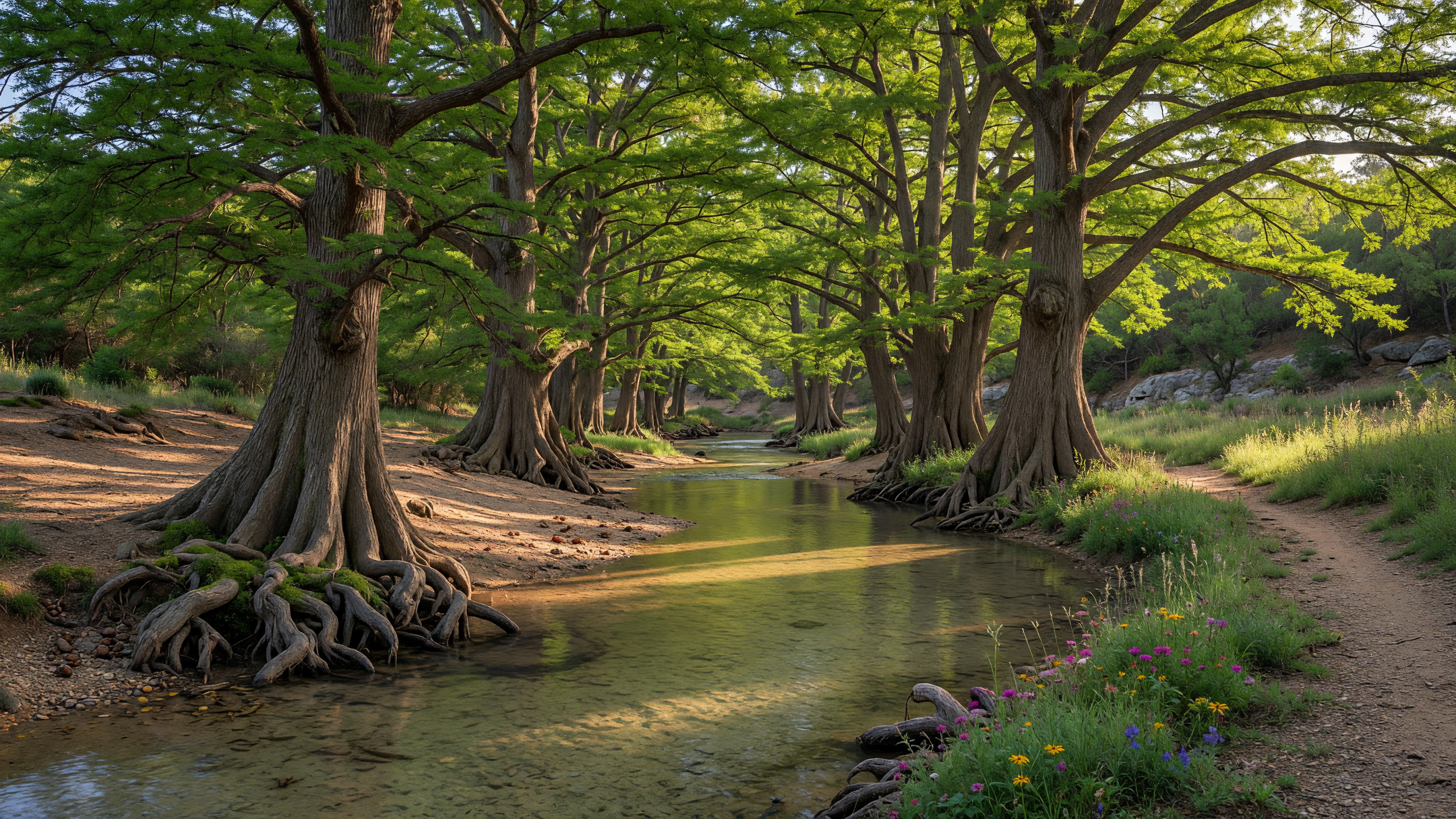
If you are considering a move to the Hill Country, or you already live here and have not made the trip, the Cibolo Center for Conservation is one of those places that tells you a lot about what daily life feels like in this region. Tucked just a mile from downtown Boerne, it is the kind of local resource that residents come to appreciate more the longer they live here — and one of the first things worth showing anyone evaluating the area.
The Cibolo Center for Conservation (formerly known as the Cibolo Nature Center & Farm) sits on more than 160 acres just a mile from downtown Boerne. It is open daily from dawn to dusk, charges no admission fee, and hosts over 100,000 visitors per year [1][2]. For a small city of roughly 13,000 people, that is a remarkable footprint — and it tells you something about the quality of the outdoor infrastructure here.
What the Cibolo Center actually is
Founded in 1988 by Carolyn Chipman Evans and a small group of neighbors, the center was created to conserve a segment of Cibolo Creek and the surrounding land [3]. It opened to the public on Earth Day 1990 and has since grown into one of the most respected conservation education organizations in Texas. The campus includes the main nature center trails and the historic Herff Farm at 33 Herff Road — a property with roots going back to 1852, when pioneer surgeon Dr. Ferdinand Herff established it [3].
The facility is managed by a nonprofit organization, not by a state or municipal parks department. That distinction matters: the programming, trail maintenance, and educational offerings are driven by community investment rather than government budgets. If you are evaluating whether the Hill Country has the kind of civic infrastructure that supports long-term quality of life, this place is exhibit A.
What you will find on the trails
The Cibolo Center encompasses more than six miles of trails across its 160-plus acres, threading through five distinct ecosystems [1][2]:
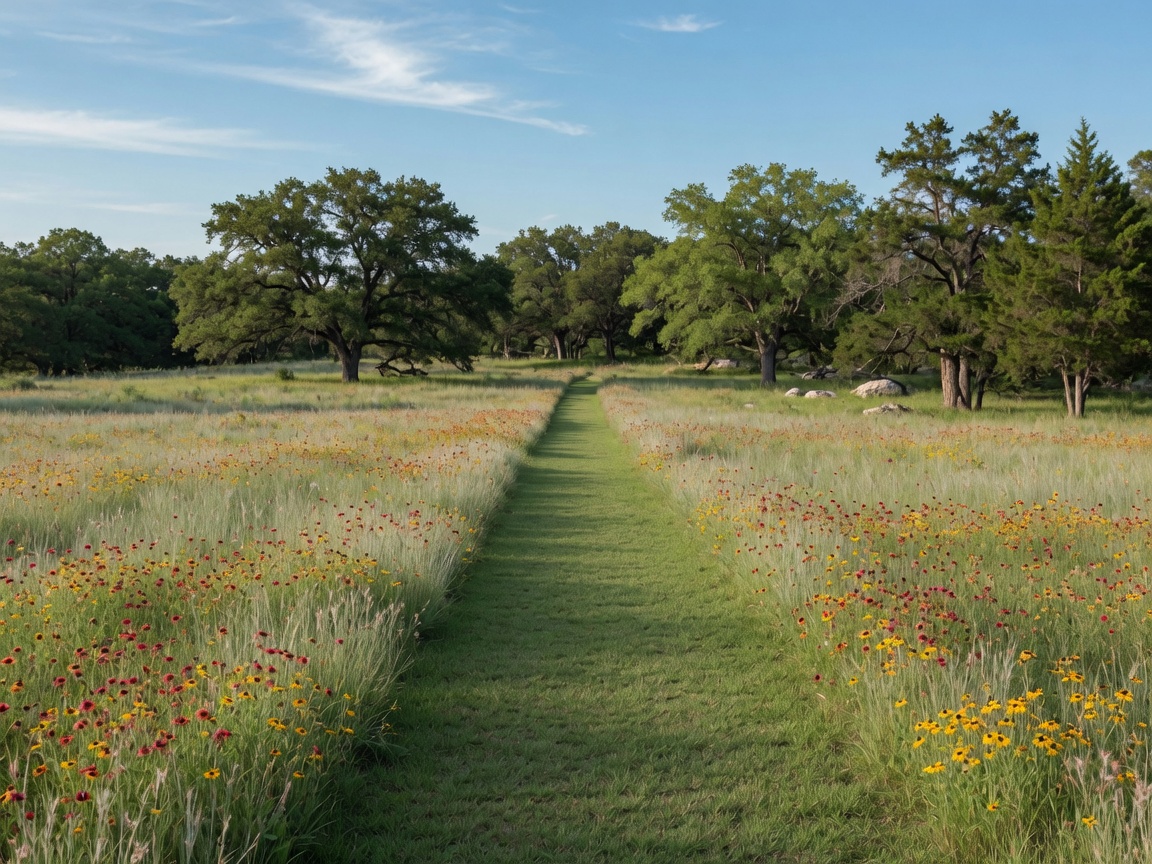
- Native prairie — Open grassland with little bluestem, Indian blanket, and seasonal wildflowers. This is the landscape that covered most of the Hill Country before settlement.
- Cibolo Creek corridor — The centerpiece. Towering bald cypress trees line the creek, their exposed root systems creating the kind of dramatic, twisted forms that show up in every photographer's portfolio. The creek is spring-fed and generally shallow, with sandy banks that are ideal for wading.
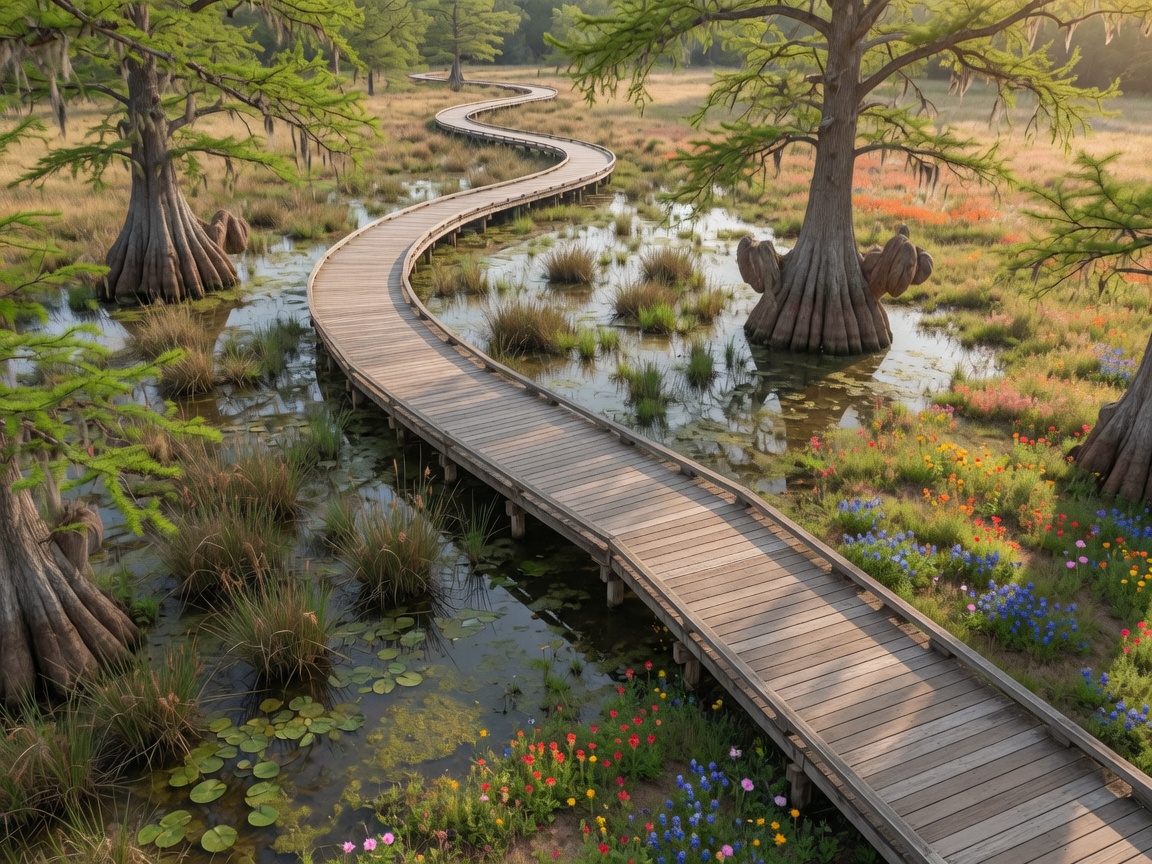
- Spring-fed marsh — A rare and ecologically significant wetland habitat. Boardwalk sections allow you to walk through the marsh without disturbing the ecosystem. This is where birdwatching is at its best.
- Woodland — Live oak and cedar elm canopy providing shade and habitat for white-tailed deer, armadillos, and a wide range of bird species.
- Upland habitat — Drier, rockier terrain typical of the Edwards Plateau, with native grasses and scrubby vegetation.
A full loop of the trail system takes roughly two hours at a comfortable pace. The trails are well-maintained and suitable for all ages and abilities. Equestrian use is allowed on some trails, though bicycles are not permitted [1]. Trail maps are available at the Visitor Center and at trailheads, and a mobile app provides GPS-guided navigation along the routes.
How to get there from Boerne
This is one of the closest significant outdoor destinations to downtown Boerne — the nature center entrance at 140 City Park Road is roughly two miles from the Main Street intersection, about a five-minute drive [4]. If you are coming from the Fair Oaks Ranch area, the trip takes roughly 10 to 15 minutes depending on where you start. From San Antonio's north side, plan on 35 to 45 minutes via I-10 West.
The center sits right at the edge of Boerne's historic downtown, which makes it easy to combine with a meal or shopping stop. Parking at the Visitor Center, walking the trails for an hour or two, and then heading into town for lunch makes for a full half-day outing without feeling like a production.
| Starting Point | Distance | Drive Time |
|---|---|---|
| Downtown Boerne | ~2 miles | ~5 min |
| Fair Oaks Ranch | ~7 miles | ~12 min |
| San Antonio (I-10 corridor) | ~30 miles | ~35–45 min |
| Cascade Caverns | ~4 miles | ~8 min |
| Cave Without a Name | ~11 miles | ~18 min |
Distances are approximate and based on standard driving routes.
What to see and do
Beyond the trail system itself, the Cibolo Center offers a range of programming that goes well beyond a typical nature preserve.
Herff Farm Farmers Market
Every Saturday morning from 9:00 AM to 1:00 PM, the historic Herff Farm hosts a farmers market featuring local produce, artisan goods, and prepared foods [2]. It is a genuine community gathering spot — not a tourist market. If you are visiting the area and want to get a feel for the local culture, Saturday morning at the farm is one of the best ways to do it.
Education programs
The center runs science-oriented education programs for all ages: preschool and homeschool programs, summer camps, adult workshops, and professional development for educators [1][3]. The intern program is open to participants 18 and older. These programs reflect the center's mission — it is not just a trail system, it is an active conservation education organization.
Wildlife and birding
The five distinct ecosystems concentrate a surprisingly wide range of wildlife into a compact area. Birdwatchers regularly report sightings of golden-cheeked warblers, black-capped vireos, and a variety of migratory songbirds. The creek corridor and marsh areas are particularly productive. You do not need to be an experienced birder — bring binoculars, move slowly, and let the habitat do the work.
Photography
The cypress-lined creek is one of the most photogenic spots in the Boerne area. Morning light through the canopy is exceptional, and the exposed root systems along the creek bank create compositions that are hard to find elsewhere in the Hill Country. If you are a photographer evaluating whether this region offers visual variety, the Cibolo Center will answer that question quickly.
Seasonal activity guide
The Cibolo Center is open 365 days a year from dawn to dusk, but the experience changes significantly by season. Here is what to expect throughout the year:
| Season | Highlight | What to Expect |
|---|---|---|
| Spring Mar – May | Wildflowers & migratory birds | Peak wildflower season. Warblers and other migratory species passing through. Mild temperatures ideal for the full trail loop. Creek levels typically higher from spring rains. |
| Summer Jun – Aug | Early mornings, summer camps | Start early — afternoon temperatures regularly exceed 95°F. The creek corridor provides shade. Summer camp programs for kids run weekly. Creek may slow to a trickle in dry years. |
| Fall Sep – Nov | Cypress color & cooler trails | The bald cypress trees along the creek turn amber and rust — one of the best foliage displays in the Hill Country. Temperatures drop to comfortable hiking range. Farmers market at its busiest. |
| Winter Dec – Feb | Solitude & clear creek | Fewer visitors, quieter trails. Creek often at its clearest. Winter birding is productive. Some weekday mornings you may have the trails nearly to yourself. |
Practical tips
Admission: Free. There is no entrance fee. Donations are accepted at drop boxes and the Visitor Center, and they directly support conservation and education programs [1]. I would encourage you to donate — the organization runs on community support.
Hours: The trails and grounds are open daily from dawn to dusk (typically 8:00 AM to sunset, 365 days a year). The Visitor Center and gift shop operate Monday through Saturday from 9:00 AM to 5:00 PM and Sunday from 1:00 to 5:00 PM [2]. Confirm hours before visiting, as they can shift seasonally.
Restrooms: Available at the Visitor Center. There are no restrooms along the back trail loop, so plan accordingly.
What to bring: Water (especially in summer), sunscreen, comfortable walking shoes, and binoculars if you enjoy birding. The trails are packed limestone and native soil — no special footwear required, but sandals are not ideal on the creek sections.
Dogs: Leashed dogs are welcome on the trails.
Best time to visit: Early morning in summer. Mid-morning in spring and fall. Anytime in winter. Weekday mornings are consistently less crowded than weekends.
Why it matters if you are considering the Hill Country
When I work with families relocating to the Boerne area — particularly from California or other high-density markets — one of the first questions they ask is about the outdoor lifestyle. They want to know whether the Hill Country genuinely delivers on the promise of accessible nature, or whether it is a marketing phrase.
The Cibolo Center is one of the strongest pieces of evidence that it is real. This is not a remote state park you drive two hours to reach. It is a 160-acre conservation preserve two miles from a walkable downtown, open free of charge every day of the year, and maintained by an organization that has been investing in this land for over 35 years.
For families evaluating Boerne as a place to put down roots, the center tells you something important about the community: people here care about the land, they invest in it, and they have built infrastructure to make it accessible. That is not something you find everywhere — and it is not something that happens by accident.
Whether you visit on a Saturday morning walk or bring out-of-town guests for an afternoon on the creek, the Cibolo Center gives you a direct, unmediated experience of what the Hill Country actually is. No entrance fee, no reservation required, no marketing language — just the place itself.
Planning a move to the Hill Country?
If you are evaluating Boerne, Fair Oaks Ranch, or surrounding communities and want to understand the full picture — schools, infrastructure, communities, and what the lifestyle actually looks like — reach out directly. I am happy to walk you through it.
Pair it with a cave tour
If you want to make a full day of it, the Cibolo Center pairs naturally with two nearby cave attractions — both within a short drive:
- Cascade Caverns (226 Cascade Caverns Road) — Located about four miles south of the nature center, Cascade Caverns offers guided tours through five major cave rooms including the Cathedral Room and an underground waterfall. Tours run hourly from 10:00 AM to 4:00 PM daily [5]. The combination of surface trails at the Cibolo Center and underground exploration at Cascade Caverns makes for a well-rounded day.
- Cave Without a Name (325 Kreutzberg Road) — Roughly 11 miles northeast of Boerne, this cave is known for its pristine formations and live music events held inside the cave itself. Tours run hourly and reservations are recommended [6]. It is a longer drive from the nature center, but worth it if you want to extend the outing.
Frequently asked questions
Is there an admission fee?
No. The Cibolo Center charges no admission fee. Donations are accepted at the Visitor Center and trailhead drop boxes and directly support the organization's conservation and education programs [1].
How long does it take to walk all the trails?
A full loop of the six-mile trail system takes approximately two hours at a comfortable pace. Shorter loops are possible — the Visitor Center can suggest routes based on your time and fitness level. Trail maps are available on-site and via a mobile app [1][2].
Are the trails stroller or wheelchair accessible?
The main trails and Visitor Center area are accessible and suitable for visitors of all ages and abilities. Some of the back trails have more rugged terrain. Check at the Visitor Center for current conditions on specific routes [2].
Can I bring my dog?
Yes. Leashed dogs are welcome on the trails. Bring water for your pet, especially during warmer months. Creek access is available along certain sections of the trail [1].
What is the address and phone number?
The nature center entrance is at 140 City Park Road, Boerne, TX 78006. The Herff Farm is at 33 Herff Road, Boerne, TX 78006. Phone: (830) 249-4616. Email: nature@cibolo.org [4].
Sources
- [1] Cibolo Center for Conservation — "Nature Center." cibolo.org/cibolo-nature-center
- [2] Cibolo Center for Conservation — "Locations." cibolo.org/locations
- [3] Cibolo Center for Conservation — "Our Story." cibolo.org/about
- [4] Cibolo Center for Conservation — Nature Center Location. cibolo.org/locations/cibolo-nature-center
- [5] Cascade Caverns — Official Tours. cascadecaverns.com/tours
- [6] Cave Without a Name — Official Website. cavewithoutaname.com
Published June 29, 2026
Updated June 29, 2026