
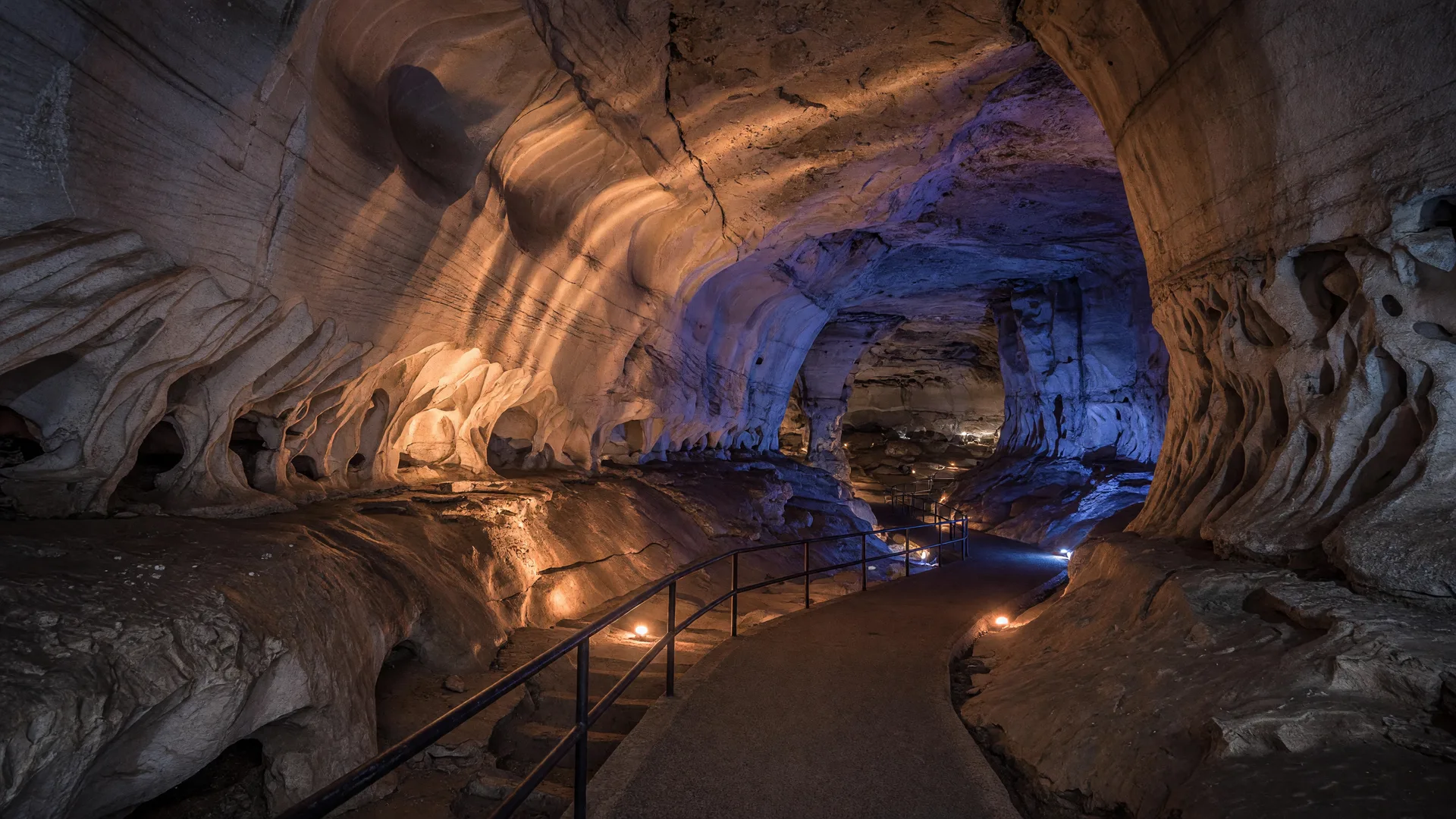
Longhorn Cavern State Park is the rare Texas park that rewards you twice. Below ground, a guided tour leads through a cave carved not by dripping water but by an ancient underground river, an hour and a half north of Boerne in Burnet County. Above ground, a 645-acre day-use park offers free entry, easy hiking trails, and some of the most handsome 1930s stonework in the state system [1][4]. It is a different animal from the dripstone caverns closer to Boerne, and that difference is worth the drive.
The park sits on Park Road 4, the scenic two-lane between Burnet and Marble Falls, about 6 miles southwest of Burnet [1][2]. The cave is open only by guided tour, while the grounds, trails, picnic tables, and historic stone buildings cost nothing to visit [1]. For a family, a first-time visitor, or anyone sizing up the region within a single tank of gas, it delivers a full day out of a surprisingly compact package.
This guide covers the route from Boerne, the tours and trails, the fees and seasonal timing, the cave's genuinely strange history, and why a place this far north still belongs on the Hill Country radar.
How to get there from Boerne
Longhorn Cavern State Park is located at 6211 Park Road 4 S, Burnet, TX 78611, on Park Road 4 between Burnet and Marble Falls [1][2]. From downtown Boerne, the most direct route follows U.S. Highway 281 north through Johnson City, turns west off 281 onto Park Road 4 about 6 miles south of Burnet, and follows it roughly 6 miles to the park entrance [2]. The trip is about 85 to 90 miles and typically runs an hour and a half under normal conditions, per routing services [12][13].
The route matters as much as the distance. U.S. 281 north of Boerne is a fast, well-maintained four-lane through widening Hill Country, and the Park Road 4 leg is a classic two-lane ranch road lined with live oak, cedar, and limestone. There is little in the way of services once you leave 281, so fuel up and grab snacks in Boerne, Johnson City, or Burnet.
| Starting Point | Distance | Drive Time |
|---|---|---|
| Downtown Boerne | ~85-90 miles | ~90 min |
| Burnet | ~6 miles | ~10 min |
| Marble Falls | ~12 miles | ~20 min |
| Johnson City | ~20 miles | ~25 min |
| Austin | ~65 miles | ~75 min |
Distances are approximate and based on standard driving routes. On busy tour weekends, the parking lot can fill by mid-morning, so an early start is the reliable play.
What to see and do
The guided walking tour
The reason most people come is the 90-minute walking tour, the only way inside the cave [1][3]. The developed path is about 1.1 miles round trip and descends roughly 130 feet along the floor of the ancient riverbed, with 52 stone steps at the entrance and no elevator [3][4]. The cave holds a constant temperature near 68 degrees, which makes the tour comfortable in any season and gives it genuine appeal on a 100-degree summer afternoon [4]. Guides pace the trip as a relaxed walk over a paved trail, and it works for most ages: children 3 and under ride free, ages 4 to 11 pay a reduced rate, and the wild cave route is limited to ages 8 and up [3].
The rooms that made it famous
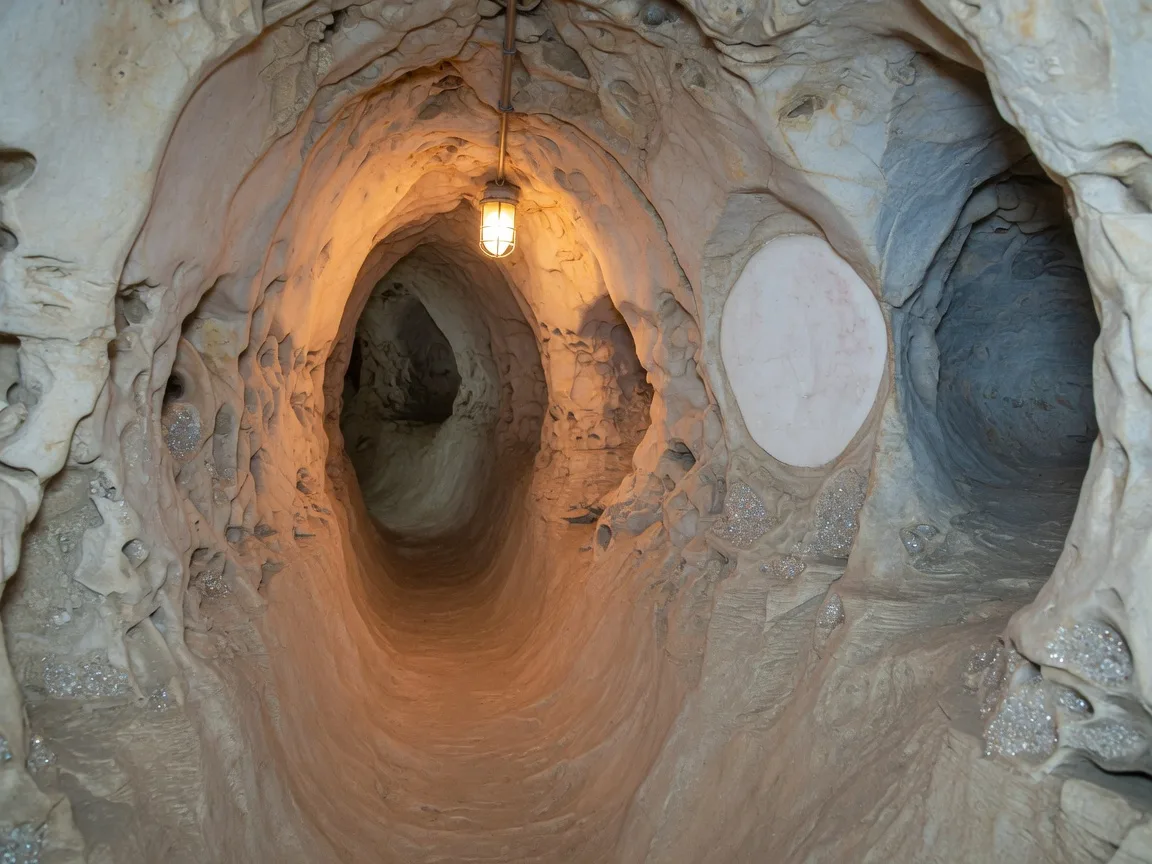
Because Longhorn is a flow cave rather than a dripstone cavern, the rooms read differently from the Hill Country caves most visitors know [6]. Instead of forested stalactites, expect smooth, sculpted walls with strange natural curiosities: the Grand Hall, the Queen's Throne, and the famous Queen's Watchdog, a formation that genuinely resembles a sitting dog keeping watch before the throne [4]. In the passage known as the Crystal Palace, calcite and dolomite crystals catch the tour lights and make the walls shimmer [4][6]. The guides collect plenty of stories along the way; the mix of geology and showmanship has kept it a working tourist cave for nearly a century [4][10].
The wild cave tour
For the adventurous, the park also offers a wild cave tour of roughly three hours, from about $110, open to ages 8 and older [1][3]. It means leaving the paved path to crawl through undeveloped passages, getting dirty on purpose, and moving the way speleologists actually move. It books up fast and requires real comfort with tight, dark, narrow spaces; the walking tour is the right call for everyone else [3][5].
Trails, tower, and the surface park
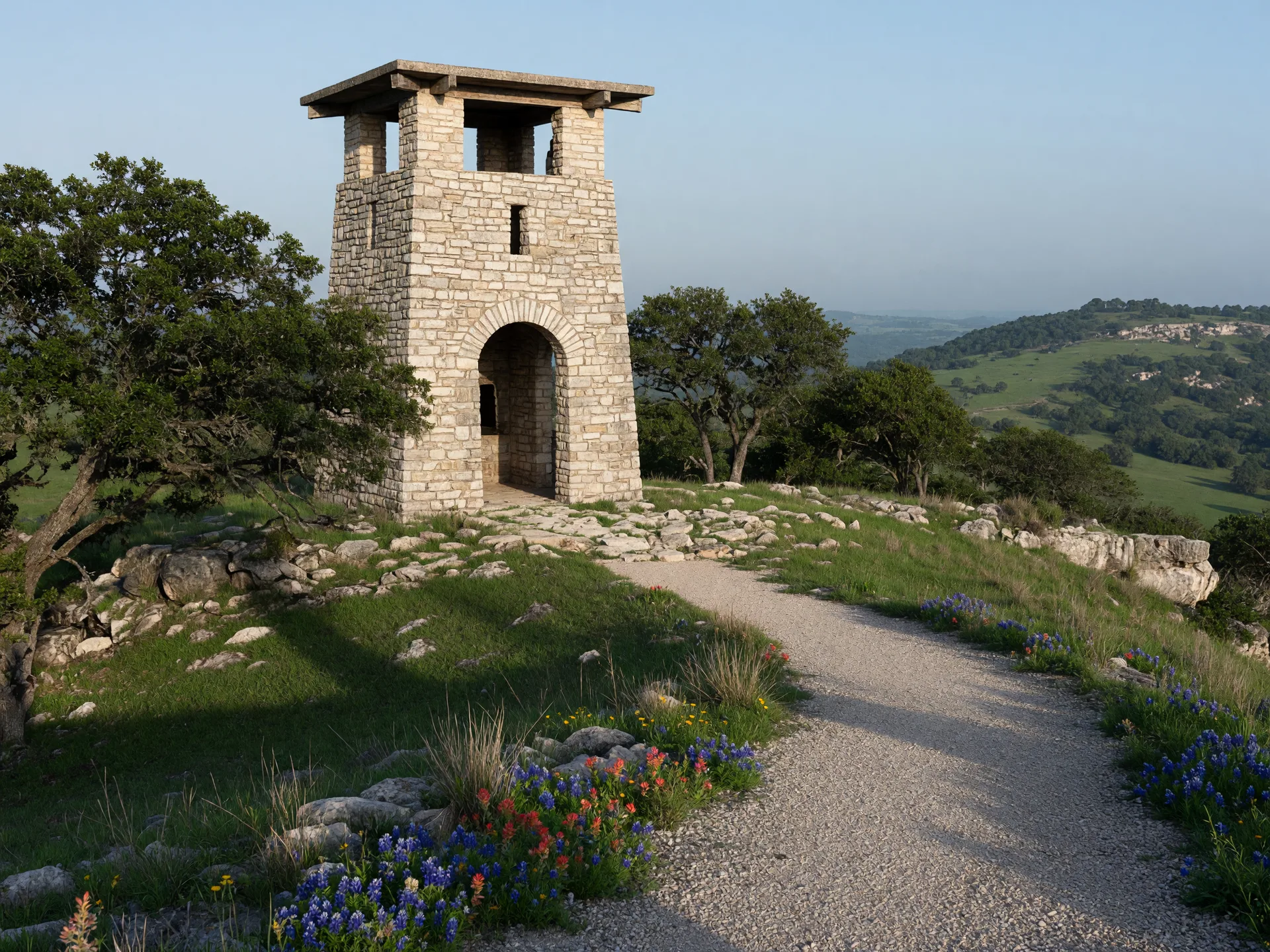
The above-ground half of the park is easy to miss and worth not missing. The Backbone Ridge Nature Trail is a roughly 2-mile crushed-gravel loop over the ridge, wide and gentle enough for families, while the shorter Karst Discovery Trail and Warbler Walk add variety for birders [7][10]. Along the way the trail passes a rustic stone observation tower built by the Civilian Conservation Corps in the 1930s, a classic piece of park architecture that frames the ridge in every direction [7][10]. There are shaded picnic tables, a snack bar and gift shop, and restrooms near the headquarters building [4]. Entry to all of this is free; only the cave tours carry a ticket [1].
Why the cave looks so different
Every cave near Boerne teaches a lesson about limestone; Longhorn teaches a different one. The cavern formed inside the Ellenburger limestone, roughly 500 million years old, as the nearby Colorado River cut downward and an underground river carved passages through the rock [4][6]. The result is what geologists call a flow cave: smooth, rounded, sculpted surfaces shaped by running water rather than the slow drip that builds stalactites and stalagmites [4][6]. Where calcite and dolomite crystals coat the walls, the chambers sparkle under the tour lights, which is how the Crystal Palace earned its name [6]. Surveyors with the Texas Speleological Survey have mapped about 3 miles of passage, putting it among the longer surveyed caves in the state [9].
For visitors, the practical takeaway is simple. Longhorn looks like no other cave in the region, so it is not a repeat of a Boerne-area cavern trip; it is a genuinely different experience.
A history you can still feel
The name comes with a story. The most repeated version holds that the wide opening in the cave ceiling, a natural sinkhole, trapped longhorns that wandered onto it during the ranching era, giving the cavern its name [4][8]. Even older evidence suggests the opening worked as a prehistoric hunting trap: the Ice Age animal bones found in the cave lead researchers to believe hunters once drove game over the edge, the way a buffalo jump worked [4].
The Civil War added a stranger chapter. Confederate soldiers mined bat guano in the cave to produce saltpeter, the key ingredient in gunpowder, turning the cave into a wartime supply operation [4][10]. Decades later, in the 1920s and 1930s, the cave took its most surprising turn: the largest room doubled as an underground dance hall, and the same era produced enduring stories about Prohibition-era gambling and bootlegging [4][10].
Then the state took over. The property, then known as Sherrard's Cave, opened to the public as Longhorn Cavern State Park on Thanksgiving Day in 1932, and during the 1930s and early 1940s Civilian Conservation Corps Company 854 hauled out silt and bat guano by hand and built the park's limestone administration building, observation tower, roads, and picnic structures in the rustic National Park style [4][10][11]. Much of that stonework is still standing and in use today, which is why a visit feels like stepping into a well-preserved slice of Texas park history [4].
Hours, fees, and tour details
Longhorn Cavern is a day-use operation: there is no camping, and the gates generally run from 9 a.m. to 6 p.m. daily [1]. Because the cave is only accessible on a paid tour, the practical cost of a visit is the tour ticket plus the drive [1][3]. Tour prices vary by day and season, and the park strongly recommends booking ahead online, though day-of tickets are often sold at the visitor center when space allows [3][5].
| Detail | Information |
|---|---|
| Grounds entry and parking | Free [1] |
| Park hours | Daily, generally 9 a.m. to 6 p.m. [1] |
| Walking tour | About 90 minutes; from $24 ages 12+, $17 ages 4-11, ages 3 and under free; prices vary by day and season [3] |
| Wild cave tour | About 3 hours; from $110; ages 8+ [1][3] |
| Cave temperature | About 68 degrees Fahrenheit year-round [4] |
| Reservations | Recommended online in advance; day-of tickets often available [3][5] |
| Phone | (512) 715-9000 [1] |
Prices are set by the park and its tour operator and can change; check the official pages before your visit. The Texas State Parks Pass does not cover cave tours, but pass holders get a discount at the park store [5].
Best time to visit and seasonal planning
| Season | What it is like | Best for |
|---|---|---|
| Spring (Mar-May) | Mild days, green ridge, comfortable trail walking; cave a steady 68 degrees | Tours plus Backbone Ridge hiking |
| Summer | Hot on the surface, cool underground; weekend tours fill fast | Beat-the-heat cave tours, lake stops nearby |
| Fall (Sep-Nov) | Golden hills, lighter crowds after school starts, crisp mornings | Hiking, photography, quiet weekends |
| Winter (Dec-Feb) | Cold outside, warm relative air in the cave; tour schedule can be reduced | Quiet tours, holiday-week visits, little company |
The cave's steady 68 degrees makes the tour a year-round proposition, so the calendar mostly decides how much time you spend above ground [4]. Spring and fall are ideal for pairing the tour with the Backbone Ridge Trail: mild mornings, green or golden hills, and lighter weekend crowds. Summer is hot on the surface but genuinely cool in the cave, which makes a midday tour one of the better ideas in Central Texas in July [3][5]. Winter is the quiet season, when the cave feels warm by comparison and the ridge is nearly empty, though tour times can shrink around the holidays, so confirm the schedule before you drive [3].
Practical tips for the day
Bring a light jacket even in summer. The constant 68 degrees feels genuinely cold after a 95-degree surface, and the damp stone holds the chill [4].
Wear shoes you can walk a mile in. The tour covers about 1.1 miles with 52 stone steps, and the trail loop adds more; flip-flops are a bad idea on a cave floor [3][4].
Book the tour before you leave Boerne. Reservations online are strongly recommended, and the wild cave tour in particular fills days ahead [3][5].
Treat the grounds as a free park. Trails, the stone tower, the picnic tables, and the architecture are all free, so pack a lunch and make a half day even if you skip the tour [1][7].
Mind the pet rules. Pets are welcome on the park grounds but cannot enter park buildings, and only trained service animals may go on the cave tour [5].
Why it matters if you are considering the Hill Country
Longhorn matters to anyone weighing a move to the Hill Country because it is proof that the region's depth runs horizontally. The destinations that define this part of Texas are spread across a huge, varied map, and a day trip is the way most people experience them. A two-hour drive to a cave unlike any other in the region is not a novelty; it is a routine example of the quality-of-life range a Boerne-area home puts within reach.
It also makes a quiet case about value. The grounds, trails, and historic buildings are free, and the signature experience costs less than a night out for two [1][3]. That affordability matters for a family deciding whether the Hill Country supports an active, outdoorsy life: free entry, a kid-friendly tour, an easy walk, and a shady picnic all arrive in a single afternoon.
The park also introduces the Highland Lakes corridor, the string of reservoirs that anchors recreation north of the Hill Country. Because Longhorn tucks neatly into that region, a visit pairs naturally with the small towns on either side: Burnet, about 6 miles up Park Road 4, is a classic county-courthouse-square town and an easy stop for lunch, while Marble Falls, about 20 minutes south, puts a lakefront downtown on the way home. That loop, cave to courthouse square to waterfront, shows how much sits just beyond the usual Hill Country circuit within two hours of Boerne.
Frequently asked questions
How far is Longhorn Cavern State Park from Boerne?
Roughly 85 to 90 miles north, about an hour and a half, via U.S. 281 through Johnson City, then west on Park Road 4 south of Burnet [2][12][13].
Do you have to take a tour to see Longhorn Cavern?
Yes. The cave is open only on guided tours: a 90-minute walking tour and a roughly 3-hour wild cave tour. The grounds, trails, and picnic areas are free [1][3].
How much does the Longhorn Cavern tour cost?
The walking tour starts at about $24 for ages 12 and up and $17 for ages 4 to 11, with ages 3 and under free; the wild cave tour starts at about $110 and requires ages 8 and up. Prices vary by day and season [3].
How cold is it inside Longhorn Cavern?
The cave holds a constant temperature near 68 degrees year-round, so a light jacket helps even in summer [4].
Is Longhorn Cavern good for kids or older visitors?
The walking tour works well for most ages, but it includes 52 stone steps and about 1.1 miles of walking with no elevator. Ages 3 and under ride free, and the wild cave tour is limited to ages 8 and up [3][4].
Sources
- [1] Texas Parks and Wildlife Department, Longhorn Cavern State Park. tpwd.texas.gov/state-parks/longhorn-cavern
- [2] Texas Parks and Wildlife Department, Longhorn Cavern State Park Map and Directions. tpwd.texas.gov/state-parks/longhorn-cavern/map
- [3] Visit Longhorn Cavern, Plan My Trip. visitlonghorncavern.com/plan-my-trip
- [4] Wikipedia, Longhorn Cavern State Park. en.wikipedia.org/wiki/Longhorn_Cavern_State_Park
- [5] Visit Longhorn Cavern, Frequently Asked Questions. visitlonghorncavern.com/faq
- [6] Texas Parks and Wildlife Magazine, This Often-Overlooked Hill Country Cavern Is a Year-Round Delight. tpwmagazine.com/parks/longhorn-cavern
- [7] 101 Highland Lakes, Explore Longhorn Cavern State Park Above Ground. 101highlandlakes.com/above-ground-at-longhorn-cavern-state-park
- [8] Atlas Obscura, Longhorn Cavern. atlasobscura.com/places/longhorn-cavern-burnet-texas
- [9] Texas Speleological Survey, Longhorn Cavern. texasspeleologicalsurvey.org
- [10] KXAN, Destination Texas: The Long, Rich History of Longhorn Cavern. kxan.com/destination-texas
- [11] Texas Highways, How Longhorn Cavern Was Carved by Hand. texashighways.com
- [12] Distance-Cities, Distance from Boerne, TX to Burnet, TX. distance-cities.com/distance-boerne-tx-to-burnet-tx
- [13] Trippy, How Far Is Boerne from Burnet. trippy.com/distance/Burnet-to-Boerne
Published September 28, 2026
Updated September 28, 2026