
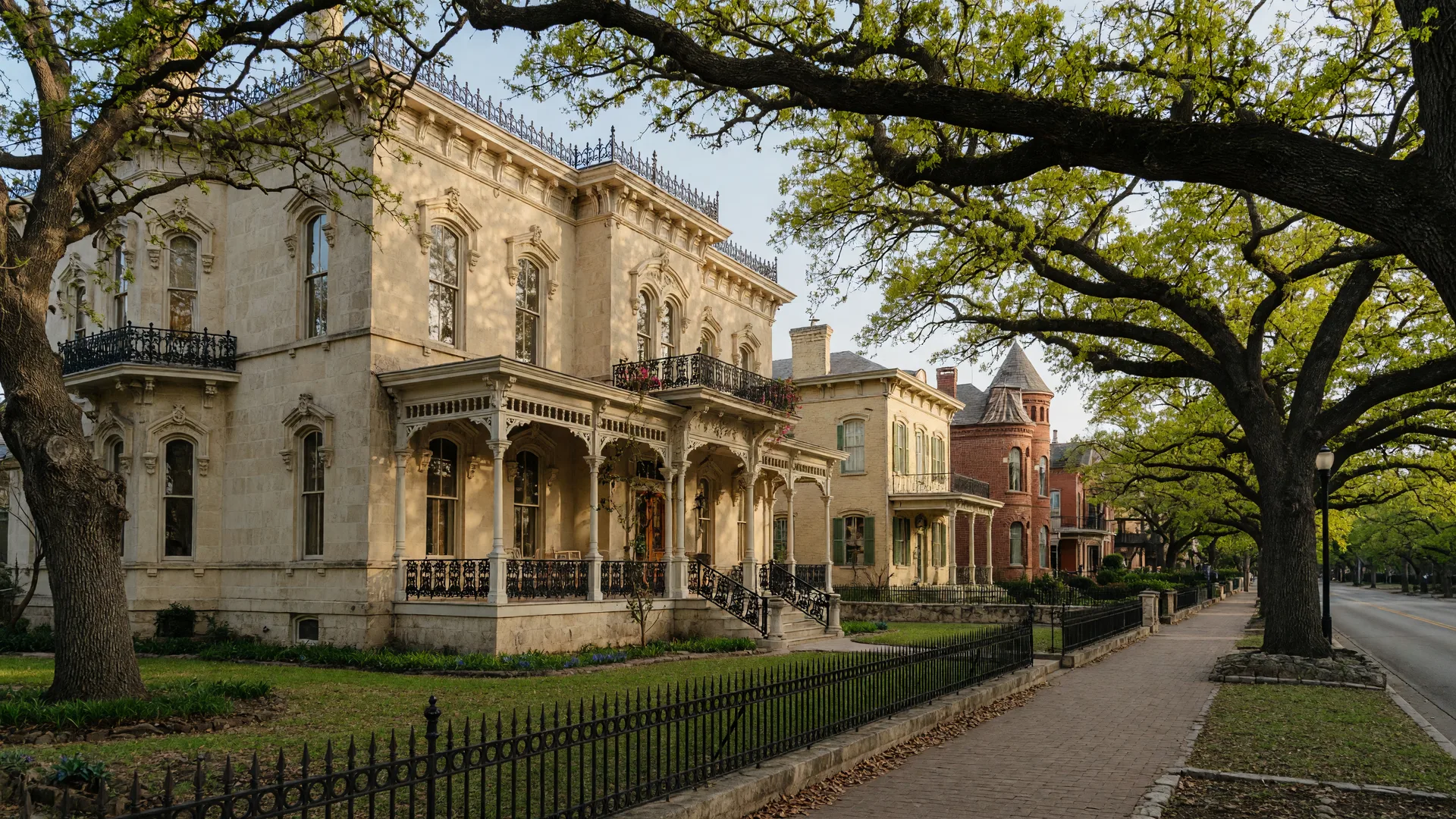
The King William Historic District is not the kind of place most people think of when they picture a day trip from Boerne. It is not a state park, a river tubing destination, or a small German town with a dance hall. It is an urban historic neighborhood — a 25-block grid of Victorian mansions, Italianate villas, limestone workers' cottages, and live oak-lined streets that sits just south of downtown San Antonio, roughly 35 miles from the Boerne town square. It is also Texas' first designated historic district, listed on the National Register of Historic Places in 1972, and it offers a kind of cultural and architectural density that is rare anywhere in the state [1][2].
For anyone evaluating the Hill Country as a place to live, the King William District matters because it demonstrates something important about the region: the Hill Country is not limited to small towns and rural landscapes. Within a 35-minute drive from Boerne, there is a walkable, historic urban neighborhood with nationally significant architecture, a contemporary art complex, some of San Antonio's best restaurants, and direct access to the Mission Reach of the San Antonio River Walk. That range of options — from rural to urban in under 40 minutes — is one of the defining advantages of living in the Boerne area [3][4].
How a German neighborhood became a historic landmark
The land that became the King William District was originally the farmlands of the Misión San Antonio de Valero (the Alamo), granted to Spanish settlers in the 1700s. After Texas independence and the establishment of San Antonio as a growing commercial center, German immigrants began purchasing land south of downtown in the mid-1800s. The neighborhood took its name from King Wilhelm I of Prussia, reflecting the German heritage of its early residents, and the streets were given German names — Guenther, Stieren, Bremer, and the main thoroughfare, King William Street [1][2][5].
The first home in the district was built in 1866 by Ernst Hermann Altgelt, a German immigrant who surveyed and laid out the neighborhood. Altgelt's own house still stands at 432 West Myrtle Street, a modest limestone residence that set the pattern for the wave of construction that followed. Over the next two decades, the city's German mercantile elite built homes along King William Street and the surrounding blocks — wealthy families like the Steves (lumber), the Guenthers (flour milling), and the Nortons (hardware) commissioned prominent architects to build mansions that reflected their status and taste [1][5].
By the early 20th century, the neighborhood's character had shifted. Newer suburbs drew wealthier families away from the urban core, and many of the grand homes were subdivided into boarding houses or fell into neglect. The original German-speaking community dispersed, and by the 1960s, the district was at risk of demolition and redevelopment [1][2][5].
The preservation movement that saved the King William District began in the late 1960s, led by a group of residents and preservationists who recognized the architectural significance of the neighborhood. In 1968, the City of San Antonio designated it a historic district — the first in Texas — and the neighborhood was listed on the National Register of Historic Places in 1972. Preservationist and collector Walter Nold Mathis purchased the Norton-Polk-Mathis house at 401 King William Street in 1967 and spent decades restoring it, eventually bequeathing it to the National Trust for Historic Preservation as the Villa Finale Museum & Gardens. His work earned the DuPont Crowninshield Award, the highest preservation honor in the United States, in 2003 [1][2][5][6].
Today, the King William District contains 79 historically significant structures representing Victorian, Italianate, Greek Revival, and Renaissance Revival architecture. The neighborhood is a National Trust Historic Site, a Recorded Texas Historic Landmark, and one of the most desirable places to live in San Antonio [1][2][5].
How to get there from Boerne
The King William Historic District is approximately 31 to 33 miles from downtown Boerne, with a typical drive time of 35 to 40 minutes [3][4]. The route is straightforward and entirely on highways: take I-10 East from Boerne toward San Antonio, then exit onto US-281 South (McAllister Freeway) near the Loop 1604 interchange. Follow US-281 south toward downtown, then take the Durango Boulevard exit and head east, or continue to South Alamo Street and head south into the district. The neighborhood is centered roughly around 1032 South Alamo Street, San Antonio, TX 78210 [3][4].
From San Antonio International Airport, the district is about 8 miles south, approximately 15 to 20 minutes via I-37 or US-281. From Fair Oaks Ranch, the drive is approximately 38 miles and about 45 minutes. From downtown San Antonio, it is less than 2 miles south — a five-minute drive or a 20-minute walk across the River Walk [3][4].
Parking in the King William District is generally available on the street, though some blocks require a residential permit. Visitors can find free parking on the side streets off King William Street and South Alamo Street, or in the paid lots near the Blue Star Arts Complex at 1420 South Alamo Street. The neighborhood is compact and walkable, with most attractions within a 10- to 15-minute walk of each other [4].
| Starting Point | Distance | Drive Time |
|---|---|---|
| Downtown Boerne | ~31–33 miles | ~35–40 min |
| Fair Oaks Ranch | ~38 miles | ~45 min |
| San Antonio (downtown) | ~1.5 miles | ~5 min |
| San Antonio Airport | ~8 miles | ~15–20 min |
| San Antonio Missions NHP | ~3–5 miles | ~10–15 min |
Distances are approximate and based on standard driving routes via I-10 and US-281. Traffic on I-10 and US-281 can add 10–20 minutes during peak hours.
What to see and do
Villa Finale Museum & Gardens
Villa Finale, located at 401 King William Street, is the anchor attraction of the historic district and the only National Trust Historic Site in Texas [6][7]. The house was built in 1876 for Russell C. Norton, a German immigrant and hardware merchant who had it constructed as a wedding gift for his wife. Designed in the Italianate style, the three-story limestone mansion was described at the time as the finest house in Texas — a claim that reflects both the wealth of the district's early residents and the ambition of its architecture [6].
The house changed hands several times over the next century. Rancher Edward Polk, the second owner, added the second-story porches and a rear wing around 1881. Later owners included cattleman Ike T. Pryor. By the 1960s, the mansion had been subdivided into a boarding house and was in serious disrepair. In 1967, preservationist Walter Nold Mathis purchased the property and began a meticulous restoration that would continue for the rest of his life [6][7].
Mathis was a ninth-generation Texan with a deep appreciation for decorative arts, and he filled the house with an extensive collection of American and European antiques, including a notable collection of paperweights, silver, and furniture. He received the DuPont Crowninshield Award from the National Trust for Historic Preservation in 2003 — the highest preservation honor in the country — for his work on Villa Finale. Upon his death in 2004, he bequeathed the house and its collections to the National Trust, and it opened as a museum in October 2010 [6][7].
Villa Finale is currently open Tuesday through Saturday, 10:00 AM to 4:00 PM, with last entry at 3:30 PM. It is closed Sunday and Monday. Admission for self-guided tours is $12 for adults, with discounts for seniors, military, and students. Guided tours are offered on Thursdays only at 3:30 PM. The gardens are free and open to the public during museum hours. Plan for 60 to 75 minutes for a self-guided tour of the house and gardens [6][7].
The Steves Homestead (509 King William Street), another major historic house museum, operated for decades but was sold by the San Antonio Conservation Society Foundation in 2022 and is now a private residence. It is no longer open to the public, though the exterior remains a significant architectural landmark worth passing on a walking tour [8].
Walking tour of the district
The best way to experience the King William District is on foot. The neighborhood is compact and walkable, with 79 historic structures within a 25-block grid. A self-guided walking tour following King William Street from Guenther Street south to Eagleland covers the most significant homes and is roughly 1.5 miles round trip [1][2].
Notable houses along the route include:
- Guenther House (205 East Guenther Street) — The restored home of flour miller Carl Hilmar Guenther, now a restaurant and museum operated by Pioneer Flour Mills. The adjacent mill building is still in operation. The Guenther House restaurant serves breakfast and lunch and is a popular weekend destination [9].
- Norton-Polk-Mathis House (Villa Finale) (401 King William Street) — The Italianate mansion described above. The largest house in the district [6].
- San Antonio Art League and Museum (130 King William Street) — Housed in a historic residence, this museum features rotating exhibitions of Texas and regional art. Open Tuesday through Saturday, 11:00 AM to 3:00 PM, with free admission [10].
- King William Park — A small neighborhood park at the intersection of King William Street and Beauregard Street with benches, shade trees, and a view of the San Antonio River. A good spot to rest during a walking tour [11].
The King William Association, the neighborhood's civic organization, provides self-guided walking tour maps on its website for those who want a structured route [5].
Blue Star Arts Complex
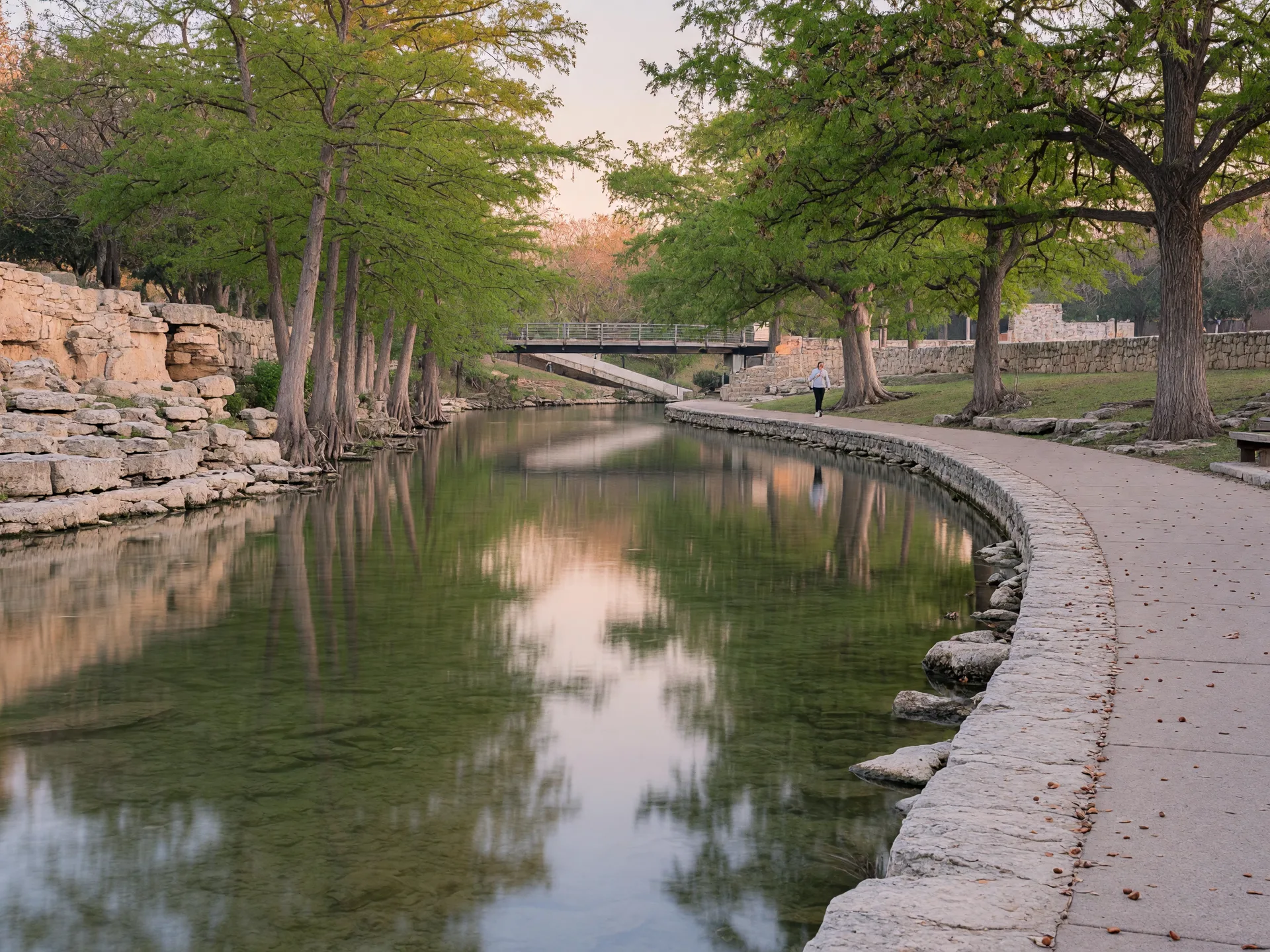
The Blue Star Arts Complex, located at 1420 South Alamo Street on the southern edge of the district, is a mixed-use creative destination housed in a converted historic warehouse building [12][13]. The complex is anchored by the Blue Star Contemporary Art Museum, San Antonio's longest-running contemporary art space, established in 1986. The museum features rotating exhibitions of regional, national, and international contemporary artists and is free and open to the public [12][13].
Beyond the museum, the complex houses over 20 artist studios and galleries, independent retail shops (vintage, gifts, art, and home decor), and multiple dining and drinking venues including Stella Public House, Bar 1919, and the Blue Star Brewing Company, which opened in 1996 as San Antonio's first brewpub [12][13]. The complex also serves as a trailhead for the Mission Reach of the San Antonio River Walk, providing direct access to the eight-mile riverfront trail that connects the district to the San Antonio Missions National Historical Park [12][13].
The most significant regular event in the district is the First Friday Art Walk, San Antonio's longest-running monthly art event, established in 1994. On the first Friday of each month, all shops, galleries, studios, restaurants, and bars in the Blue Star complex open their doors for a free, family-friendly evening of live music, art vendors, new exhibition previews, and community gathering. The event draws visitors from across San Antonio and regularly fills the complex and surrounding streets [12][13].
Mission Reach of the San Antonio River Walk
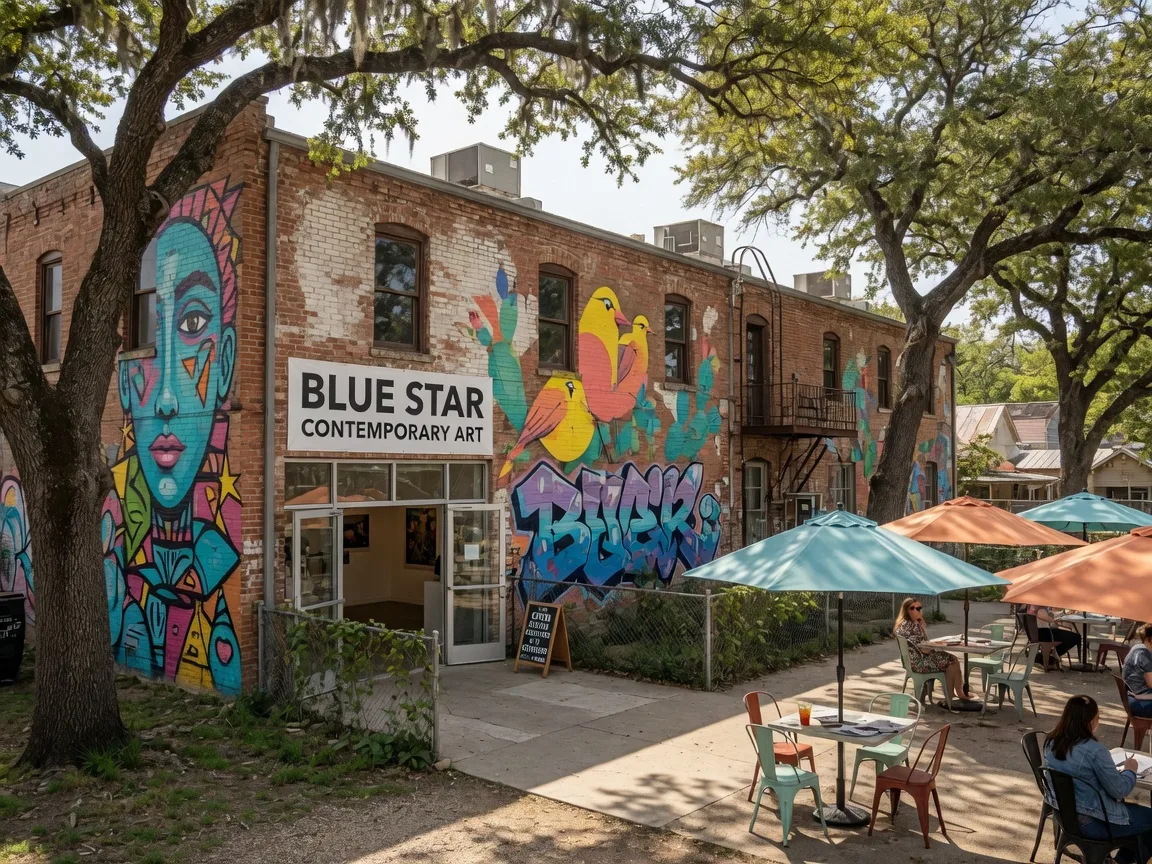
The Mission Reach is the southern extension of the San Antonio River Walk, an eight-mile linear park and trail system that connects the King William District to the San Antonio Missions National Historical Park — a UNESCO World Heritage Site that includes Missions Concepción, San José, San Juan, and Espada [14]. The trail runs along the eastern boundary of the district, providing a paved, flat, accessible path for walking, running, and cycling. It is one of the most significant urban greenway projects in Texas, completed in 2013 as part of a $271 million restoration of the San Antonio River [14].
For day-trippers from Boerne, the Mission Reach is worth knowing about even if you do not walk the full eight miles. The section that passes through the King William District is the most accessible, with multiple entry points at South Alamo Street, King William Street, and the Blue Star complex. A walk from the Blue Star trailhead north to the King William Street bridge covers approximately one mile each way and takes about 30 to 40 minutes at a casual pace, passing through restored riparian habitat with interpretive signage about the river's ecology and history [14][15].
Dining and drinking
The King William District and the adjacent Southtown neighborhood have become one of San Antonio's most concentrated dining destinations. The options range from casual coffee shops to destination restaurants worth planning a trip around:
- Liberty Bar (1111 South Alamo Street) — Housed in a former convent built in 1890, Liberty Bar is one of San Antonio's most beloved restaurants. The menu is American with a seasonal, locally sourced focus. The building itself is part of the experience — a converted historic structure with a sloping floor, stone walls, and a sprawling patio under live oaks. Entrees range from $15 to $30 [16][17].
- Nonna Osteria (2118 South Alamo Street) — Italian cuisine with handmade pasta, wood-fired pizzas, and an extensive Italian wine list. Dinner entrees range from $18 to $35. Reservations recommended for weekend evenings [17].
- La Panadería Bakery Café (8305 Broadway, with a Southtown location at 411 South Alamo Street) — A Mexico City-style bakery known for its pan dulce, sandwiches, and coffee. Breakfast and lunch daily. Counter service with reasonable prices [17][18].
- Beau's Tiny Diner (215 East Grayson Street) — A casual breakfast and lunch spot popular with locals. Cash-only, limited seating, and short hours (typically 6:00 AM to 1:00 PM). The breakfast tacos are a local institution [17].
- Bar Loretta (1111 South Alamo Street, attached to Liberty Bar) — A cocktail bar with a focus on classic and original cocktails, barrel-aged spirits, and a small food menu. Open evenings [17].
- King William Coffee House (951 South Alamo Street) — A neighborhood coffee shop with indoor and outdoor seating. Serves coffee, tea, pastries, and light breakfast and lunch items. Open daily [18].
- King William Wine Co. (1420 South Alamo Street, inside Blue Star Arts Complex) — A wine bar with a curated selection of wines by the glass and bottle, plus a small food menu. Open evenings [19].
For a full day trip, a common itinerary is: arrive mid-morning, grab coffee at King William Coffee House, spend 90 minutes at Villa Finale, walk the King William Street corridor south to the Blue Star complex, have lunch at Liberty Bar or La Panadería, browse the galleries at Blue Star, and walk the Mission Reach trail along the river before heading home. This covers the main attractions without feeling rushed and comes in at roughly four to five hours of active time [4][17].
Practical tips: hours, fees, and timing
| Detail | Information |
|---|---|
| Villa Finale Museum | Tue–Sat, 10 AM–4 PM; closed Sun-Mon. Adult admission $12 |
| Blue Star Contemporary | Wed–Sun, 11 AM–6 PM; free admission |
| San Antonio Art League | Tue–Sat, 11 AM–3 PM; free admission |
| First Friday Art Walk | First Friday of each month, 6–10 PM; free |
| Mission Reach Trail | Open daily, dawn to dusk; free. Trailhead at Blue Star |
| Best Time to Visit | Weekday mornings for quiet; First Friday for energy |
| Typical Visit Duration | 4–5 hours for a full tour including lunch |
| Parking | Street parking available; paid lots near Blue Star |
Hours, admission, and event dates may change. Confirm current details before visiting, especially for Villa Finale and gallery hours.
What to bring: Comfortable walking shoes are essential — the district is best explored on foot, and the distances add up over a few hours. A water bottle and sun protection (hat, sunscreen) are important in warmer months, as much of the walking is on exposed streets with limited shade. A camera is worthwhile for the architecture. Cash is useful at smaller cafes and coffee shops [4][17].
What to leave at home: Expectations of a curated, commercial tourist experience. The King William District is a living residential neighborhood. The museum hours are limited, the shops are independent, and the pace is set by the neighborhood itself rather than by a tourism calendar. That is the appeal, but it means planning ahead for hours and reservations [4][5].
| Season | Activities & Events | Atmosphere |
|---|---|---|
| Spring (Mar–May) | Walking tours, First Friday, river trail, patio dining | Mild weather, blooming gardens, busy weekends |
| Summer (Jun–Aug) | Early morning walks, gallery visits (AC), evening river strolls | Hot; plan indoor activities midday; river trail is cooler |
| Fall (Sep–Nov) | Art openings, walking tours, dining patios | Pleasant temps, fewer crowds on weekdays, excellent for walking |
| Winter (Dec–Feb) | Museum visits, holiday decorations, cozy dining | Quietest season; mild by northern standards; limited outdoor time |
The King William District is accessible year-round. Indoor attractions (museums, galleries, restaurants) make it a viable destination even on the hottest summer afternoons or the coolest winter days.
Why the King William District matters if you are considering the Hill Country
The King William District serves a specific function as a day trip from Boerne: it demonstrates that living in the Hill Country does not mean giving up access to urban cultural density. The 35-mile drive between the Boerne town square and the Blue Star Arts Complex covers a remarkable range of landscapes and lifestyles — from a historic German Hill Country town through suburban corridor development along I-10, past the outer edges of San Antonio's growth, and into one of the most architecturally significant urban neighborhoods in Texas [3][4].
That proximity matters for quality of life in practical ways. Villa Finale is not a destination that justifies a separate trip from Boerne on its own, but it is exactly the kind of place that becomes part of your routine when it is 35 minutes away. The First Friday Art Walk is the kind of monthly event that defines a social calendar when it is accessible. The Mission Reach trail is the kind of urban green space that expands your options for a Sunday afternoon walk without requiring a half-day commitment to driving [4][14].
For someone relocating to the Hill Country from an urban area, the King William District offers reassurance: the cultural amenities of a major city are not absent from the region — they are simply distributed differently. San Antonio's urban core is not remote from the Hill Country; it is adjacent to it, connected by a 30-minute interstate drive that thousands of commuters make every day. Understanding that adjacency — knowing that a walkable historic neighborhood with nationally significant architecture, a contemporary art museum, and some of the best restaurants in San Antonio is a 35-minute drive from Boerne — provides a more complete picture of what Hill Country living actually means [3][4].
It also says something about the region's growth patterns. The King William District was nearly lost to neglect and redevelopment in the 1960s. Its preservation and revival reflect a commitment to urban quality of life that has shaped San Antonio's development philosophy in subsequent decades. The Mission Reach project, the Blue Star complex, and the continued investment in the Southtown corridor are all evidence of a city that values its historic fabric and invests in the public spaces that connect it. For someone evaluating a long-term move to the region, that trajectory is useful information [5][6][14].
Pairs well with
- San Antonio Missions National Historical Park (Wine, Food & Culture) — Located just 3 to 5 miles south of the King William District via the Mission Reach trail, the Missions are a UNESCO World Heritage Site and a natural extension of a day trip into the Southside. A combined visit — morning at the King William District, afternoon at Mission San José or Mission Concepción — makes for a full and well-paced day covering two distinct layers of San Antonio history [14].
- Gruene Historic District (Historic Towns & Villages) — Gruene is roughly 40 miles northeast of the King William District, making it a separate trip from Boerne. But for someone interested in historic German-Texan architecture, the comparison between the urban Victorian mansions of King William and the rural German dance hall and cotton gin of Gruene illustrates the range of historic preservation in the region [20].
Frequently asked questions
How much time should I plan for a visit to the King William District?
Four to five hours is sufficient for a thorough visit that includes Villa Finale (60–75 minutes), a self-guided walking tour of the district (45–60 minutes), the Blue Star Arts Complex galleries (30–45 minutes), and lunch at a neighborhood restaurant (60–75 minutes). If you want to walk a section of the Mission Reach trail, add another 30 to 45 minutes. The district is compact enough that you can adjust your pace based on your interests without the risk of missing something important. First Friday evenings are a different experience — plan for a later visit with more time at the galleries and bars [4][17].
Is the King William District safe for visitors?
Yes. The King William District is one of San Antonio's most desirable residential neighborhoods, with active neighborhood association oversight, regular foot traffic on the main streets, and well-lit public spaces along the river trail. Standard urban precautions apply — lock your car, keep valuables out of sight, and be aware of your surroundings — but the district is generally safe during daylight hours and during evening events like First Friday. The Mission Reach trail is popular with walkers, runners, and cyclists and is well-maintained, but it is a good idea to stick to the more traveled sections if visiting alone [4][5].
What is the best time of year to visit?
Spring (March through May) is the most pleasant time, with mild temperatures and blooming gardens at Villa Finale and in the neighborhood's many private gardens. Fall (September through November) is also excellent, with comfortable walking weather and a full gallery schedule at Blue Star. Summer visits are viable but best planned for early morning or late afternoon to avoid the midday heat — the river trail offers some relief, but temperatures above 95°F are common. First Friday events in the summer are popular despite the heat, with the evening hours providing some cooling. Winter is the quietest season and offers the best access to indoor attractions without crowds [4][7].
Is the district accessible for people with limited mobility?
The King William District is generally flat, with wide sidewalks on the main streets and curb cuts at most intersections. Villa Finale is accessible on the ground floor; the upper floors are not accessible by elevator. The Mission Reach trail is fully paved, flat, and accessible for wheelchairs and strollers from the Blue Star trailhead north to the King William Street bridge. The Blue Star Arts Complex has ramp access to the main galleries and ground-floor spaces. Some of the older restaurants in converted historic buildings may have limited accessibility — Liberty Bar, for example, has a multi-level floor and limited wheelchair access in sections [6][12][14].
Can I visit the King William District and the San Antonio Missions in one day?
Yes, and it makes for an excellent full-day itinerary. The King William District is located roughly 3 to 5 miles north of the San Antonio Missions National Historical Park, and the Mission Reach trail connects the two directly. A practical schedule: arrive in the King William District by 10:00 AM, visit Villa Finale (closes 4:00 PM), have lunch in the neighborhood, walk the Mission Reach trail south to Mission Concepción or Mission San José (about 1.5 to 2.5 miles one way), spend an hour at the mission site, and return via the same trail or a short drive. This covers two distinct layers of San Antonio history — the Victorian-era German mercantile district and the 18th-century Spanish colonial missions — in a single well-paced day [4][14].
Sources
- [1] King William Historic District — Texas State Historical Association. tshaonline.org/handbook/entries/king-william-historic-district
- [2] King William Historic District — Wikipedia. en.wikipedia.org/wiki/King_William_Historic_District
- [3] Distance from Boerne, TX to San Antonio, TX — Check-Distance. check-distance.com/route/boerne-tx/san-antonio-tx
- [4] King William Historic District — Frommer's Travel Guide. frommers.com/destinations/san-antonio/attractions/king-william-historic-district
- [5] Historic Districts — King William Association. ourkwa.org/historic-districts
- [6] Villa Finale Museum & Gardens — Official Site. villafinale.org/visit/
- [7] Villa Finale: Norton-Polk-Mathis House — SAH Archipedia. sah-archipedia.org/buildings/TX-01-SA74
- [8] Edward Steves Homestead — Wikipedia. en.wikipedia.org/wiki/Edward_Steves_Homestead
- [9] Guenther House — Visit San Antonio. visitsanantonio.com/listing/guenther-house/5857/
- [10] San Antonio Art League and Museum. saalm.org
- [11] King William Park — City of San Antonio Parks & Recreation. sanantonio.gov/ParksAndRec
- [12] Blue Star Arts Complex — Official Website. bluestarartscomplex.com
- [13] Blue Star Contemporary — Wikipedia. en.wikipedia.org/wiki/Blue_Star_Contemporary
- [14] San Antonio Missions National Historical Park — National Park Service. nps.gov/saan/index.htm
- [15] San Antonio River Mission Reach — San Antonio River Authority. sariverauthority.org/our-programs/river-improvements/mission-reach
- [16] Liberty Bar — Visit San Antonio. visitsanantonio.com/listing/liberty-bar/5866/
- [17] San Antonio Magazine — Fun Things to Do in the King William Historic District. sanantoniomag.com/fun-things-to-do-in-the-king-william-historic-district/
- [18] King William Coffee House — Facebook. facebook.com/p/King-William-Coffee-House
- [19] King William Wine Co. — Official Site. kingwilliamwine.com
- [20] Gruene Historic District — Texas Time Travel. traveltexas.com/things-to-do/history/ghost-towns-and-historic-sites/gruene/
Published July 27, 2026
Updated July 27, 2026