
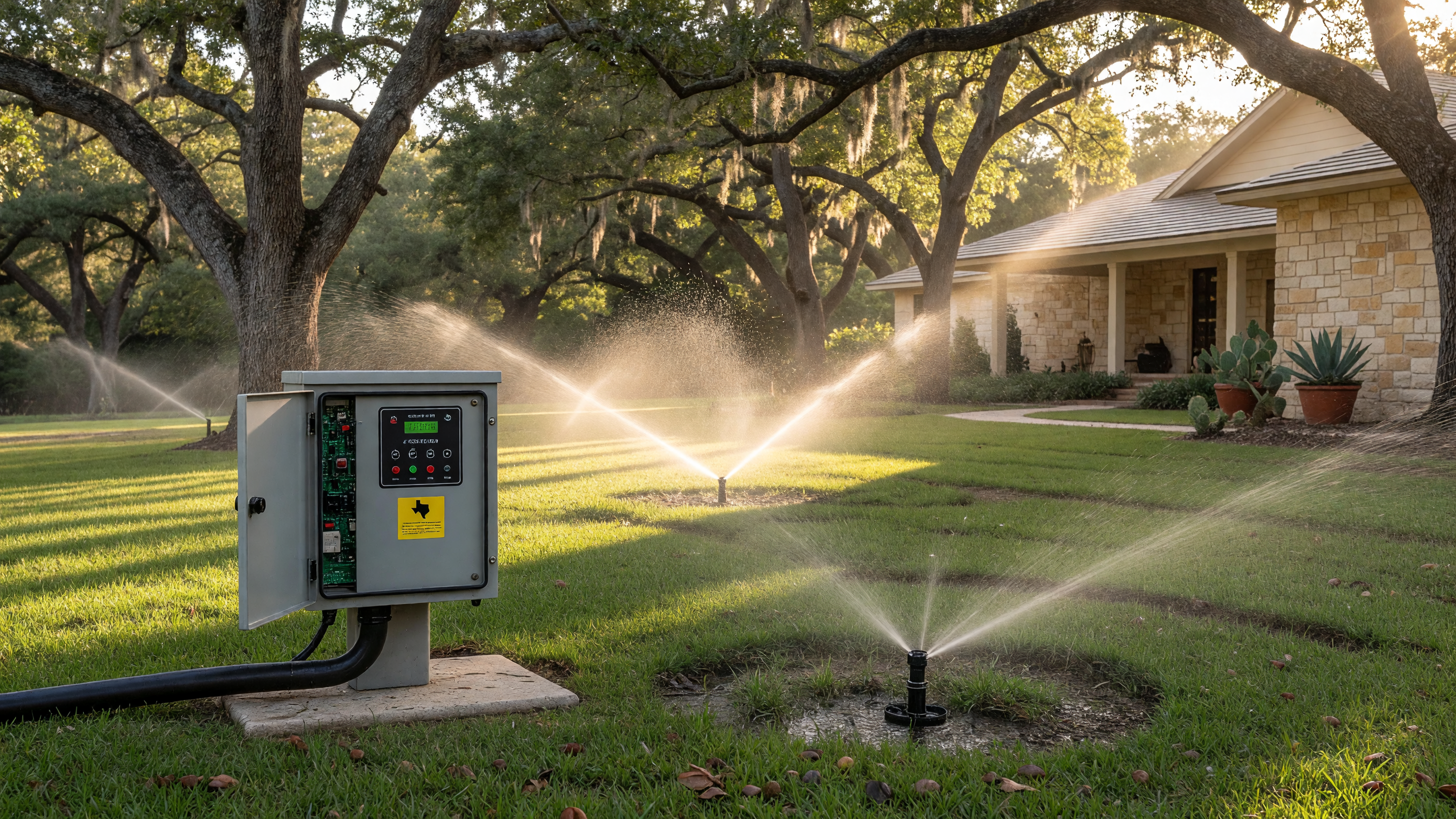
Most properties in the Texas Hill Country are not connected to a municipal sewer system. Instead, they rely on on-site sewage facilities (OSSFs), and in this region, the standard is the Texas Hill Country well and septic aerobic septic systems system. Understanding the basics of aerobic septic systems Hill Country Texas before you buy can save you from an expensive surprise.
Aerobic versus conventional: the key difference
A conventional (anaerobic) septic system relies on bacteria that thrive without oxygen to break down waste in a sealed tank, then disperses effluent into a drain field where soil completes the treatment. These systems work well in deep, well-drained soils, which the Hill Country often does not have.
An aerobic system adds oxygen to the treatment process via an air pump, creating conditions for aerobic bacteria that break down waste faster and more completely. The treated effluent is then sprayed onto the lawn through sprinkler heads, which is why you see those small, circular spray heads around Hill Country homes.
Texas Commission on Environmental Quality (TCEQ) regulations mandate aerobic systems in areas where soil conditions, lot size, or proximity to water features make conventional systems unsuitable. In Kendall County, aerobic systems are now the default for new construction.
Maintenance requirements and costs
Aerobic systems require a maintenance contract with a licensed provider. In Texas, this is not optional, it is a regulatory requirement under TCEQ rules. The provider inspects the system quarterly (or at minimum every four months), checks the air pump, chlorine levels, spray heads, and sludge accumulation.
Annual maintenance contracts typically run $300 to $600 per year. Plan for an air pump replacement every 5 to 7 years at a cost of $400 to $800. Chlorine tablets (calcium hypochlorite) cost approximately $50 to $100 per year depending on usage.
What to inspect before buying
During your option period, have the system inspected by a licensed OSSF inspector, not the same company that holds the maintenance contract, to avoid conflicts of interest. The inspector should check the air pump function, spray head coverage, sludge level in the tank, and the condition of the chlorine feeder. A full pump-out and inspection typically costs $500 to $800.
Ask for the maintenance records. A well-maintained system will have quarterly inspection reports. Gaps in the record are a red flag, they often indicate deferred maintenance or an owner who did not understand the commitment.
Replacement costs
A full aerobic system replacement runs $8,000 to $15,000 depending on system size, site conditions, and whether the existing spray field can be reused. The permitting process through the county typically takes 2 to 4 weeks. If you are looking at a property where the system is approaching 15 to 20 years of age, factor replacement into your offer.
Bottom line
An aerobic septic system is not a deal-breaker, it is the standard in the Hill Country. But it is a system you need to understand and budget for. Factor $500 to $800 per year into your ongoing ownership costs for maintenance and consumables, and keep a reserve for the eventual air pump and system replacement. This is part of the trade-off for living on acreage outside the municipal grid.
Published: June 3, 2026
Updated June 27, 2026