
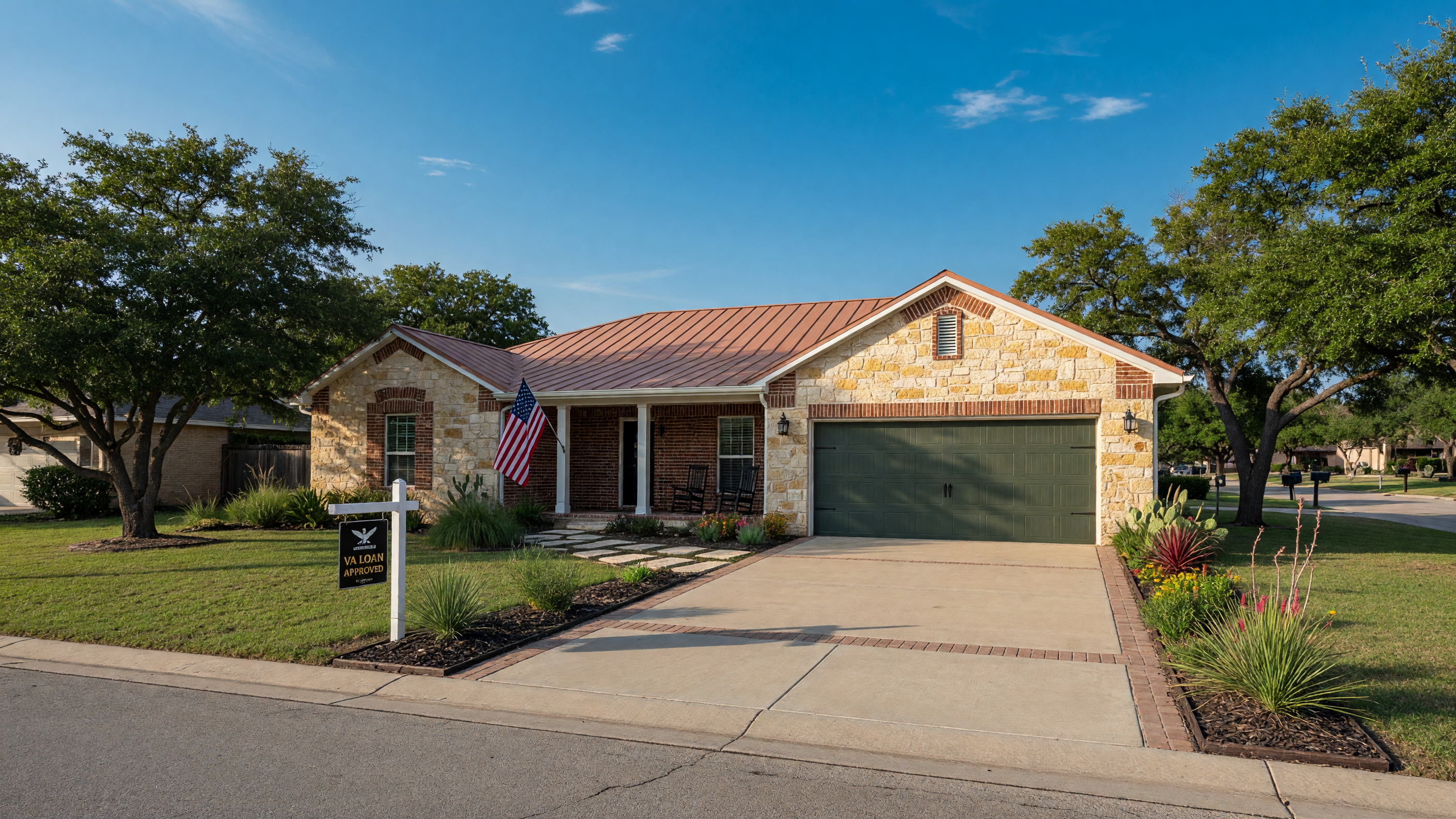
VA home loans are one of the most valuable benefits available to veterans, active-duty service members, and qualifying surviving spouses. In the Texas Hill Country, they open doors that conventional financing sometimes cannot, but the property itself has to meet VA standards. Here is what that means in practice.
The core benefit: zero down, no PMI
A VA loan allows qualified borrowers to finance 100 percent of the purchase price with no private mortgage insurance (PMI). On a $500,000 purchase, that eliminates a $300 to $400 monthly PMI charge compared to a conventional loan with less than 20 percent down. Over five years, that saves $18,000 to $24,000. The VA funding fee, a one-time charge that varies by service history and down payment amount, is the trade-off, and it can be financed into the loan.
VA property requirements and Hill Country realities
The VA Minimum Property Requirements (MPRs) ensure the home is safe, structurally sound, and sanitary. In the Hill Country, three specific MPRs create friction: water supply, sewage disposal, and pest inspections.
For water supply, the VA requires a safe, potable water source. A private well must pass a water quality test, typically coliform bacteria, nitrates, and lead. If the well fails, the seller must remediate or the deal cannot close with VA financing.
For sewage, the septic system must be functional and compliant with local health authority requirements. The VA appraiser will note any obvious deficiencies, and the lender may require a septic inspection. If the system is failing, it must be repaired or replaced, which can create negotiation friction in a seller's market.
For pest inspections, the VA requires a wood-destroying insect inspection in Texas. Termites are common in the Hill Country. A clean report is standard; a report showing active infestation requires treatment before closing.
Texas property tax exemptions for veterans
Texas offers several property tax exemptions for veterans that stack on top of the VA loan benefit. Disabled veterans with a VA disability rating of 10 to 90 percent receive a reduction in their home's assessed value, $5,000 to $12,000 depending on the rating. Veterans with a 100 percent disability rating, or who are individually unemployable, may qualify for a total exemption from property taxes on their primary residence.
The surviving spouse of a disabled veteran may also qualify for the exemption. These are applied through the county appraisal district, Kendall County, Bexar County, or Comal County, depending on the property location, and require filing the appropriate form with supporting documentation.
Bottom line
VA loans work in the Hill Country, but the property has to pass MPR standards. Wells, septic systems, and termite inspections are the most common friction points. If you are a veteran or active-duty buyer, find a lender who has closed VA loans on acreage properties, not just VA loans in general. The property type matters as much as the financing type, and both have to work together.
Published: April 22, 2026
Updated June 27, 2026