
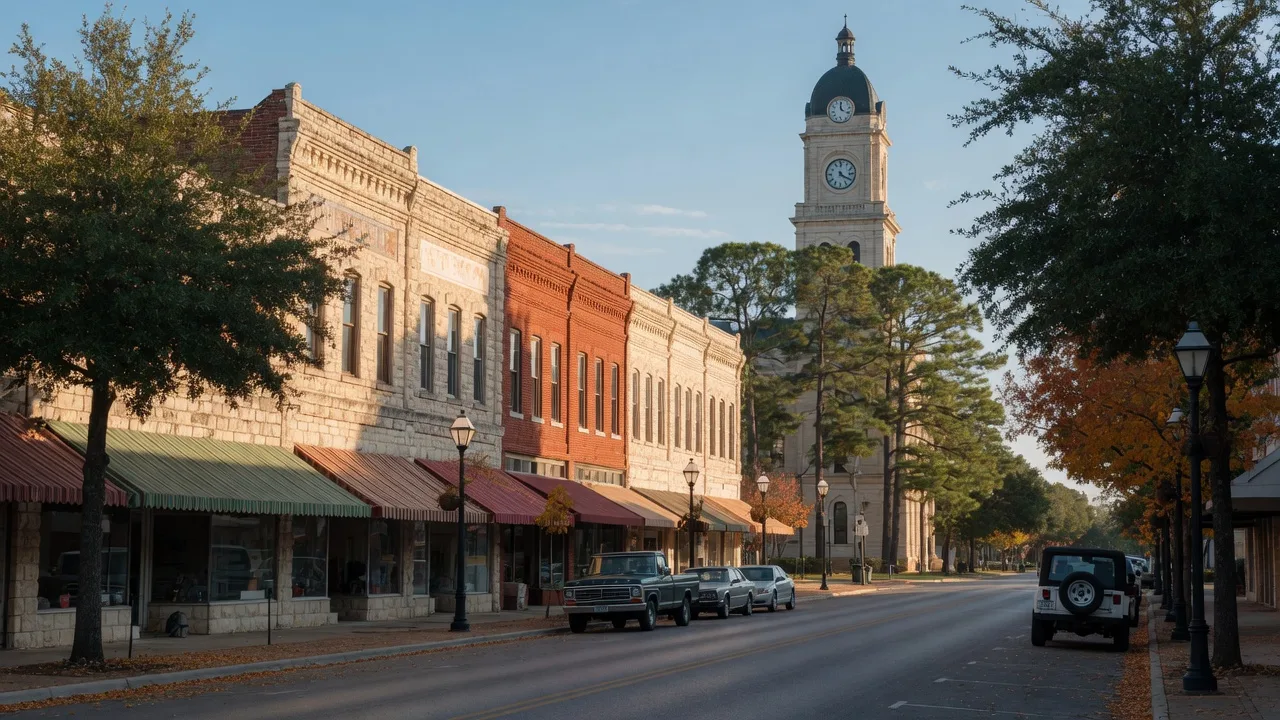
Bastrop, Texas, is the county seat of Bastrop County, sitting roughly 30 miles southeast of Austin on the Colorado River at the junction of State Highways 71, 21, and 95 [1][2]. The site was first occupied in 1804, when the Spanish built a fort called Puesta del Colorado at the river crossing of the Old San Antonio Road, and the town itself was established in 1832 as Mina, which makes it one of the oldest towns in Texas [1][2]. It was incorporated in 1837 and renamed in honor of the Baron de Bastrop, the Dutch-born land agent who backed Stephen F. Austin's colonization efforts [1][2]. The population has grown quickly with Austin's expansion, from about 5,340 in 2000 to roughly 9,700 at the 2020 census and approximately 10,500 by 2023 [1]. From Boerne, the drive is roughly 105 to 111 miles, about an hour and 50 minutes to two hours by the fastest mapped routes [20][21].
What sets Bastrop apart from every other town in this series is the Lost Pines. This is a roughly 13-mile belt of loblolly pine separated by about 100 miles from the main East Texas Piney Woods, and it is the westernmost stand of loblolly pine in the United States [3][4]. Spanish explorer Domingo Terán de los Ríos first described it in 1691, and the forest covers more than 6,000 acres in the immediate Bastrop area, with the broader Lost Pines ecosystem spanning more than 75,000 acres across parts of five counties [3][4]. The trees are thought to be remnants of a much larger pine forest that shrank during the last glacial period [3][4]. For a visitor from the limestone and juniper country around Boerne, driving into Bastrop is a genuine change of scenery: sandy soil, pine duff, and tall loblolly crowns where the Hill Country's live oaks and cedars usually are.
Bastrop pairs that one-of-a-kind forest with a genuinely old Texas downtown, a state park built by the Civilian Conservation Corps, and a working river at the center of town. It is also the site of the most destructive wildfire in Texas history, the 2011 Bastrop County Complex Fire, and watching how the town and the forest have recovered is part of what makes the visit meaningful [8][9]. Because Bastrop sits at the end of the longest drive in the historic towns category, it rewards a full planned day, and it pairs naturally with San Marcos on the way out and Lockhart on the way home [22][23].
How to get there from Boerne
The standard route runs east on the interstate corridor and then northeast along the old San Antonio Road. Head east from Boerne on I-10 toward San Antonio, then take I-35 north through the city to San Marcos, where Texas State Highway 21 begins its run east [22]. TX-21 follows the historic Old San Antonio Road corridor through the communities of Uhland, Niederwald, and Mustang Ridge, where it meets US-183, before crossing into Bastrop County and joining US-290 just west of town [22][23]. Most mapping services show about 105 to 111 miles and an hour and 50 minutes to two hours door to door, and the destination-list convention used in this series rounds the trip to roughly 105 miles [20][21].
Route via I-10, I-35, and Texas 21 (recommended): From downtown Boerne, take I-10 east about 30 miles into San Antonio, then I-35 north through the city to San Marcos, roughly 35 miles of freeway [20]. At San Marcos, exit onto Texas State Highway 21 east and follow it through Uhland, Niederwald, and Mustang Ridge, about 45 miles, into Bastrop [22][23]. The interstate legs are fast and divided; the TX-21 leg is two-lane through farm and ranch country and is deer country after dark, so the drive is best done in daylight [22]. Parking in downtown Bastrop is free and easy around Main Street and at Fisherman's Park [14].
Notes on the drive: This is the longest drive in the historic towns category, so treat it as a full day rather than a spontaneous afternoon. There is no practical faster alternative from Boerne. The route passes directly through San Marcos, which makes a natural midway stop, and the Mustang Ridge junction with US-183 puts Lockhart about 15 miles to the south if you want to add barbecue on the way home [22][23]. If a river paddle or a state-park afternoon is part of the plan, expect a late return, so leave with a full tank and keep the headlights on for wildlife on TX-21 [22].
| Starting Point | Distance | Drive Time |
|---|---|---|
| Downtown Boerne to Bastrop | ~105-111 miles | ~1 hr 50 min - 2 hrs |
| Boerne to I-35 (via I-10 East) | ~30 miles | ~35 min |
| I-35 North to San Marcos (midway) | ~35 miles | ~40 min |
| San Marcos to Bastrop (TX-21 East) | ~45 miles | ~50 min |
| Mustang Ridge junction to Lockhart (US-183 South) | ~15 miles | ~20 min |
Distances are approximate and based on the I-10 to I-35 to TX-21 route [20][21]. Segment lengths are rounded from the corridor total; the TX-21 leg is two-lane crossing country, so plan the return for daylight whenever possible [22].
What to see and do
Main Street Historic District
The heart of Bastrop is its Main Street Historic District, which the town's visitors bureau bills as "the most historic small town in Texas" [14]. The district holds more than 130 historic structures, is listed on the National Register of Historic Places with roughly 131 contributing properties, and is a National Trust for Historic Preservation Distinctive Destination [14][15]. It is a working downtown rather than a stage-set: about three dozen locally owned shops, galleries, and restaurants line Main Street, with public sculpture and a monthly First Friday Art Walk [14][18]. The Bastrop County Museum and Visitor Center at 904 Main Street, housed in a 1930s former fire and police station and run by the Bastrop County Historical Society, is the natural first stop for orientation [16]. The Bastrop Opera House, a restored theater dating to the 1880s, hosts live shows year-round and is worth checking for a performance if you plan ahead [15].
The Colorado River and the riverwalk
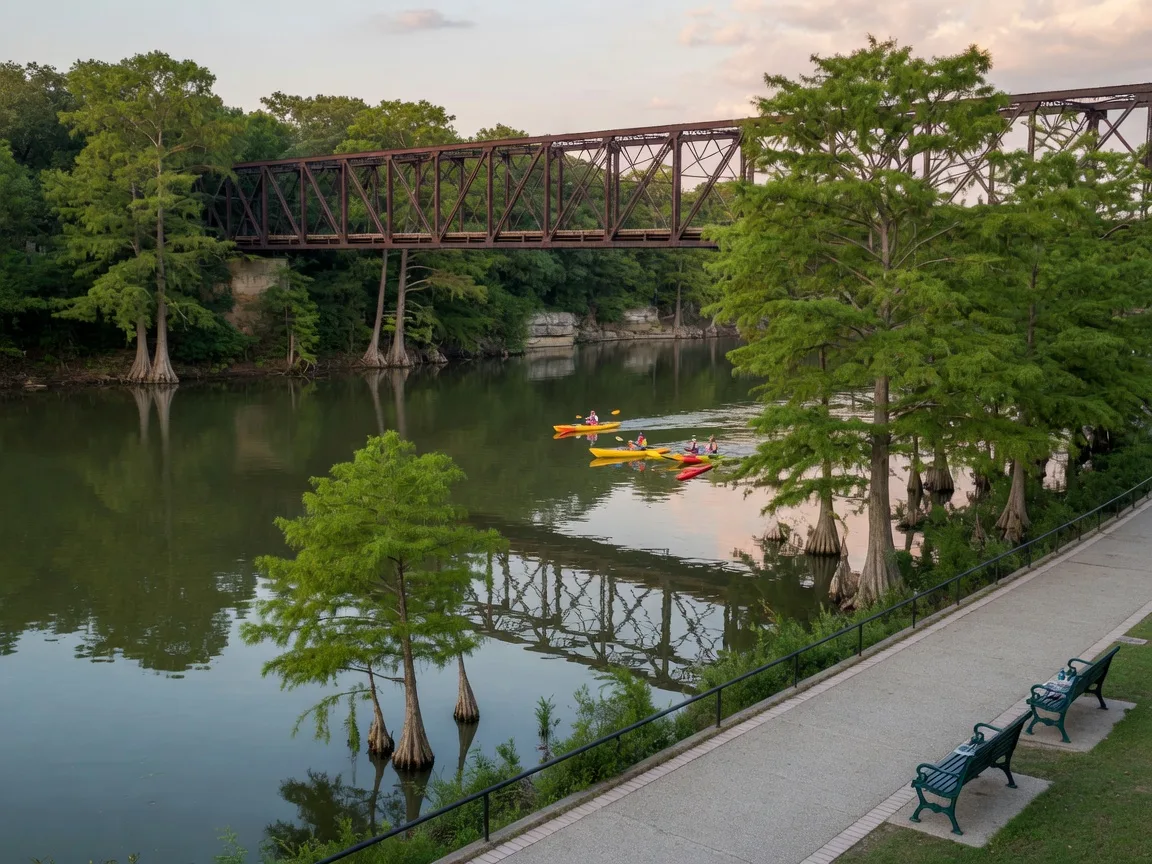
Bastrop is one of the few towns in this series with a real river running through its downtown. The Colorado River flows past the historic district, and the June Hill Pape Riverwalk along the bank is the town's signature public space, with the Old Iron Bridge and Fisherman's Park nearby [14][15]. In warm months the river is the center of activity: kayakers, canoeists, paddleboarders, and tubers put in near historic downtown and Fisherman's Park through local outfitters including Bastrop River Company and Rising Phoenix Adventures [14][15]. The river is calm and broad through town, which makes it a beginner-friendly paddle, and the riverwalk is the best free view of the town's relationship to the water [14][15].
Bastrop State Park and the Lost Pines
A short drive from downtown, Bastrop State Park protects the heart of the Lost Pines and is the reason most visitors make the trip [5]. The park is open daily from 6:00 AM to 10:00 PM, with day-use admission of $5 per adult and free entry for children 12 and under, and reservations are recommended because the park often reaches capacity on weekends [6]. The 2011 fire burned about 96 percent of the park's roughly 6,565 acres, and the recovery is the park's defining story: millions of loblolly pines have been replanted, and the forest is in a decades-long restoration phase [8][9]. Today the park offers a nine-hole golf course built by the CCC, a swimming pool, fishing at Lake Mina, and a trail network that includes the 8.4-mile Lost Pines Loop, the easy Tree Army Trails up to 4.5 miles, and the short Piney Hill Spur [5][7].
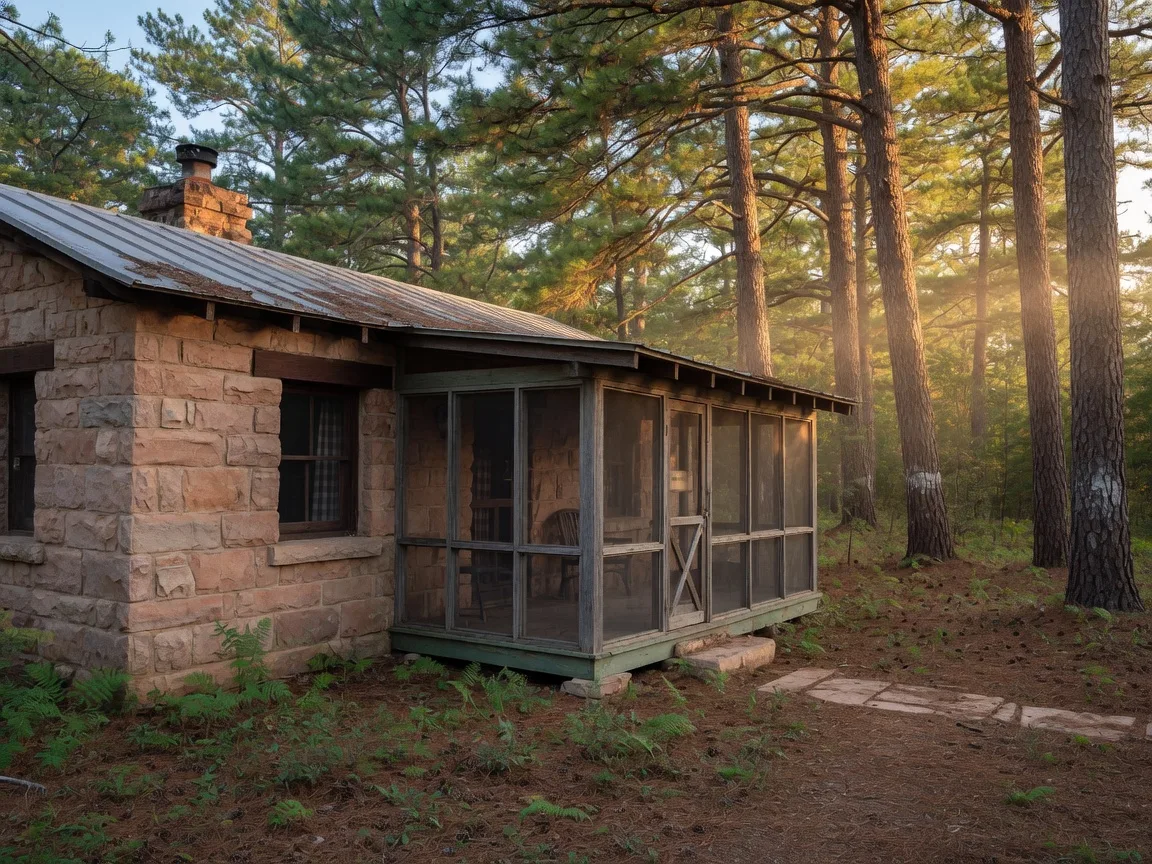
The park also preserves 12 sandstone-and-timber cabins built by the Civilian Conservation Corps in the 1930s, along with campsites from walk-in tent sites to full-hookup RV sites [5][6]. For a day trip, the hiking and the scenic drive are the main draws, but the cabins are worth knowing about for anyone considering an overnight [5].
The Park Road 1 scenic drive and Buescher State Park
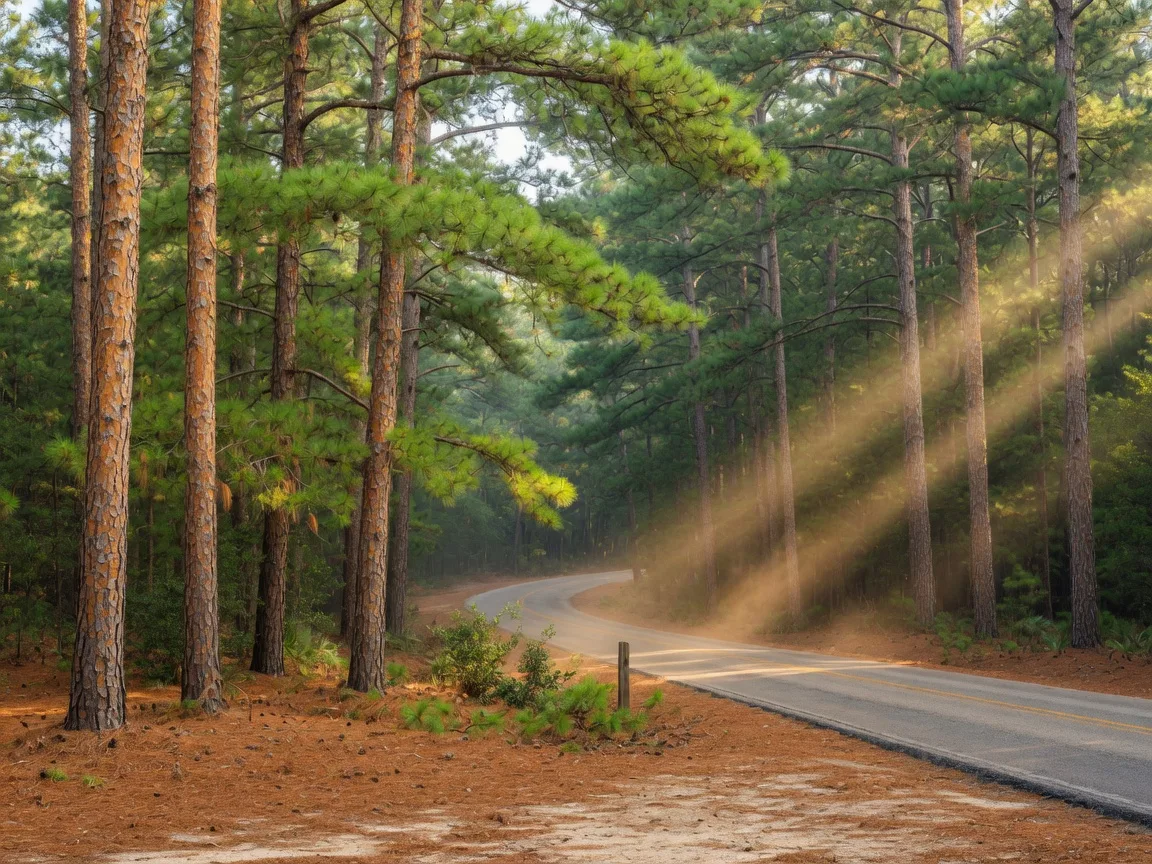
The most distinctive way to see the Lost Pines is the Park Road 1 scenic drive. The 12-mile segment known as Park Road 1C connects Bastrop State Park to Buescher State Park, winding through recovering pine forest at a 30-mph pace with bikes and cars sharing the road [10][11]. The route was first drafted by the Civilian Conservation Corps in 1933 as a scenic drive between the two parks and was designated in 1937 as one of Texas' original Park Roads [11]. Buescher State Park, just north of Smithville and about 1,000 acres, is the quieter sibling, with hiking, mountain biking, fishing in a stocked lake, and non-motorized boating [10]. Together the two parks and the drive between them give a full picture of the Lost Pines ecosystem [10][11].
Lake Bastrop and McKinney Roughs
For water beyond the river, Lake Bastrop is a 900-acre reservoir managed by the Lower Colorado River Authority, with the North Shore Park on FM 1441 offering a fishing pier, boat ramp, swim areas, picnic grounds, and camping [12]. A 9.2-mile trailway connects the north and south shore parks [12]. Farther afield, McKinney Roughs Nature Park is a 1,140-acre LCRA day-use park on the Colorado River where four ecoregions meet, with roughly 18 miles of multi-use trails for hiking, mountain biking, and equestrian use, plus kayaking and a zipline course [13]. For a single day from Boerne, Lake Bastrop is the practical add-on; McKinney Roughs is better saved for a longer visit [12][13].
Downtown food and drink
Bastrop's Main Street has a solid, locally owned food scene that does not depend on a single famous institution. Maxine's Cafe and Bakery at 905 Main Street is a longtime anchor for breakfast and lunch, and Tough Cookie Bakery at 1003 Main Street covers coffee and pastries [24][25]. Old Town Restaurant and Bar at 931 Main Street is a full-service spot with live music, and Anita's Mexican Restaurant at 1004 Main Street is a dependable local pick [26][27]. For a craft beer after a day on the river, 602 Brewing Company operates downtown [14].
Practical tips: hours, fees, and timing
Bastrop's main attractions are inexpensive, and a full day can cover the Main Street district, the riverwalk, and Bastrop State Park for the cost of a meal and one admission ticket [6][14]. The two planning considerations are the length of the drive from Boerne and the seasonal schedule: the state park is open year-round, but the river is at its best in warm months and the town's signature holiday events run in December [6][17].
| Attraction | Hours | Admission |
|---|---|---|
| Main Street Historic District | Open, walkable anytime | Free |
| Bastrop County Museum & Visitor Center | Regular visitor-center hours | Free, donations welcome |
| Colorado River kayak/canoe outfitters | Seasonal, daylight hours | Rental rates vary by outfitter |
| Bastrop State Park | Daily 6 AM - 10 PM | $5 adult; free 12 and under |
| Park Road 1 scenic drive | Open, 30 mph | Free (park entry applies) |
| Lake Bastrop North Shore Park | Day-use hours vary by season | Day-use fee applies |
Hours and pricing may change. Confirm current conditions before visiting, especially river-outfitter schedules, state-park capacity, and holiday-event dates [6][12][17].
Best time to visit: Spring and fall offer the most comfortable weather for walking Main Street, hiking the Lost Pines trails, and paddling the river [5][14]. December is the signature month for the town itself, when Lost Pines Christmas fills the calendar with the River of Lights, a display of more than 100 light installations along the Colorado River riverwalk that opens the Friday after Thanksgiving, plus a tree lighting and a lighted parade [17]. May brings the Bastrop Music Festival, and February and March bring the medieval-themed Sherwood Forest Faire [18]. Summer is hot but the river takes over, with tubing and paddling at their peak [14][15].
Suggested itinerary for a full day from Boerne:
- Morning (8:00 AM - 10:30 AM): Depart Boerne on I-10 east to I-35 north, with a midway coffee stop in San Marcos. Continue on TX-21 east into Bastrop and walk the Main Street Historic District, starting at the Bastrop County Museum and Visitor Center at 904 Main Street [14][16].
- Mid-morning (10:30 AM - 12:00 PM): Walk the June Hill Pape Riverwalk along the Colorado River, cross or photograph the Old Iron Bridge, and browse the shops on Main Street [14][15].
- Midday (12:00 PM - 1:30 PM): Lunch on Main Street. Maxine's Cafe and Bakery at 905 Main Street is a longtime local anchor, and Tough Cookie Bakery at 1003 Main Street covers coffee and sweets [24][25].
- Afternoon (1:30 PM - 4:30 PM): Drive to Bastrop State Park for the Lost Pines. Hike the Tree Army Trails or part of the Lost Pines Loop, then take the Park Road 1 scenic drive south toward Buescher State Park for the full forest view [5][7][11].
- Late afternoon (4:30 PM - 6:00 PM): If the weather is warm, add a short paddle on the Colorado River near Fisherman's Park, or detour to Lake Bastrop North Shore Park for the fishing pier and lake views [12][14].
- Evening: Return to Boerne the way you came, or detour south on US-183 from Mustang Ridge to Lockhart for barbecue on the way home, watching for deer on TX-21 after dark [22][23].
Annual events in Bastrop
Bastrop's signature event is Lost Pines Christmas in December, anchored by the River of Lights along the Colorado River riverwalk, which opens the Friday after Thanksgiving and runs through the holiday season with a tree lighting and a lighted parade [17]. The Bastrop Music Festival lands in May, Sherwood Forest Faire runs February through March, and the summer brings the Bastrop Patriotic Festival in July and the Bastrop Homecoming and Rodeo in late summer [18]. The monthly First Friday Art Walk on Main Street is the easiest recurring event to catch on a visit [18].
Why Bastrop matters if you are considering the Hill Country
Bastrop matters to anyone evaluating a move to the Hill Country because it is the region's clearest lesson in wildfire risk, and in how a community recovers from it. The 2011 Bastrop County Complex Fire, which ignited on September 4, 2011, was the most destructive wildfire in Texas history [9]. It burned roughly 32,000 to 34,000 acres of the Lost Pines ecosystem, including 95 to 96 percent of Bastrop State Park, destroyed more than 1,600 homes, and caused hundreds of millions of dollars in insured losses [8][9]. The recovery has been long and deliberate: millions of loblolly pines have been replanted, and officials describe the forest as being in a restoration phase that will last decades [8]. For a buyer weighing Boerne, Fair Oaks Ranch, or the surrounding Hill Country, Bastrop is the concrete example of why wildfire risk, defensible space, and insurance questions deserve a straight answer before you commit to a property [8][9].
Bastrop also shows what happens when a small Texas town absorbs metro growth. Its population more than doubled between 2000 and 2023, from about 5,340 to roughly 10,500, as Austin's expansion reached the Colorado River corridor [1]. That is the same growth dynamic reshaping communities closer to San Antonio, and Bastrop is a useful, finished example of how a historic downtown can absorb it: the growth has brought new restaurants and events, while the National Register district keeps the town's character intact [1][14]. The Lost Pines themselves are a reminder that the "Hill Country" is not one ecosystem. The eastern edge of the region is pine-oak forest on sandy soil rather than limestone and juniper, and the water story shifts too, from aquifer-fed springs to the Colorado River and the LCRA reservoirs [3][4][12].
And it is simply a full, satisfying day. The Main Street district is one of the most intact historic downtowns in Texas, the state park offers a forest found nowhere else within a day's drive of Boerne, and the river makes the town feel alive in a way a courthouse square alone cannot [5][14]. Visitors who want an old Texas town, a real forest, and a working river will find all three in Bastrop [1][5][14].
Pairs well with
- San Marcos (Lakes & Rivers) : The route from Boerne passes directly through San Marcos on I-35, making it the natural midway stop. The San Marcos River, the outlet malls, and the spring-fed water make it a good bookend to Bastrop's river day, and it breaks up the drive in both directions [22].
- Lockhart (Historic Towns & Villages) : About 15 miles south of the Mustang Ridge junction on US-183, the official Barbecue Capital of Texas is the classic way to end a Bastrop day. The Big Four smokehouses and the 1894 courthouse square make it a natural two-town loop on the way home [22][23].
- Luling (Historic Towns & Villages) : Farther south on US-183 past Lockhart, the Watermelon Capital and its historic Zedler Mill on the San Marcos River extend the loop for visitors who want a third town on the same corridor [23].
| Season | What Bastrop Offers | Why Go |
|---|---|---|
| Spring (Mar-May) | Sherwood Forest Faire (Feb-Mar), Bastrop Music Festival (May), best hiking weather | Comfortable temperatures for the Lost Pines trails and the riverwalk [5][18] |
| Summer (Jun-Aug) | River tubing and paddling, Patriotic Festival (Jul), Homecoming and Rodeo | The Colorado River is the center of town; long evenings for a paddle [14][18] |
| Fall (Sep-Nov) | Comfortable hiking and riverwalk walks, First Friday Art Walks | Best walking weather and a quieter downtown [5][18] |
| Winter (Dec-Feb) | Lost Pines Christmas, River of Lights along the riverwalk | The signature holiday season; more than 100 light displays on the river [17] |
A seasonal glance at Bastrop. Spring and fall are for the forest and the riverwalk, summer belongs to the river, and December is the town's signature holiday month. The table pairs each season with the reason it is worth the drive.
Frequently asked questions
Is Bastrop worth the drive from Boerne?
Yes, for visitors who want a genuinely old Texas town and a forest found nowhere else. The drive is about two hours each way, so treat it as a full day. Bastrop delivers a 130-building National Register Main Street, the Lost Pines at Bastrop State Park, and the Colorado River through downtown, and it pairs naturally with San Marcos and Lockhart on the same corridor [5][14][22].
What does Bastrop State Park cost and when is it open?
Day-use admission is $5 per adult, with children 12 and under free, and the park is open daily from 6:00 AM to 10:00 PM. Reservations are recommended because the park often reaches capacity on weekends, and a Texas State Parks Pass covers entry. The park offers hiking, a nine-hole CCC-built golf course, a swimming pool, fishing, and the Park Road 1 scenic drive [6][7][11].
Did the 2011 fire destroy the Lost Pines? Can you still see the forest?
The 2011 Bastrop County Complex Fire was the most destructive wildfire in Texas history, burning about 32,000 to 34,000 acres and 95 to 96 percent of Bastrop State Park. Millions of loblolly pines have been replanted since, and the forest is in a decades-long restoration phase. Visitors today see a recovering forest with young pines, mature survivors, and prescribed burns keeping the understory healthy [8][9].
When is the best time to visit Bastrop?
Spring and fall offer the most comfortable weather for hiking the Lost Pines and walking Main Street. December is the town's signature month, when Lost Pines Christmas fills the calendar with the River of Lights along the Colorado River riverwalk. Summer is hot but the river takes over with tubing and paddling [5][14][17].
What pairs well with a Bastrop day trip?
San Marcos sits directly on the route and makes a natural midway stop for the river and the outlets. Lockhart, about 15 miles south of the Mustang Ridge junction on US-183, is the classic barbecue end to the day. Luling, farther south on US-183, extends the loop with its historic Zedler Mill [22][23].
Sources
- [1] Bastrop, Texas : Handbook of Texas, TSHA. tshaonline.org/handbook/entries/bastrop-texas
- [2] Bastrop, Texas : Wikipedia. en.wikipedia.org/wiki/Bastrop,_Texas
- [3] Lost Pines Forest : Wikipedia. en.wikipedia.org/wiki/Lost_Pines_Forest
- [4] Lost Pines Forest : Handbook of Texas, TSHA. tshaonline.org/handbook/entries/lost-pines-forest
- [5] Bastrop State Park : Texas Parks & Wildlife. tpwd.texas.gov/state-parks/bastrop
- [6] Bastrop State Park Entrance Fees : Texas Parks & Wildlife. tpwd.texas.gov/state-parks/bastrop/fees-facilities/entrance-fees/
- [7] Bastrop State Park Trails : Texas Parks & Wildlife. tpwd.texas.gov/state-parks/bastrop/trails-info
- [8] Bastrop State Park Life After Wildfire : Texas Parks & Wildlife. tpwd.texas.gov/state-parks/bastrop/life-after-wildfire/
- [9] Bastrop County Complex Fire : Wikipedia. en.wikipedia.org/wiki/Bastrop_County_Complex_Fire
- [10] Buescher State Park : Texas Parks & Wildlife. tpwd.texas.gov/state-parks/buescher
- [11] Texas Park Road 1 : Wikipedia. en.wikipedia.org/wiki/Texas_Park_Road_1
- [12] Lake Bastrop North Shore Park : LCRA Parks. lcraparks.com/parks/lake-bastrop-north-shore-park
- [13] McKinney Roughs Nature Park : LCRA Parks. lcraparks.com/parks/mckinney-roughs-nature-park
- [14] Downtown Bastrop : Discover Bastrop. discoverbastroptx.org/things-to-do/downtown-bastrop/
- [15] Bastrop : Tour Texas. tourtexas.com/destinations/Bastrop
- [16] Bastrop County Museum and Visitor Center : Bastrop County Historical Society. bastropcountyhistoricalsociety.com
- [17] Lost Pines Christmas : Visit Bastrop. visitbastrop.com/lost-pines-christmas/
- [18] Bastrop Events and Activities : Discover Bastrop. discoverbastroptx.org/events/
- [19] Bastrop History : Discover Bastrop. discoverbastroptx.org/plan/history/
- [20] Distance from Boerne, TX to Bastrop, TX : Distance-Cities. distance-cities.com/distance-boerne-tx-to-bastrop-tx
- [21] How Far Is Bastrop from Boerne : Trippy. trippy.com/distance/Boerne-to-Bastrop-TX
- [22] Texas State Highway 21 : Wikipedia. en.wikipedia.org/wiki/Texas_State_Highway_21
- [23] Lockhart, Texas : Wikipedia. en.wikipedia.org/wiki/Lockhart,_Texas
- [24] Maxine's Cafe and Bakery : Bastrop, Texas. maxinescafe.com
- [25] Tough Cookie Bakery : Bastrop, Texas. toughcookiebakery.com
- [26] Old Town Restaurant and Bar : Bastrop, Texas. oldtownbastroptx.com
- [27] Anita's Mexican Restaurant : Bastrop, Texas. anitasbastrop.com
Published September 29, 2026
Updated September 29, 2026