
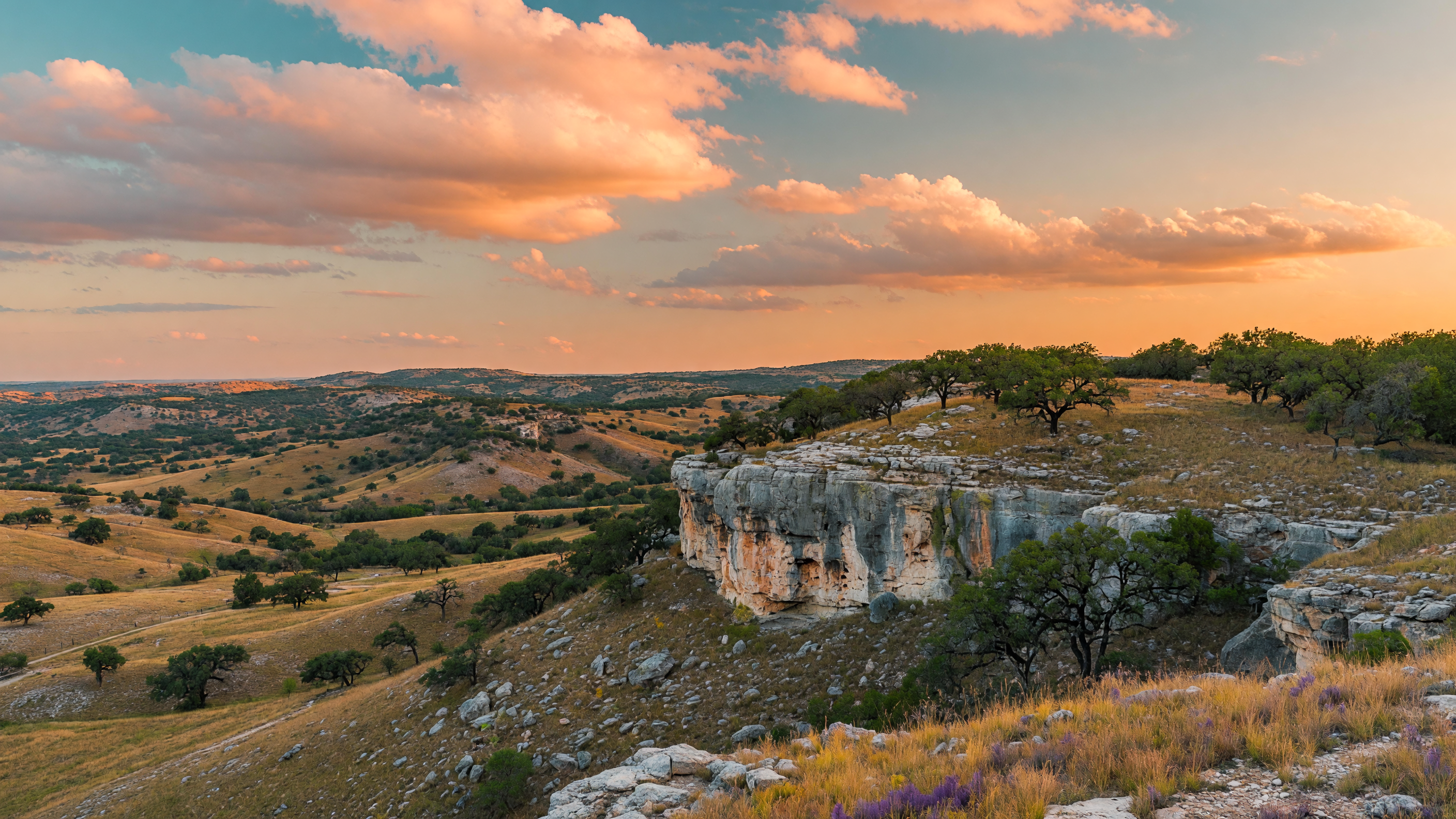
If you are evaluating the Hill Country as a place to live — or you already live here and want to spend a Saturday doing something that actually teaches you about the terrain under your feet — Cascade Caverns is one of those places that earns a visit. It sits about four miles south of downtown Boerne, tucked into the limestone karst landscape that defines this entire region. And it has been doing that since 1932, making it the oldest publicly toured cave in Texas [1][2].
This is not a theme-park attraction with animatronics and gift-shop gimmicks. It is a genuine limestone solutional cave, 125 million years in the making, with five major rooms, a 100-foot underground waterfall, and a constant internal temperature of 63°F regardless of what August is doing to the surface [1][3]. For anyone moving to the Hill Country from a climate or landscape that looks nothing like this, it is a direct, physical introduction to the geology that shapes everything here — from well water and septic systems to the rolling terrain that makes the real estate what it is.
What Cascade Caverns actually is
Cascade Caverns is a limestone solutional cave system located at 226 Cascade Caverns Road, Boerne, TX 78015 [1]. The cave extends roughly 1,670 feet (about a third of a mile) into the hillside and descends to approximately 140 feet below the surface [1][4]. The entire system sits within 103 acres of native Hill Country habitat — live oak, cedar, and limestone grassland typical of the Edwards Plateau [1].
The cave was originally discovered by the Lipan Apache people in the 1700s, based on artifacts and a cave fireplace found near the entrance [1][4]. It was rediscovered in the 1840s by Kendall County youth — early settlers who, like teenagers in every era, carved their initials into stalactites. The cave was known as "Hester's Cave" after Dr. Hester acquired the property in 1875 [4]. It opened to the public as a guided tour attraction in 1932, making it the oldest commercial cave tour in the state [1][2].
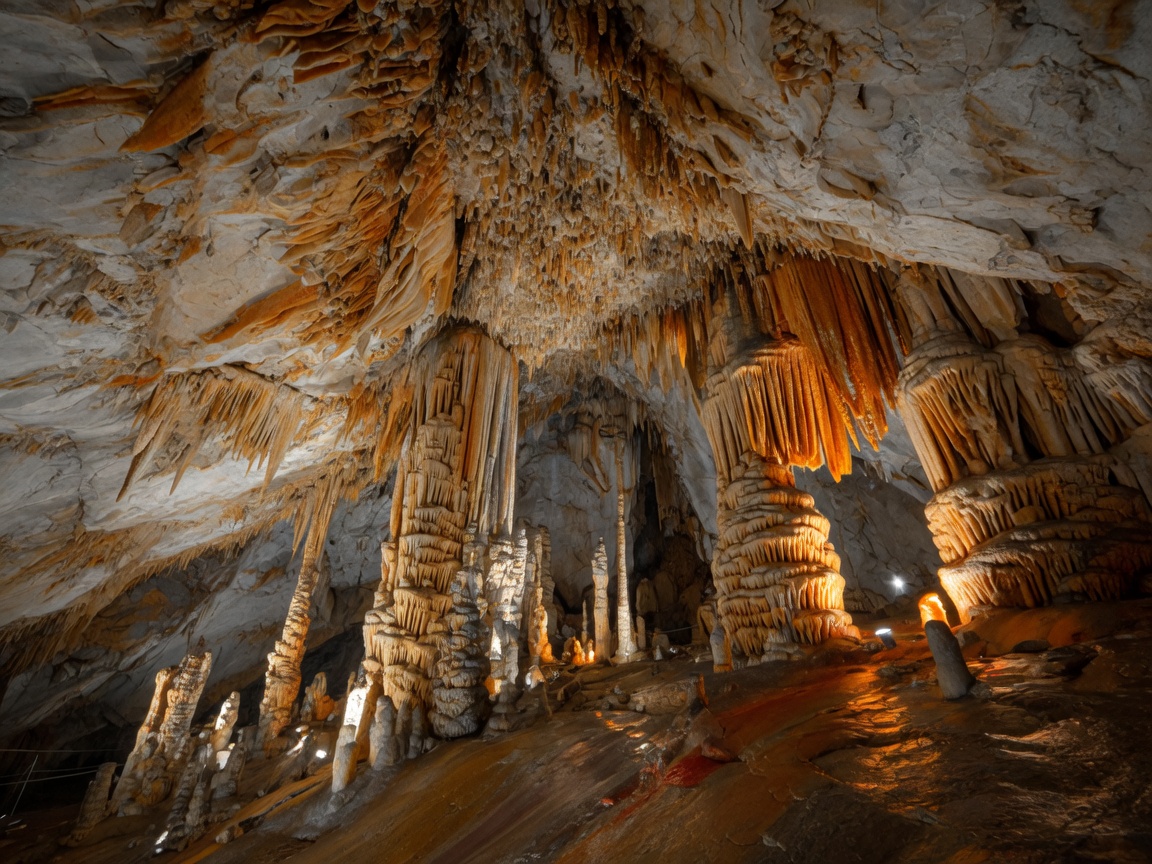
For context on the geology: the limestone that forms this cave was deposited during the Early Cretaceous period, roughly 125 million years ago, when a shallow inland sea covered much of central Texas [4][5]. Water slowly dissolved the calcium carbonate in the limestone, carving out the passages, rooms, and vertical shafts that visitors walk through today. The minerals in the water — calcium, magnesium, and iron oxide — deposited the stalactites, stalagmites, flowstone, and dripstone formations that fill the cave [4]. This is the same geological process that creates the karst terrain across the Hill Country, the same terrain that determines where wells go, how water moves underground, and why septic systems behave the way they do in this region.
What you will see on the tour
The standard tour is called the DownUnder Tour, and it covers five major rooms across the cave's upper level. It runs every hour on the hour from 10:00 AM to 4:00 PM daily, takes roughly 45 to 60 minutes, and requires a minimum of two people per group [1][2]. Here are the rooms you will walk through:
- Cathedral Room — The signature space. A massive chamber with a ceiling reaching approximately 50 to 70 feet overhead, covered in flowstone cascades and draped formations. This is where most visitors stop and stare for a while. The scale is hard to capture in photos.
- First Room — The coolest room in the cave (even by the cave's 63°F standard), located near the entrance. It sets the tone for what you are about to walk into.
- Imagination Room — Features the "Soda Straw Rainforest," "Diamond Ceiling," and "Hanging Tobacco" formations — descriptive names that actually match what you see. The soda straw formations are thin, hollow stalactites that drip water at their tips, growing fractions of a millimeter per year.
- Lake Room — Home to an underground pool and, significantly, the Cascade Caverns salamander (Eurycea latitans), a species found only in this cave system [3][6]. This is a genuinely rare animal, and the fact that it lives here is a marker of the cave's ecological significance.
- Storm Canyon — A narrow passage with dramatic formations and a sense of the cave's vertical depth. This section leads toward the waterfall viewpoint.
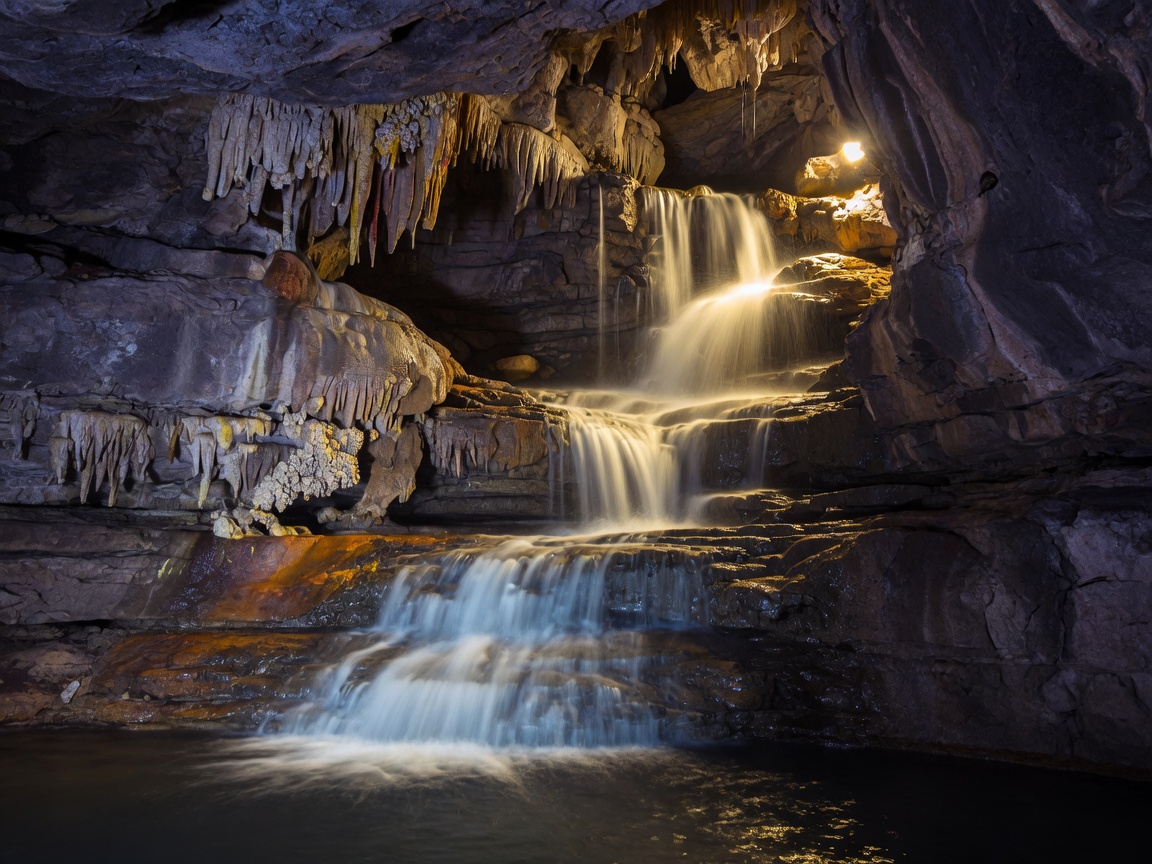
The 100-foot underground waterfall is the tour's centerpiece — widely described as the only underground waterfall in Texas [1][5]. Water cascades down a series of limestone ledges into a subterranean pool, and the sound of it echoes through the surrounding passages in a way that makes the cave feel alive. It is not something you expect to find four miles from a Hill Country town of 13,000 people.
The wildlife you will not see (but should know about)
Cascade Caverns supports a surprisingly diverse cave ecosystem. The Cascade Caverns salamander (Eurycea latitans) is the most notable resident — a troglobitic (cave-adapted) species found nowhere else on Earth [3][6]. It is pale, eyeless, and perfectly adapted to the perpetual dark and constant temperature of the underground lake system.
Other species documented in the cave include tricolored bats (Perimyotis subflavus), cave crickets, cave beetles (Rhadine persephone), amphipods, leopard frogs, and crawfish [3][6]. You are unlikely to encounter most of these on a standard tour — the bats roost in deeper passages, and the salamander stays in the lake — but their presence tells you something important about the health of the underground water systems in this part of the Hill Country.
For anyone considering a property with a well on karst limestone (which is most properties in the Boerne area), understanding that this kind of underground ecosystem exists — and that it depends on clean water moving through limestone — is a useful piece of context. The same aquifer system that feeds this cave feeds the wells that supply homes across Kendall County.
How to get there from Boerne
Cascade Caverns is roughly four miles south of downtown Boerne, about an eight-minute drive via Highway 87 South and Cascade Caverns Road [1]. It is one of the closer destination-quality attractions to the Boerne city center — closer than most state parks, closer than the Fredericksburg wineries, and about the same distance as the Cibolo Center for Conservation on the north side of town.
| Starting Point | Distance | Drive Time |
|---|---|---|
| Downtown Boerne | ~4 miles | ~8 min |
| Fair Oaks Ranch | ~8 miles | ~14 min |
| Cibolo Center for Conservation | ~2 miles | ~5 min |
| Cave Without a Name | ~12 miles | ~20 min |
| San Antonio (I-10 corridor) | ~30 miles | ~35–45 min |
Distances are approximate and based on standard driving routes.
If you are coming from San Antonio, take I-10 West to Boerne, then head south on Highway 87. The caverns entrance is well-signed. Parking is free and ample. The drive from the I-10/Highway 87 interchange is straightforward — no back roads, no gravel, no navigating through neighborhoods.
Tour options and pricing
Cascade Caverns offers three tour experiences, each at a different intensity level and commitment:
The DownUnder Tour (standard guided tour)
This is the one most visitors take. It runs hourly from 10:00 AM to 4:00 PM, covers five rooms across the cave's upper level, and lasts approximately 45 to 60 minutes [1][2]. The terrain is mostly paved or stairs — manageable for most adults and older children. Pricing as of mid-2026 is $24.95 for ages 12 and up, $19.95 for children ages 4 to 11, and free for children under 4 [2]. Groups require a minimum of two people, so if you show up alone, you may need to wait for another party or purchase a second ticket.
The Adventure Tour (spelunking)
This is the serious option. It takes three to four hours and covers the cave's lower system — passages that are not on the standard tour. It is physically demanding: crawling, climbing, and navigating tight spaces. Ages 16 and up only, and advance booking is required [1][2]. If you have someone in your family who wants to understand what real caving looks like (not the tourist version), this is worth scheduling ahead for.
The Flashlight Tour (evening experience)
A 90-minute evening tour where the electric lights stay off and you navigate by flashlight and candlelight [1][2]. This tour runs on a less frequent schedule — check the website or call ahead for availability. It gives you a very different experience of the cave: more intimate, more atmospheric, and considerably more aware of the darkness.
What to bring and practical tips
Clothing: Wear closed-toe shoes with good grip. The cave floor is wet limestone in places, and stairs can be slippery. Jeans or long pants are advisable — the cave is 63°F, and while that feels refreshing in August, it can feel cold in January [1]. A light jacket or sweater is a good idea regardless of season.
What to leave behind: Flash photography is not permitted inside the cave [1]. The guides provide flashlights, but if you want to bring your own, a small red-filtered headlamp works well without disturbing the cave environment. Leave tripods at home — the passages are narrow in places and group tours move at a steady pace.
Accessibility: The standard DownUnder Tour involves stairs and some uneven surfaces. It is not wheelchair accessible. If you have mobility concerns, call ahead at (830) 755-8080 to discuss what the tour requires [1].
Food and drink: No food or drink inside the cave. There are picnic tables and a pavilion on the surface, and the gift shop sells snacks [1]. If you are making a day of it, packing a cooler for a post-tour lunch on the grounds is a solid plan.
Pets: Pets are not allowed inside the cave. Leashed dogs can stay in the air-conditioned lobby area during the tour.
Booking: Walk-ins are welcome for the DownUnder Tour, but arriving 15 to 20 minutes early ensures you get the next time slot. The Adventure Tour and Flashlight Tour require advance reservations [1][2]. During summer and holiday weekends, the cave can fill up — book ahead if your schedule is fixed.
Campground: Cascade Caverns operates an on-site campground with RV and tent sites [7]. For anyone visiting from out of town, or for Hill Country residents who want an overnight experience, combining a cave tour with a night under the stars is an option that most Boerne-area attractions do not offer.
Why it matters if you are considering the Hill Country
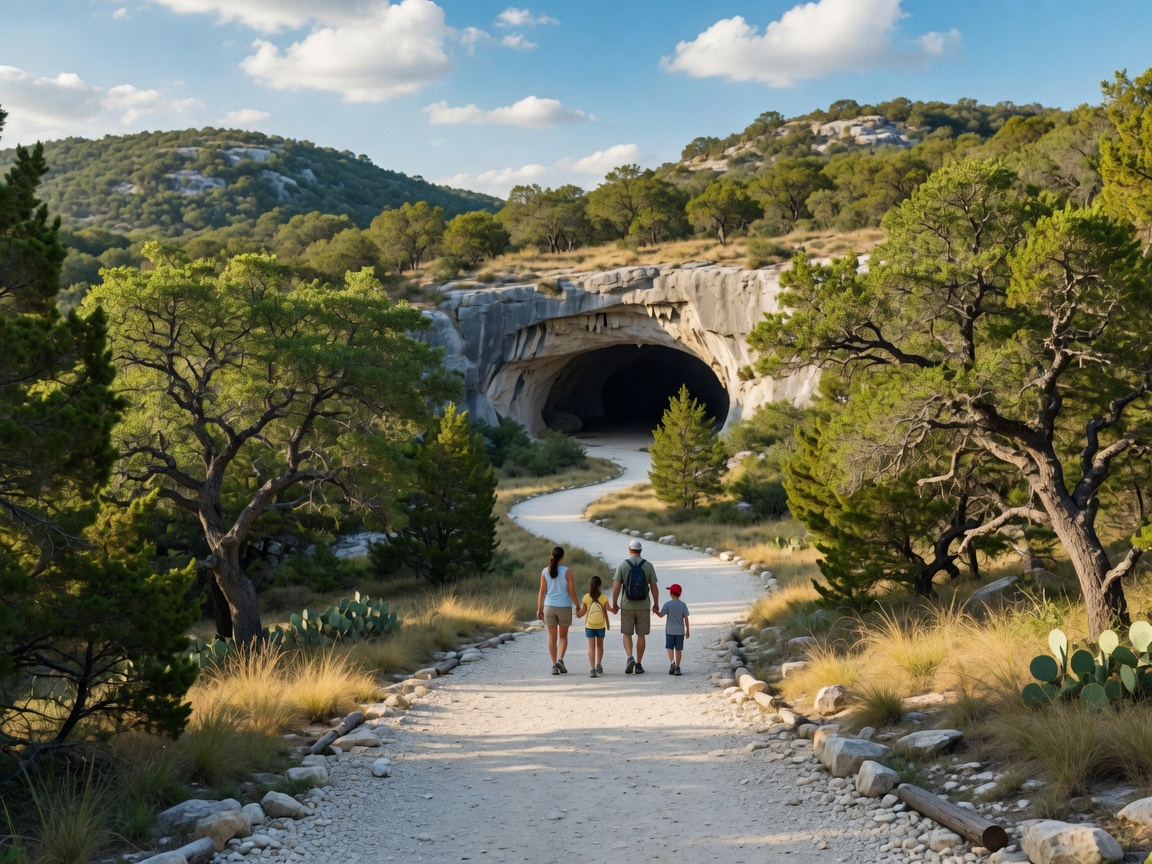
I bring this up in the context of real estate because it is not just a fun afternoon — it is a direct lesson in what the ground is made of. When I work with families relocating from California or other markets where geology means earthquakes and drought, not limestone karst and underground rivers, the Hill Country landscape can feel abstract. You hear about well water, Edwards Aquifer recharge zones, septic requirements, and limestone foundations, but you do not always connect those concepts to the physical world under your property.
Cascade Caverns makes the connection tangible. The same geological process — water dissolving limestone over millions of years — that carved this cave is the process that creates the karst terrain across Kendall, Bexar, Comal, and Bandera counties. It is the reason some properties have excellent well water and others do not. It is the reason septic permitting varies so dramatically from one lot to the next. It is the reason foundation engineering in the Hill Country is different from foundation engineering in San Antonio's clay soils.
Walking through a 125-million-year-old cave system four miles from downtown Boerne is not just a day trip. It is an education in the physical reality of the place you are thinking about calling home.
Pair it with the Cibolo Center for Conservation
If you want to make a full, well-rounded day of it, Cascade Caverns pairs naturally with the Cibolo Center for Conservation — located just two miles to the north, near downtown Boerne [8]. Here is how the two complement each other:
- Cascade Caverns takes you underground into the limestone geology that defines the Hill Country. You see the cave formations, the underground waterfall, and the karst landscape from the inside.
- Cibolo Center for Conservation takes you across the surface — 160 acres, six miles of trails, five ecosystems, and a spring-fed creek corridor. You see what that same limestone landscape looks like above ground, and how the water that flows through it sustains the habitat.
Together, they give you a complete picture of the Hill Country's physical infrastructure: the underground water systems and the surface ecosystems they support. Doing both in a single day is entirely feasible — the drive between them is about five minutes — and it is one of the most informative half-day outings you can do in the Boerne area.
The Cibolo Center is free and open daily from dawn to dusk. Cascade Caverns runs tours from 10:00 AM to 4:00 PM. A reasonable plan: morning at the Cibolo Center for a trail walk, lunch in downtown Boerne, and an afternoon cave tour at Cascade Caverns.
Other cave options nearby
The Boerne area has more cave density than you might expect. If Cascade Caverns leaves you wanting more, there are two additional options worth knowing about:
- Cave Without a Name (325 Kreutzberg Road) — Roughly 12 miles northeast of Boerne, this cave is known for its pristine, undisturbed formations and a series of live music events held inside the cave itself [9]. Tours run hourly, and reservations are recommended. It is a different character from Cascade Caverns — quieter, more gallery-like, and less commercially developed.
- Enchanted Rock — Not a cave, but a massive pink granite dome that represents the other major geological formation in the Hill Country. Where Cascade Caverns shows you what water does to limestone underground, Enchanted Rock shows you what happens when granite pushes up through the surface. About 90 minutes from Boerne, and worth the drive.
Frequently asked questions
How long is the cave tour?
The standard DownUnder Tour takes approximately 45 to 60 minutes and covers five rooms across the cave's upper level. The Adventure Tour (spelunking) takes three to four hours and covers the lower system. The Flashlight Tour runs about 90 minutes [1][2].
How much does it cost?
As of mid-2026, the DownUnder Tour is $24.95 for ages 12 and up, $19.95 for children ages 4 to 11, and free for children under 4. Pricing for the Adventure Tour and Flashlight Tour varies — check the official website or call (830) 755-8080 for current rates [2].
What should I wear?
Closed-toe shoes with good grip are essential — the cave floor is wet limestone and the stairs can be slippery. Long pants are recommended. The cave stays at a constant 63°F, so bring a light layer even in summer [1].
Is it suitable for children?
The DownUnder Tour is suitable for older children and adults. The stairs and wet surfaces may be challenging for very young children. The Adventure Tour is restricted to ages 16 and up [1][2].
Can I take photos?
Photography is allowed, but flash photography is not permitted inside the cave. The guides provide flashlights. If you want to photograph the formations, a camera with good low-light capability and a high ISO setting will produce the best results [1].
Do I need reservations?
Walk-ins are accepted for the DownUnder Tour, but arriving 15 to 20 minutes early helps secure the next time slot. The Adventure Tour and Flashlight Tour require advance reservations. During summer and holiday weekends, booking ahead is strongly recommended [1][2].
What is the address and phone number?
The address is 226 Cascade Caverns Road, Boerne, TX 78015. Phone: (830) 755-8080. Email: Downunder@cascadecaverns.com. Website: cascadecaverns.com [1].
Sources
- [1] Cascade Caverns — Official Website. cascadecaverns.com
- [2] Cascade Caverns — Tours & Pricing. cascadecaverns.com/tours
- [3] Cascade Caverns — Science & Ecology. cascadecaverns.com/science
- [4] Cascade Caverns — About Us / History. cascadecaverns.com/about-us
- [5] Wikipedia — Cascade Caverns. en.wikipedia.org/wiki/Cascade_Caverns
- [6] Texas Master Naturalist — Cascade Caverns. txmn.org/centralplaces/cascade-caverns
- [7] Texas Campgrounds — Cascade Caverns Campground. texascampgrounds.com
- [8] Hill Country Homesteads — Cibolo Center for Conservation Day Trip Guide. hillcountryhomesteads.com
- [9] Cave Without a Name — Official Website. cavewithoutaname.com
Published July 1, 2026
Updated July 1, 2026