
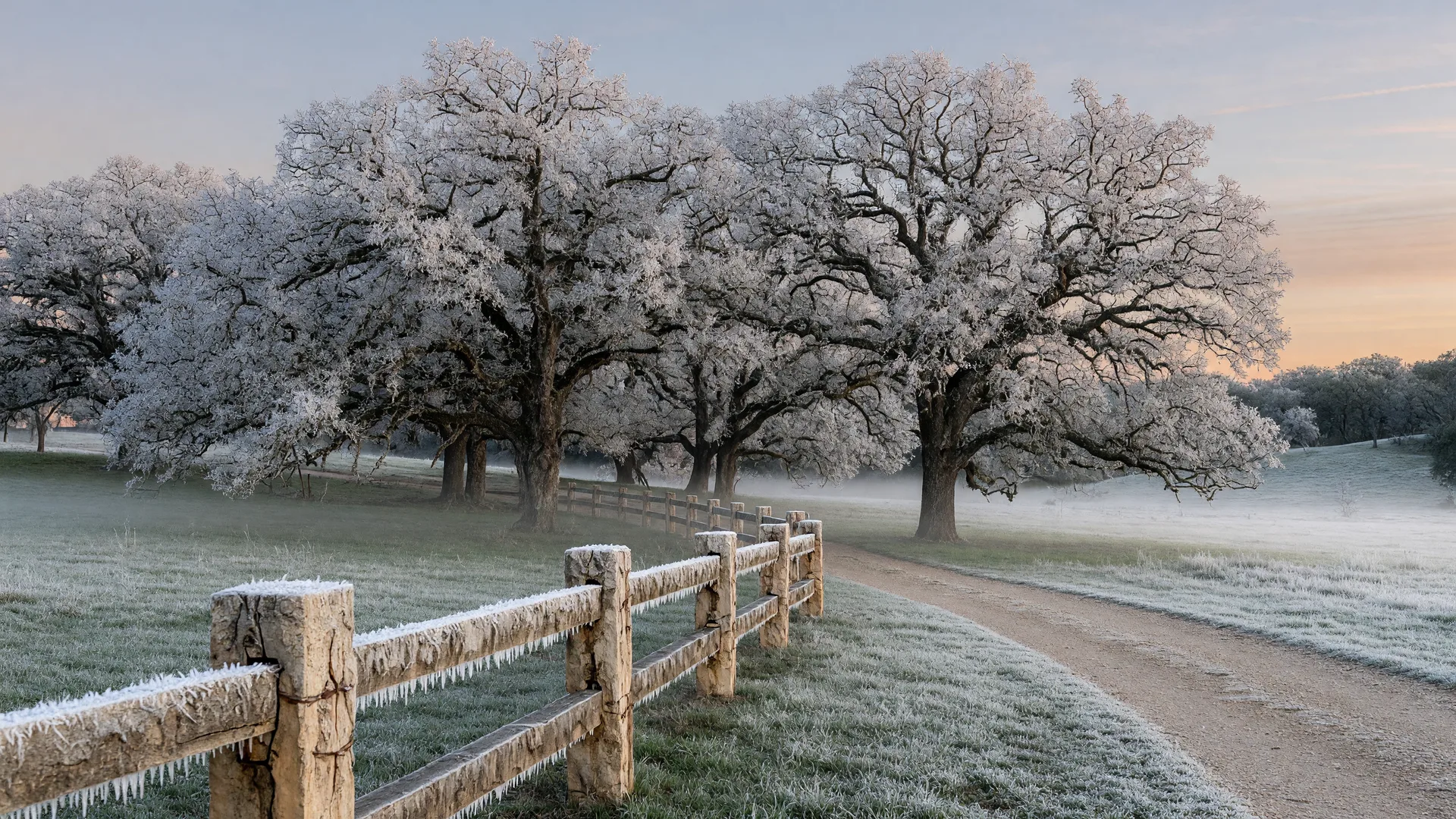
In February 2021, Winter Storm Uri pushed a hard freeze across the whole state and held it there for days. At its peak, more than 4.5 million Texans lost power, some for as long as four days, according to the final FERC-NERC review of the event [2]. The Texas Department of State Health Services' final report counted 246 storm-related deaths across 77 counties, and the largest share by far came from hypothermia and from existing illness made worse when power and heat failed [1]. That is not a statistics roundup. It is the reason this page exists.
Since Uri, Texas has imposed additional winter-weather requirements on power generators and natural-gas infrastructure, while substantial new generation and battery-storage capacity has entered the ERCOT market [4]. Winter Storm Fern provided another significant post-Uri test in January 2026. ERCOT reported that the statewide grid remained stable, with sufficient generation and operating reserves throughout the event; ERCOT did not call for conservation, issue an Energy Emergency Alert, or experience systemwide power outages [5]. Energy-storage resources were available to support peak periods. Fern, however, brought substantially less sustained cold than Uri, so one successful event should not be treated as proof that every future extreme-weather event will produce the same result.
Why this freeze checklist is a Hill Country thing
Freeze advice written for Michigan or Ohio does not fit here, and generic national lists miss what actually breaks in Kendall, Bexar, Comal, and Bandera counties. The Hill Country sits higher and cooler than the rest of South Texas, and our winter storms are usually not deep snow. They are ice and freezing rain that coat live oaks and power lines, snap branches, and take out electricity for days at a time.
Then there is what makes this part of Texas different from a suburb: many homes run on infrastructure the owner is responsible for. A private well normally loses pumping capability when utility power fails unless the pump has functioning backup power. Septic systems vary widely: conventional gravity systems behave differently from aerobic or pressure-distribution systems that may depend on pumps, aerators, controls, alarms, or timed dosing. For those homes, an extended power outage can be a septic issue as well as an electrical one. A good share of acreage homes heat with propane, so a freeze is also a fuel logistics problem of tank levels, regulators, and supplier routes. Livestock on the property need water and shelter you provide. And a fair number of Hill Country homes sit vacant for parts of the year, including estate properties that sit empty during probate, a situation our guide to homes that sit vacant during probate covers: an empty house has no one to drip a faucet or notice a burst pipe until it is too late.
Out-of-state buyers, especially those coming from California, should treat this page as part of the relocation homework: our out-of-state relocation planning resource covers moving logistics, and this checklist covers the first hard freeze after you close. Locals know the drill but lose track of the details; this is the version you keep on your phone. It is also the freeze chapter of the Texas Hill Country home maintenance calendar, which walks through every season of the year.
Local instructions override this checklist. During an actual winter-weather emergency, follow current directions from your water provider, electric utility, emergency-management officials, equipment manufacturers, and qualified service professionals. Procedures can vary by plumbing, well, septic, pool, generator, propane, and irrigation system.
Pipes: what to protect before the freeze
Burst pipes can produce some of the most expensive freeze-related damage in a Hill Country home, and many failures can be prevented or substantially reduced with preparation. Plumbing in attics, crawlspaces, exterior walls, garages, and other unconditioned or poorly protected areas is particularly vulnerable, especially where cold outside air can reach the pipe. Do the work before the cold front, not during it.
Before the freeze: core pipe-protection steps
- Insulate exposed pipes in attics, crawlspaces, and under sinks with foam pipe sleeves or wrapped insulation. Pipe insulation is one of the highest-value preventive steps on the list [10].
- Wrap outdoor faucets with foam faucet covers and disconnect garden hoses, then drain the hoses and store them.
- Turn off the irrigation system at its shutoff valve and follow the manufacturer's or installer's winterization instructions. Protect in-ground valve boxes and insulate exposed above-ground piping and backflow-prevention assemblies. Some systems require draining or professional compressed-air winterization; do not use compressed air unless the system instructions specifically call for it and you know the procedure [22].
- Find the main shutoff valve, confirm it turns freely, and label it. When a pipe bursts at 2 a.m., the five minutes it takes to find the valve becomes the difference between a puddle and a flooded house.
- Keep garage doors closed if water supply lines run through the garage [11].
- On the coldest nights, open cabinet doors under sinks so warm room air can reach the plumbing, especially in kitchens and bathrooms on exterior walls [18].
- Let faucets drip at a thin stream when extreme cold is in the forecast, focusing on faucets fed by pipes on exterior walls. A small flow through a vulnerable line can reduce freeze risk, and an open faucet also provides a path for pressure relief if ice begins to form [18]. It does not make a pipe freeze-proof.
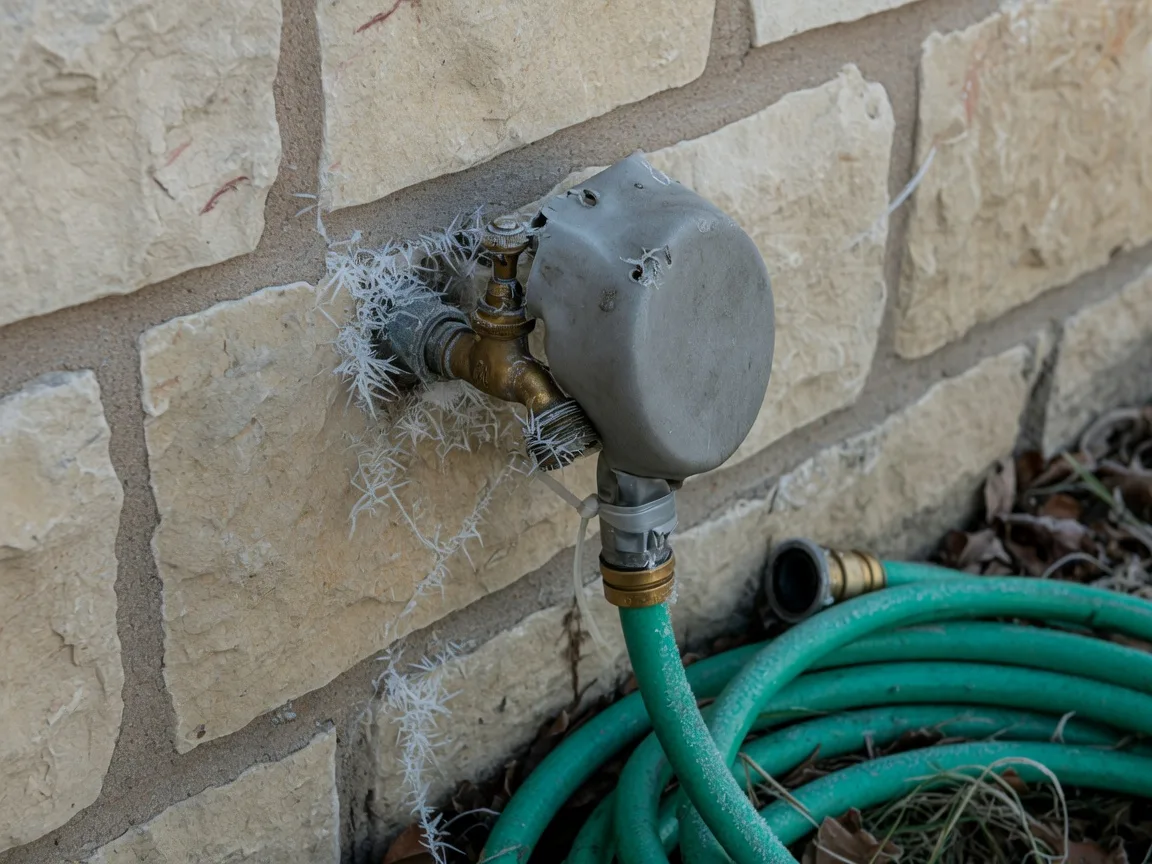
A covered faucet and a disconnected hose, done before the freeze.
If a pipe freezes anyway
Here is the order of operations when you find a faucet with no water:
- Turn off the main water valve. If the pipe is already split, this limits the damage while the pipe thaws.
- Open the affected faucet so water can escape as the ice melts, which also relieves pressure in the line.
- Apply gentle heat only: a hair dryer on low or towels soaked in hot water, working from the faucet toward the frozen section. Never use a blowtorch, open flame, or propane heater to thaw a pipe [18].
- If you cannot find the freeze, or a pipe has burst, leave the main valve off and call a licensed plumber. A plumber can locate the freeze with the right tools and can repair a burst line properly.
One rule that applies to pipes and everything else on this checklist: never wire-modify or disable equipment to get through a freeze. Do not bypass shutoff valves, do not rig heat tape without reading the instructions, and do not disable safety devices. Improvised fixes are how small problems become big ones.
Tankless and outdoor water heaters
Many Hill Country homes, especially newer builds, use tankless or on-demand water heaters, and a good number of them are mounted outdoors or in an unconditioned garage or utility space. Their freeze-protection features depend on power: most use electric heat tracing or circulation that runs on house current, so they can stop working the moment the power goes out, exactly when a hard freeze hits.
Know where your unit is and whether it has freeze protection, and read the label or owner's manual before the season. If a hard freeze with power loss is expected and the unit can be drained, drain it per the manufacturer's instructions, or have a plumber show you how the first time. Never wire-modify or disable a tankless unit's safety systems, and when in doubt, call a licensed plumber.
Irrigation systems and backflow preventers
An irrigation system has more exposed freeze points than the sprinkler heads you see in the yard. Above-ground backflow preventers, valves, and piping are particularly vulnerable, and damage can be expensive [22].
- Turn off irrigation before the freeze and follow the manufacturer's or installer's winterization procedure.
- Disconnect hoses from outdoor faucets.
- Cover or insulate above-ground backflow assemblies without blocking required vents or relief openings.
- Protect exposed irrigation piping and cover in-ground valve boxes.
- Do not assume that simply turning the controller to "off" removes water from vulnerable piping.
- If your system requires draining, compressed-air winterization, or another specialized procedure, follow the installer's instructions or have an irrigation professional perform it.
Pools and spas: freeze protection needs electricity
Many pool systems use automated freeze-protection settings that circulate water when temperatures approach freezing. That protection depends on electricity and correctly functioning equipment, so a power outage during an extended freeze changes the plan.
Before winter, confirm that freeze protection is enabled and that the temperature sensor, pumps, valves, and automation are working correctly. Know what your pool manufacturer or service company recommends if power is lost during freezing weather. Do not improvise by randomly opening equipment, removing plugs, or operating valves unless you understand the system; procedures differ by equipment configuration.
After a prolonged outage or hard freeze, inspect pumps, filters, heaters, valves, exposed PVC, and other equipment for cracks or leaks before assuming the system is undamaged. If anything looks questionable, leave the affected equipment off and call a pool professional.
Insurance: document the freeze prep
Coverage for frozen-pipe damage depends on the policy and the circumstances. The Texas Department of Insurance notes that home and renters policies might not pay for damage caused by frozen pipes if the policyholder did not take protective steps, such as keeping the heat on [14]. TDI also states that most companies stop some coverage when a house has been vacant for 60 days or more [15]. Owners of vacant, seasonal, or estate properties should confirm their own policy requirements with the insurer before a freeze.
- In a vacant home, keep the heat set at a reasonable level for the forecast rather than turning it off for the season, and still do the rest of the prep: open cabinet doors under sinks, drip faucets on the coldest nights, and insulate exposed lines.
- Document the prep. Save receipts for insulation and supplies, note the thermostat setting and the dates you checked on the property, and take dated photos of covered faucets and disconnected hoses. If a claim ever has to be made, that file documents the precautions you took, even though it cannot by itself guarantee how the insurer will apply the policy.
- Tell your insurer the home is vacant, especially when it will sit empty for months. It is a detail worth raising before the freeze rather than during a claim.
We are not insurance professionals, and every policy reads differently. Read your own policy, and ask your agent about the vacant-property and reasonable-care language if it is unclear. If you do not already have an agent, the Hill Country insurance agents directory is a place to start. For an estate property, the guidance on homes that sit vacant during probate applies directly.
Generators and propane
Portable generator rules worth memorizing
If your generator is not set up safely, it can become the most dangerous thing on your property. Gasoline generators produce carbon monoxide at levels that can kill in minutes, and the gas has no smell and no color [6][7]. The rules are simple and they are not negotiable:
- Operate a portable generator outdoors only, at least 20 feet from the home and other occupied buildings, with the exhaust directed away from windows, doors, vents, and other openings. Do not operate it on a porch or in a carport [6][7][24].
- Never run a generator in a garage, even with the door open. Open doors and windows do not provide enough ventilation [6][7].
- Follow the generator manufacturer's instructions for electrical-shock hazards in rain, snow, or other wet weather. Those instructions may call for an NFPA-rated noncombustible generator tent or may require waiting until precipitation passes. Do not improvise an enclosure or ordinary canopy that could trap exhaust, overheat the generator, or create a fire hazard [24].
- Use heavy-duty extension cords rated for the load, and inspect them for damage before use [6].
- Install working battery-operated CO alarms or CO alarms with battery backup on every level of the home and outside sleeping areas, and test them regularly [6][7][24].
- For a whole-house connection, have a licensed electrician install a transfer switch or interlock. Never plug the generator into a wall outlet: that backfeeds power into the grid and can electrocute a line worker restoring service nearby [6].
Sizing, in plain terms: add up the wattage of what you truly need to power at the same time, such as the refrigerator, the well pump if you have one, the furnace blower, lights, phone charging, and any medical device. Size the generator above that running total, account for the surge some motors draw on startup, and never overload the machine. The owner's manual gives the rated limits; treat them as ceilings, not suggestions. For a full breakdown of generator sizing, fuel math, and solar battery options, see the backup power guide for the Hill Country.
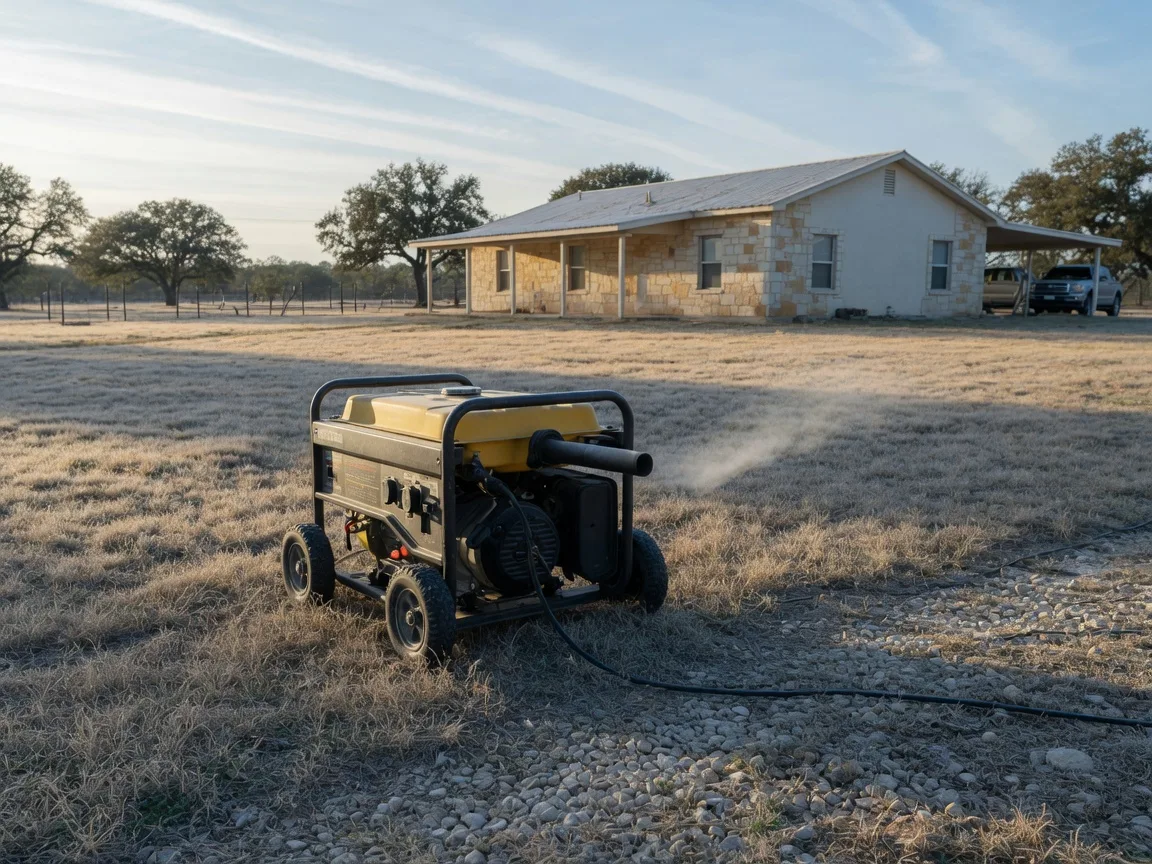
Outdoors, dry, and at least 20 feet from the home and other occupied buildings: where a portable generator belongs.
Propane: what to check on the tank
Propane is regulated in Texas by the Railroad Commission of Texas, and your propane supplier is the first call for anything that smells wrong [8]. Before a freeze:
- Get the tank as full as your supplier allows. A freeze is exactly when you do not want a surprise delivery visit at the end of a long list.
- Carefully clear heavy snow and ice from propane piping, regulators, and meters, and keep appliance intake and exhaust vents clear. Do not strike, chip, or otherwise damage propane-system components while removing ice. If any part of the system appears damaged, contact the propane supplier or a qualified professional [9].
- Never bring outdoor propane heaters or grills indoors. A device built for outdoor use has no place in a house, and running one inside is a fast route to carbon monoxide poisoning [9][11].
- Know the smell. Propane is odorized so it smells like rotten eggs. If you suspect a leak, leave the area immediately, call your propane supplier or 911 from outside, and do not flip light switches, light matches, or use anything that could spark until a professional has checked it [9].
Keep CO alarms in place near sleeping areas and on every level of the home, and test them before every cold front [7][24].
Food without power
An extended outage turns the kitchen into a math problem. The numbers are simple when you know them:
- Keep the refrigerator and freezer closed. Every time the door opens, the clock on your food runs faster.
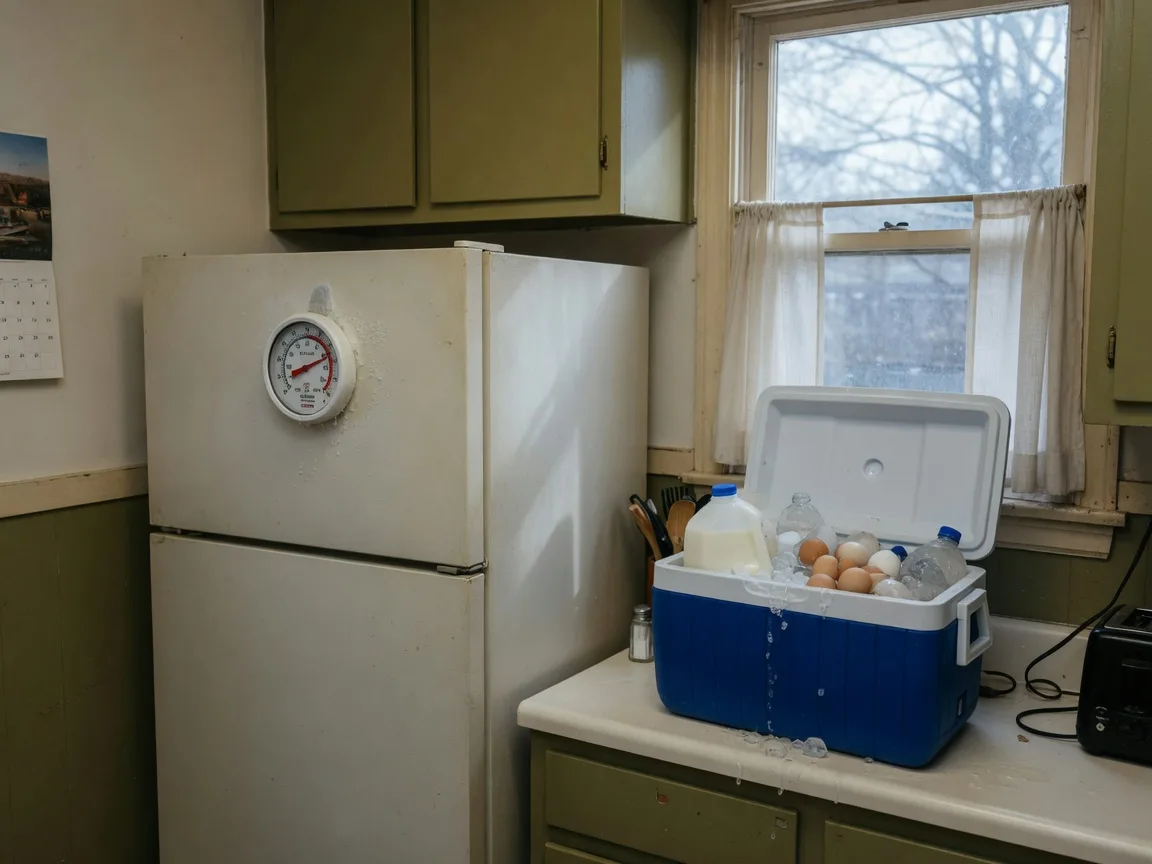
- A refrigerator keeps food safe for about 4 hours with the door kept shut, and a full freezer about 48 hours (about 24 hours if it is half full) [13].
- Use an appliance thermometer so you know when food has crossed into the danger zone: if the temperature is above 40°F, perishables are at risk [13].
- Move valuable perishables to a cooler with ice after about four hours without power, before the refrigerator warms further [13].
- When in doubt, throw it out. Never taste food to decide whether it is safe; you cannot taste the bacteria that causes foodborne illness [13].
- A generator-powered fridge is fine as long as the generator rules above are followed. Just do not let the generator run unattended overnight with the cord draped through a window.
- Outdoor grills and camp stoves are for outdoor use only, never indoors, in a garage, or near a window [19].
| What you have | How long food stays safe |
|---|---|
| Refrigerator, door kept closed | About 4 hours |
| Full freezer, door kept closed | About 48 hours |
| Half-full freezer, door kept closed | About 24 hours |
| Thawed or questionable food | Toss it if it has been above 40°F for 2 hours or more |
| Refrigerated perishables | After about four hours without power or another cold source, discard perishable foods such as meat, fish, eggs, milk, leftovers, and cut fruits or vegetables unless you know they remained at 40°F or below |
Source: CDC food-safety guidance for power outages.
Do not taste food to determine whether it is safe. CDC guidance says refrigerated perishables should be discarded after about four hours without power or another cold source. Frozen food may be refrozen or cooked if it still contains ice crystals or has remained at 40°F or below [13].
Wells and septic freezes
Private wells
A conventional electric well pump stops when utility power fails unless it has functioning backup power. The household may have only a limited amount of pressurized water remaining unless the property also has a separate storage tank or cistern. That makes wells a freeze problem and a power problem at the same time:
- Insulate exposed pipes and above-ground pump components before the season starts, and protect the wellhouse or pump house so wind cannot get at vulnerable parts [10].
- If power and water are still on during a freeze, let faucets drip so water keeps moving through the system.
- Know your well system, including the pressure tank's usable drawdown and whether the property has a separate storage tank or cistern. Do not mistake the pressure tank's nameplate capacity for emergency water storage: only a fraction of a typical pressure tank's total volume is usable water before the pump must restart.
- Get the timing right. Per Texas A&M AgriLife's Texas Well Owner Network, prepare in October or November and maintain those protections through March or April [10].
- Never wire-modify pumps, heaters, or heat tape. If you are not sure the setup is safe, a well professional can check it. See the wells and Edwards Aquifer infrastructure page for the full picture.
Septic systems
Most buried septic components receive some protection from surrounding soil, but septic systems can still freeze. Risk increases with shallow or exposed components, inadequate insulation, prolonged cold, low or intermittent use, and certain system designs. Systems with pumps, aerators, controls, alarms, timed dosing, or pressure distribution also depend on electricity and require special attention during an outage [16].
- Know what type of septic system you have and which components require electricity.
- Insulate vulnerable exposed piping, risers, and other components as appropriate for the system [16].
- Avoid vehicle, livestock, and unnecessary foot traffic over the tank and drain field. Compacted soil or snow provides less insulation and can increase freeze risk [16].
- If the system begins to freeze, NEHA advises using warm water normally and spreading laundry and dishwasher use rather than leaving water running continuously. Continuous flow can hydraulically overload the system [16].
- Do not add antifreeze, salt, or septic additives to thaw a frozen system, and do not run hot water continuously [16].
- If a pump-dependent system loses power, an alarm activates, or freezing is suspected, reduce unnecessary water use and contact a septic-system professional [16].
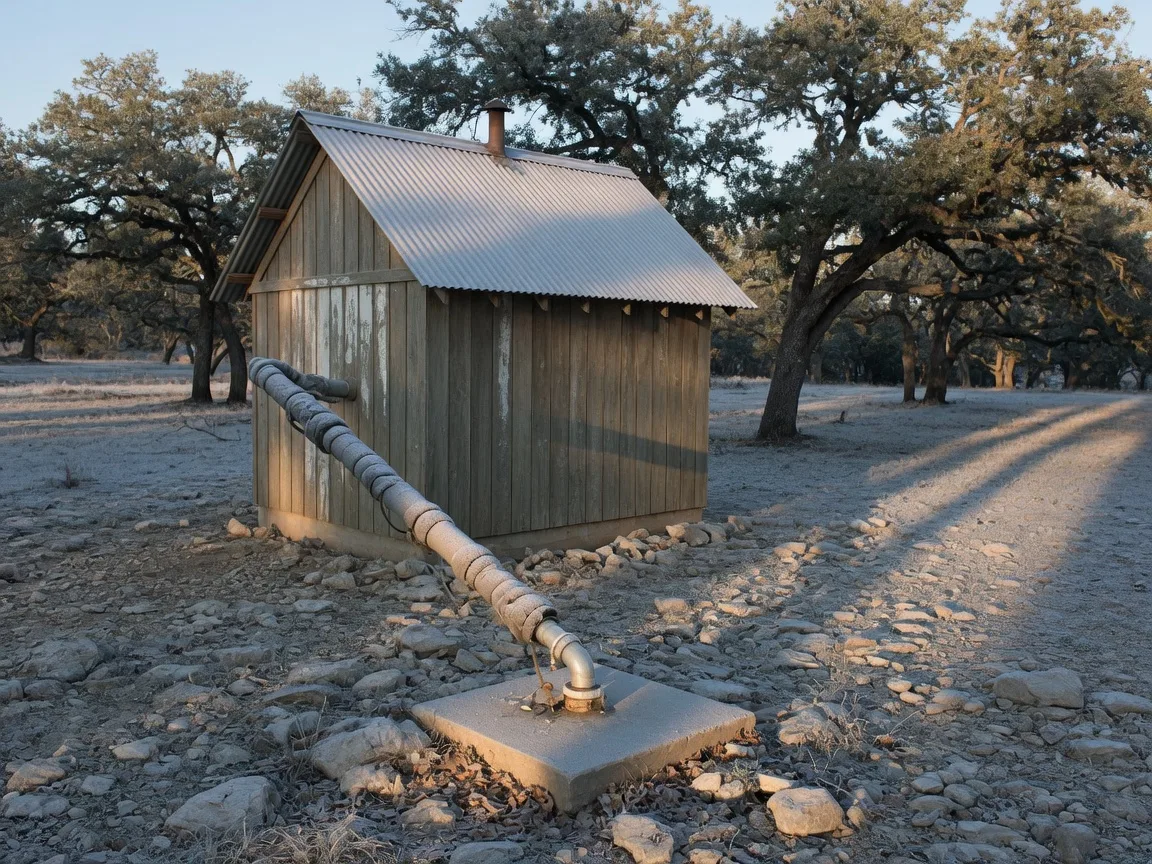
Insulated pipe and a sealed pump house keep a well working through a freeze.
Boil-water notices after the freeze
Homes on private wells are not the only water story in a freeze. After a hard freeze and a power outage, municipal and rural water systems can issue boil-water notices when system pressure drops during the event, sometimes even for homes that never lost water service themselves. Power failures, pump outages, broken mains, unusually high demand, or other system disruptions can reduce pressure, prompting a precautionary boil-water notice when the provider cannot confirm that the distribution system remained adequately pressurized.
After a freeze event, check your water provider's website or social channels for a notice, and, if one is in force, follow the water provider's instructions. CDC guidance for a standard boil-water advisory says to bring tap water to a full rolling boil for one minute; at elevations above 6,500 feet, boil for three minutes [23]. Keep bottled water in the freeze kit for exactly this scenario: it covers drinking and cooking while the notice runs and while a well pump is down.
Livestock and pets
Livestock
Texas A&M AgriLife is blunt about the priority order for livestock in a freeze: water comes first, because animals can go far longer without feed than without water [10].
- Check and break ice, or provide heated waterers that are safe and properly installed, at least twice daily. A cattle trough skimmed with ice is a small job; a frozen one is an emergency [10].
- Provide windbreaks: tree lines, barns, or tarps fixed to the windward side of a shelter. Wind chill, not temperature alone, is what hurts [10].
- Keep bedding dry. Wet ground pulls heat out of an animal faster than cold air does, so roll out hay for a dry, insulated place to lie [10].
- Increase feed. Animals burn significantly more energy just staying warm in the cold and need the calories to do it [10].
- Calves, foals, and older animals are the most vulnerable in a hard freeze. They need the most shelter and the closest watching [10].
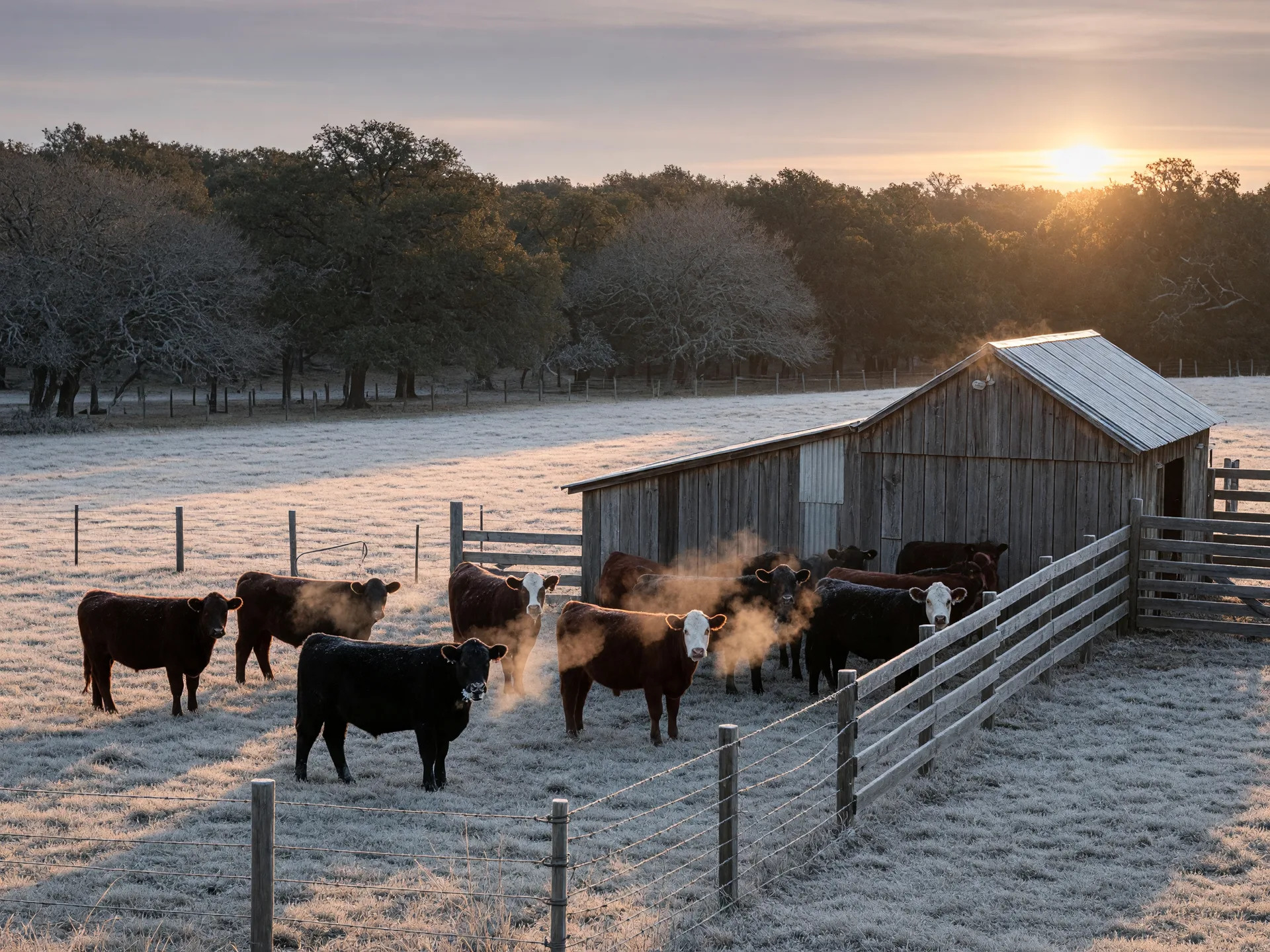
Windbreak, dry bedding, and twice-daily water checks carry livestock through a freeze.
Pets
Pets are simpler than livestock only because they live closer to you:
- Bring pets indoors during freezing weather whenever possible.
- If an animal must remain outdoors, provide weather-protected, appropriately insulated shelter with a dry sleeping area, fresh unfrozen water, adequate food, and frequent checks. Follow applicable local and state animal-care requirements.
- Keep walks short in hard freezes, and wipe paws after walks to remove ice, road salt, and anything else they picked up.
- Antifreeze is sweet and deadly. Store it sealed, clean up spills immediately, and keep pets away from garage floors and driveways where it can pool.
- Never leave a pet in a cold car. A car is a refrigerator when the temperature drops.
- Know the signs of hypothermia in pets, including shivering and lethargy, and see a veterinarian if you are concerned [10].
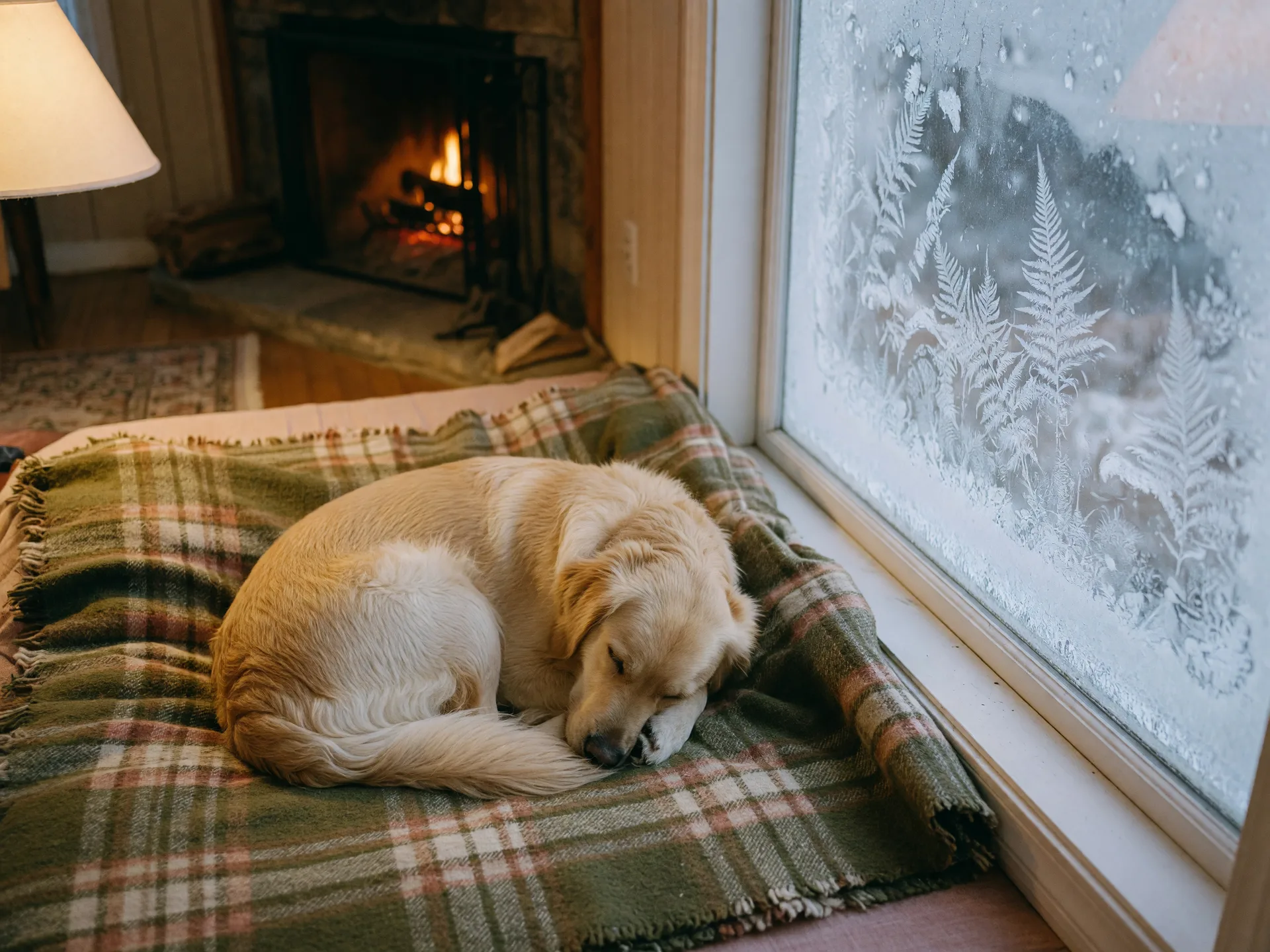
Checking on neighbors
The freeze hits people hardest when they are isolated, and in the Hill Country, isolation is the default on many roads. Before the storm, take five minutes to think about who on your road might need a hand:
- Identify neighbors who are elderly, live alone, rely on medical devices or oxygen, or have young children. If a neighbor uses oxygen or a medical device, ask what the plan is when power fails: whether they have backup power, and who to call if they do not.
- Plan a check-in during and after the event, by phone, text, or a knock at the door. A 30-second text asking "you warm?" matters more than people admit.
- Know the utility outage-reporting numbers and save them in your phone now. The Hill Country emergency and essential services directory keeps the electric, water, and propane outage lines for Kendall, Bexar, Comal, and Bandera counties in one place.
- If you spot a vacant or estate home with visible issues after a freeze, such as water running from under a door, open doors, or icicles where there should be none, contact the owner or the property contact. For estate homes, see the guidance for homes that sit vacant during probate: an unmanaged property with a burst pipe damages not just the house but the family's biggest asset.
- 211 Texas is a free helpline for health and human services, including food, shelter, and utility help. Texas residents can dial 211 or visit 211texas.org [17].
- Use official emergency-management agencies, utilities, law-enforcement agencies, fire departments, the National Weather Service, and road authorities as the primary sources for closures, outages, shelters, and safety instructions. Neighborhood and community social-media groups can provide useful hyper-local observations, but verify consequential information against an official source whenever possible.
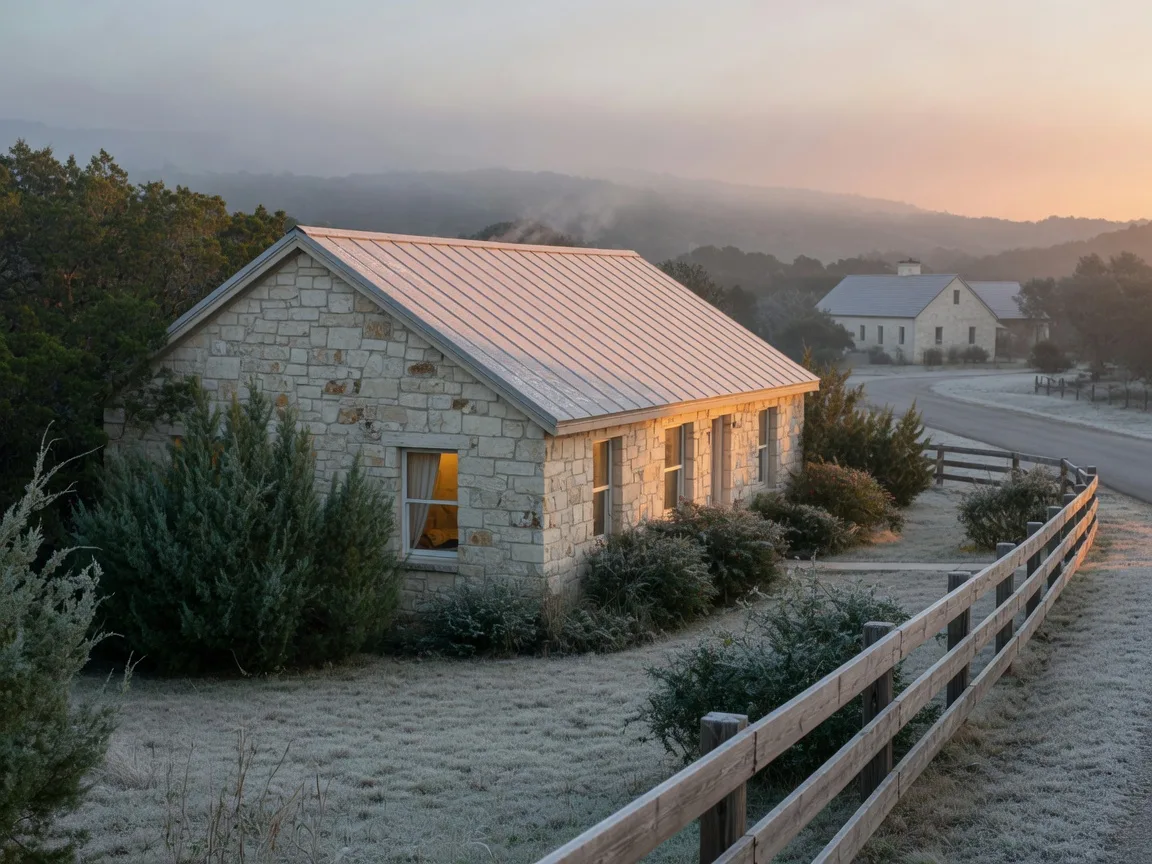
After a freeze, a quick call, text, or knock on the door can identify a neighbor who needs help before a small problem becomes an emergency.
Your freeze-week kit
Assemble the kit once in October or November, and it stops being a scramble every time the forecast drops below freezing. Keep the list on the fridge so anyone in the house can find the kit and the numbers.
| Item | Why you need it | Where to keep it |
|---|---|---|
| Flashlights and batteries | Lights when the power is out | One per room, in a drawer everyone knows about |
| Phone power banks | Keep phones charged for calls and alerts | Charged, by the door |
| Working CO and smoke alarms | Generator and heating risks | Installed in the locations recommended for each alarm type; test before the storm |
| Appliance thermometer | Know when food is above 40°F | Inside the refrigerator |
| Bottled water | Drinking, cooking, and basic needs during a well outage or water-system advisory | At least one gallon per person per day; store enough for the emergency duration appropriate to your household |
| Non-perishable food and manual can opener | Meals without power | Pantry |
| Cooler and ice | Protect valuable perishables | Kitchen or garage |
| Camp stove or grill (outdoor use only) | Cook without power | Garage or shed, never indoors |
| Portable propane cylinders, if used | Fuel only for appliances designed and approved for that use | Store cylinders outdoors in accordance with supplier, manufacturer, and fire-safety guidance; never use an outdoor-only appliance indoors |
| De-icing salt or sand | Walkways and steps after ice | Garage or shed |
| Blankets and warm layers | Heat without power | Closets, easy to reach |
| Pet food and meds | Pets get hungry and sick too | Kitchen cabinet |
| Livestock water plan | Waterers, windbreaks, extra feed | Note on the fridge |
| Basic tools | Shutoffs and quick fixes | Toolbox |
| A list of emergency numbers | Utilities, plumber, vet, neighbors | On the fridge and in your phone |
| Battery-powered or hand-crank radio / NOAA Weather Radio | Receive official information if cellular or internet service fails | With emergency supplies |
| First-aid kit | Treat minor injuries when travel is difficult | With emergency supplies |
| Prescription medications and essential medical supplies | Avoid running out during an extended outage or road closure | Maintain an appropriate reserve consistent with prescription and storage requirements |
| Backup power/batteries for essential medical equipment | Maintain necessary equipment during an outage | Charged and tested before the storm |
| Printed critical contacts and insurance information | Useful if a phone is dead, damaged, or inaccessible | Waterproof folder with emergency supplies |
CPSC recommends CO alarms on every level and outside sleeping areas, and smoke alarms on every level and inside each bedroom.
A simple prep timeline
None of this has to happen the day of the freeze. Work the timeline backward from the forecast, and the freeze itself becomes a day of checking things off rather than a day of panic.
| When | What to do |
|---|---|
| Before the season (October–November) | Insulate pipes, service the generator, test CO alarms, schedule a well and pump check, and stock the freeze kit [10] |
| Several days before the storm | Check generator fuel and propane levels early enough to obtain a delivery or refill before weather and demand disrupt suppliers; charge devices and power banks; top up pet and livestock supplies; and secure loose outdoor items |
| 24 hours out | Follow local utility guidance for vulnerable plumbing; open cabinet doors where appropriate, protect exposed lines and backflow equipment, disconnect and drain hoses, cover outdoor faucets, bring pets indoors, and confirm the generator, CO alarms, emergency water, and communications plan are ready |
| During the freeze | Keep doors closed, conserve heat, check on neighbors, run the generator safely, and follow the food timeline [13] |
| After it thaws | Inspect attics, garages, exposed plumbing, water heaters, well equipment, irrigation/backflow components, pool equipment if present, and septic alarms before assuming everything survived. Restore systems cautiously, watch for leaks, document damage, check livestock and pets, restock emergency supplies, and check on neighbors. |
Frequently asked questions
What temperature do I need to drip my faucets?
There is no single temperature at which every house should begin dripping faucets. Pipe location, insulation, construction, air leakage, duration of the freeze, and indoor heat all matter. A commonly cited research-based alert threshold for vulnerable Southern plumbing is about 20°F, based on testing of uninsulated pipes in an unconditioned attic [21]. Treat 20°F as a warning point rather than a guarantee: vulnerable pipes can freeze at higher outdoor temperatures when subfreezing air reaches them. Follow any water-use instructions issued by your local utility.
How cold does it have to get before pipes freeze?
Water freezes at 32°F, but the risk to household plumbing depends on how long pipes are exposed, where they are located, how well they are insulated, whether cold air can reach them, and whether the building remains heated. Research commonly cited for Southern homes found an outdoor alert threshold around 20°F for uninsulated pipes in an unconditioned attic [21], but freezing can occur at higher outdoor temperatures when vulnerable plumbing is exposed to flowing subfreezing air. Treat 20°F as an alert threshold for vulnerable plumbing, not a universal point at which pipes suddenly begin to freeze. Wind can cool exposed plumbing to the actual outdoor air temperature more quickly, and air leakage can expose pipes directly to subfreezing air, but wind chill does not make a pipe colder than the actual air temperature. Seal openings where outside air can reach vulnerable plumbing [20].
Can I run my generator in the garage with the door open?
No. Never run a portable generator in a garage, even with the door open. Carbon monoxide can reach lethal levels in minutes, and an open door does not provide enough ventilation [6][7][24]. The generator runs outdoors only, at least 20 feet from the home and other occupied buildings, with its exhaust directed away from windows, doors, vents, and other openings. Never operate it on a porch or in a carport [6][7][24].
How long will my food last in the fridge or freezer without power?
About 4 hours in a refrigerator with the door kept closed, about 48 hours in a full freezer, and about 24 hours in a half-full freezer [13]. Keep the doors closed and use an appliance thermometer when possible. CDC guidance says refrigerated perishables should be discarded after about four hours without power or another cold source. Frozen food may be refrozen or cooked if it still contains ice crystals or has remained at 40°F or below. Never taste food to determine whether it is safe [13].
Do I need to do anything to my well before a freeze?
Yes, ahead of the season: insulate exposed pipes and above-ground pump components, protect the wellhouse, and follow Texas Well Owner Network guidance [10]. During a freeze with power and water still on, let faucets drip. Never wire-modify pumps or heaters.
Will my septic tank freeze?
Yes. Burial depth, soil insulation, biological activity, and normal use generally reduce the risk, but septic systems can freeze under the right conditions. Risk is greater where pipes, risers, tanks, or distribution components are shallow or exposed; where insulation is inadequate; during prolonged severe cold; and at properties with little or intermittent use. Vacant homes can therefore be at greater risk, but they are not the only systems that can freeze. Avoid compacting the soil over the system, protect vulnerable components, and contact a septic professional if an alarm activates or freezing is suspected [16].
Is it OK to use my fireplace to heat the house?
A properly maintained wood-burning fireplace can provide supplemental heat, but it must be treated as both a fire and carbon-monoxide hazard. Before the season, have the chimney and flue inspected and cleaned as appropriate [14]. Open the damper before lighting the fire and keep it open as required while the fire and embers remain. Keep combustible materials away from the fireplace and maintain working smoke and CO alarms in their recommended locations. Never use an oven, outdoor grill, camp stove, or other appliance not designed for indoor space heating to heat the house.
What is 211, and how does it help during a freeze?
211 Texas is a free helpline for health and human services, including emergency food, shelter, and utility assistance. Texas residents can dial 211 or visit 211texas.org to find help in their county [17]. During and after a freeze, it is a reliable place to start when a neighbor needs food, a warm place, or help with an electric bill.
Sources
- Texas Department of State Health Services, "February 2021 Winter Storm-Related Deaths." Final storm mortality surveillance report: 246 deaths across 77 counties, most from hypothermia or exacerbation of existing illness. dshs.texas.gov
- Federal Energy Regulatory Commission (FERC), "Final Report on February 2021 Freeze Underscores Winterization Recommendations," November 16, 2021. FERC and NERC reported that more than 4.5 million Texans lost power, some for as long as four days. ferc.gov
- Electric Reliability Council of Texas (ERCOT), "Review of February 2021 Extreme Cold Weather Event - ERCOT Presentation," February 25, 2021. ERCOT's preliminary legislative briefing on the Uri grid event, retained for historical context only; the final post-event investigation is the FERC and NERC report in entry [2]. ercot.com
- The Texas Tribune, "Texas' power grid weathered another winter storm. Is it ready for the future?" January 29, 2026. Weatherization changes made after Uri, new generation, and the demand pressure that remains. texastribune.org
- Electric Reliability Council of Texas (ERCOT), "Winter Storm Fern - January 2026: Post-Event Report," January 28, 2026. ERCOT reported that the statewide grid remained stable, with sufficient generation and operating reserves throughout the event; ERCOT did not call for conservation, issue an Energy Emergency Alert, or experience systemwide power outages, and energy-storage resources were available to support peak periods. ercot.com
- U.S. Consumer Product Safety Commission, "Generators and Engine-Driven Tools." Carbon monoxide safety guidance for portable generators: outdoor operation only, distance from the home, CO alarms, cords, and transfer switches. cpsc.gov
- U.S. Consumer Product Safety Commission, "As Winter Storms Threaten Millions in the U.S., CPSC Issues Safety Tips to Help Families Prevent Carbon Monoxide Poisoning and Fires." December 12, 2025. Winter storm CO and fire safety release: generator placement, CO alarms, and fuel-burning device warnings. cpsc.gov
- Railroad Commission of Texas, "Liquefied Petroleum Gas (Propane)." Texas regulatory information for LPG/propane. rrc.texas.gov
- Propane Education & Research Council, "Safety Guide for Propane Users." Guidance on propane odor, leaks, snow and ice around regulators and piping, keeping vents clear, outdoor-only appliances, CO detectors, and post-storm system inspection. propane.com
- Texas A&M AgriLife Today, "Protect livestock, plants, pipes and pets from winter weather." January 22, 2026. Guidance from Texas A&M AgriLife and the Texas Well Owner Network on pipe insulation, well freeze timing, livestock water and windbreaks, and pets. agrilifetoday.tamu.edu
- Ready.gov, "Winter Weather." Federal winter weather guidance: pipe protection, heating safety, and generator rules from the Department of Homeland Security. ready.gov
- Ready.gov, "Power Outages." Federal emergency preparedness guidance on what to do before, during, and after a power outage, from the Department of Homeland Security. ready.gov
- Centers for Disease Control and Prevention (CDC), "Keep Food Safe After a Disaster or Emergency." Food safety guidance after power outages: when to discard refrigerated perishables, when frozen food can still be refrozen or cooked, and the four-hour window. cdc.gov
- Texas Department of Insurance, "Winter storms: Tips for preparing your house and pipes." Guidance concerning frozen-pipe coverage, maintaining heat, protecting plumbing, shutting off water, and winter-storm fire and chimney precautions. tdi.texas.gov
- Texas Department of Insurance, "Home insurance guide." Guidance concerning vacancy provisions and the potential effect of a home being vacant for 60 days or more. tdi.texas.gov
- National Environmental Health Association, "Guidance for Septic Systems Before, During, and After Winter Weather." Septic freeze guidance: keeping systems active, insulating risers and exposed pipes, mulching shallow tanks, and avoiding compaction over the drain field. neha.org
- 211 Texas. Free health and human services helpline for Texas residents: dial 211 or visit the site for food, shelter, and utility help. 211texas.org
- American Red Cross, "Preventing & Thawing Frozen Pipes." Guidance on vulnerable pipe locations, dripping faucets during very cold weather, maintaining heat, opening cabinets, insulating plumbing, and safely thawing frozen pipes without open flame. redcross.org
- American Red Cross, "Winter Storm Preparedness & Blizzard Safety." Winter storm safety guidance including the warning against fuel-burning devices such as grills and camp stoves indoors. redcross.org
- National Weather Service, "Wind Chill Questions." Explanation that wind chill applies to people and animals; inanimate objects can cool more quickly in wind but cannot fall below the actual air temperature. weather.gov
- University of Illinois Building Research Council, "Freezing and Bursting Pipes" research. Building Research Council research widely cited for the research-based alert threshold of about 20°F for vulnerable Southern plumbing, including pipes in unconditioned attics. ideals.illinois.edu
- San Antonio Water System, "Be Ready: Prepare and protect your pipes." Guidance on hose bibs, irrigation shutoffs, valve boxes, exposed plumbing, and above-ground backflow devices. saws.org
- Centers for Disease Control and Prevention (CDC), "Drinking Water Advisories: An Overview." CDC guidance for boil-water advisories, including bringing tap water to a full rolling boil for one minute, or three minutes above 6,500 feet. cdc.gov
- U.S. Consumer Product Safety Commission, "Winter Storm May Knock Out Power; CPSC Warns of Deadly Carbon Monoxide and Fire Risks," February 19, 2026. CPSC guidance for portable generators during winter storms: operate at least 20 feet from the home and other occupied buildings with the exhaust directed away from windows, doors, vents, and other openings, never on a porch or in a carport, follow the manufacturer's wet-weather instructions including an NFPA-rated noncombustible generator tent where the manufacturer directs it, and keep working CO and smoke alarms in their recommended locations. cpsc.gov
Last verified: September 5, 2026
Written by Bill Ross, Hill Country Homesteads Group, brokered by Keller Williams Boerne. Serving Boerne, Fair Oaks Ranch, San Antonio, and the surrounding Hill Country communities.
If you are buying a Hill Country home from out of state, handling an estate property, or getting a place ready for its first winter, this checklist is a starting point, not a substitute for a site-specific walkthrough. Reach out and I will point you to the right professionals for your property.
Published: September 5, 2026
Updated September 5, 2026