
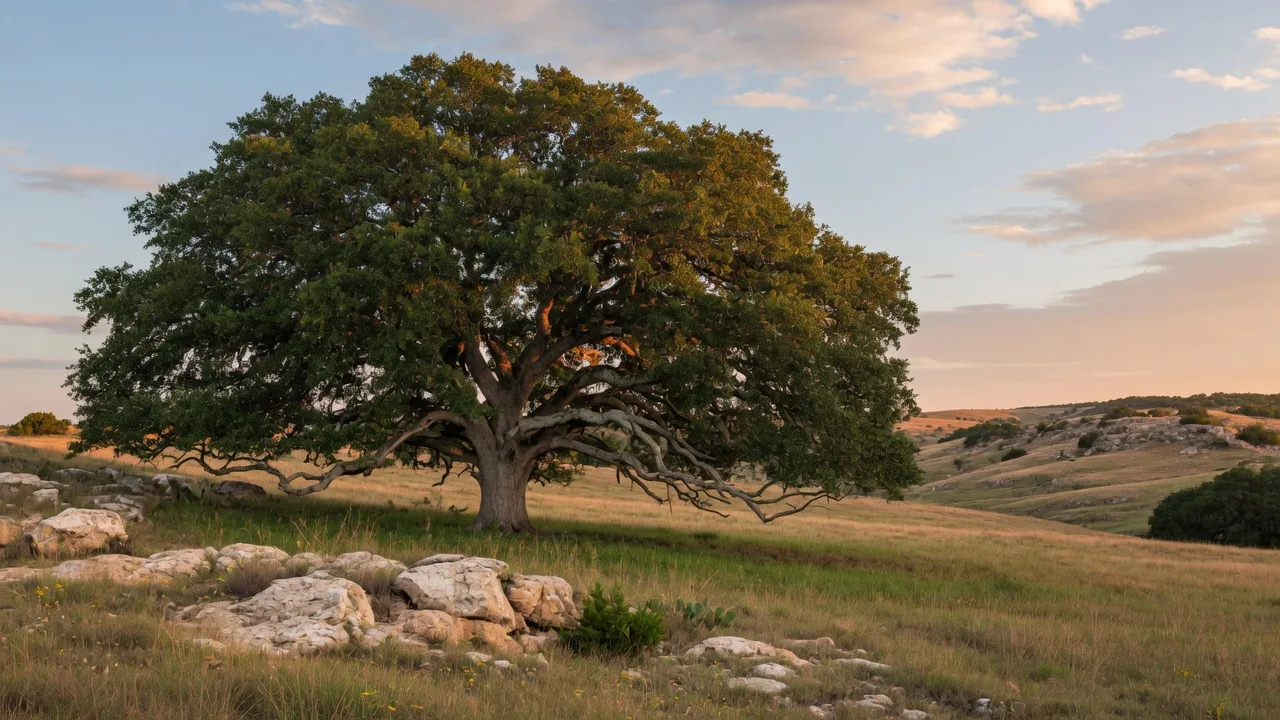
Start with the bottom line: oak wilt is one of the most destructive tree diseases affecting Texas. It has killed millions of trees across 76 counties, and it moves from yard to yard underground through connected live oak roots at an average rate of about 75 feet a year [1][2]. The cheapest and most effective thing you can do costs almost nothing: keep routine pruning and avoidable wounding out of roughly February 1 through June 30, because a fresh wound acts like an entrance ramp for the fungus [2][3]. If you have live oaks, read this before you get the trimmers out, before you clear that fence line, and absolutely before you park a truck or scraper near a root zone.
1. What to Know First: Why Oak Wilt Matters So Much
Oak wilt is a fungal disease caused by the fungus Bretziella fagacearum. It invades the xylem, the water-conducting tissue that moves water from the roots into the canopy. The tree responds to the infection by plugging those tissues, restricting water movement and ultimately causing leaves and branches to wilt and die. All oaks can be infected, but species react very differently: red oaks die fast, live oaks die slower and pass the disease through their roots, and post oaks, which are in the white oak group, are far more resistant and are only rarely killed [1][4]. On well-drained acreages across Kendall, Bexar, Comal, and Bandera counties, live oaks anchor both the canopy and the home's resale value, which is why this one disease matters so much here.
2. How Oak Wilt Moves
Oak wilt spreads two different ways [2]. Above ground, it travels through the air on sap-feeding beetles called nitidulid beetles. Fungal mats form under the bark of infected red oaks, the mats crack open, the beetles feed on them, pick up spores, and then fly to fresh wounds on healthy trees. That is why a single infected pruning wound can establish a new oak-wilt center that may subsequently spread through interconnected roots [2].
Below ground, the disease travels through interconnected root systems, which is how it moves in expanding centers. Live oaks push substantial roots that graft together, tree to tree. The fungus moves through those root grafts, killing one tree and then moving to the next at an average rate of about 75 feet per year. This underground spread is responsible for most tree deaths in Central Texas [1][5].
Is Oak Wilt Already Near Me?
Texas A&M Forest Service maintains county maps showing recorded oak-wilt mortality centers. Kendall, Bexar, Comal and Bandera counties are among the counties for which oak-wilt information is available. These maps are useful for understanding whether known disease centers have been documented near a property, but they are not a property survey and they do not prove that an unmarked property is disease-free. Unrecorded centers may exist [13].
3. The Statewide Recommended High-Risk Avoidance Period: February 1 through June 30
The single most valuable fact in this guide: routine pruning and avoidable wounding should be avoided from February through June. If pruning is necessary for an immediate safety reason, make only the necessary cuts and paint every fresh oak wound immediately. The most recent Texas A&M Forest Service guidance sets this statewide recommended high-risk avoidance period from February 1 through June 30, when the beetles are most active and fungal mats are most abundant [2][3]. Any fresh wound can become an entry point, and spore-carrying sap beetles can transmit the fungus when they visit a fresh wound on a healthy oak [2].
If a storm or an accident damages an oak during this statewide recommended high-risk avoidance period, paint the wounds: all wounds should be painted immediately and sealed with a wound dressing or tree paint, per the guidance published by Texas A&M Forest Service [3]. This does not cure oak wilt, but it keeps the fresh cut from becoming a landing pad for spore-carrying beetles. Mowing, string trimmers, construction work, driveway grading, land clearing, and even tire damage can also wound a tree, so treat those activities with the same care during these months [5]. The same caution applies to the bigger clearing and blasting projects we walk through in our land-clearing, caliche, and building-cost guide.
A practical tip on paint: specialty tree wound dressing is not required for oak-wilt prevention. Texas oak-wilt guidance states that latex, oil-based, spray-on or brush-on paint, or wound dressing can provide the physical barrier needed to keep sap-feeding beetles away from a fresh wound. The important part is speed: paint each fresh oak wound immediately after it is made, regardless of season.
Note: the statewide recommended high-risk avoidance period is February 1 through June 30 in the most recent guidance [2]. Outside that period, pruning is safer but still requires care, and any large limb work should be done by a qualified arborist.
If you are planning spring plantings or new beds near your oaks, our native plant and vegetable planting calendar describes what to put in without disturbing root zones.
4. Symptoms by Species, Described Plainly
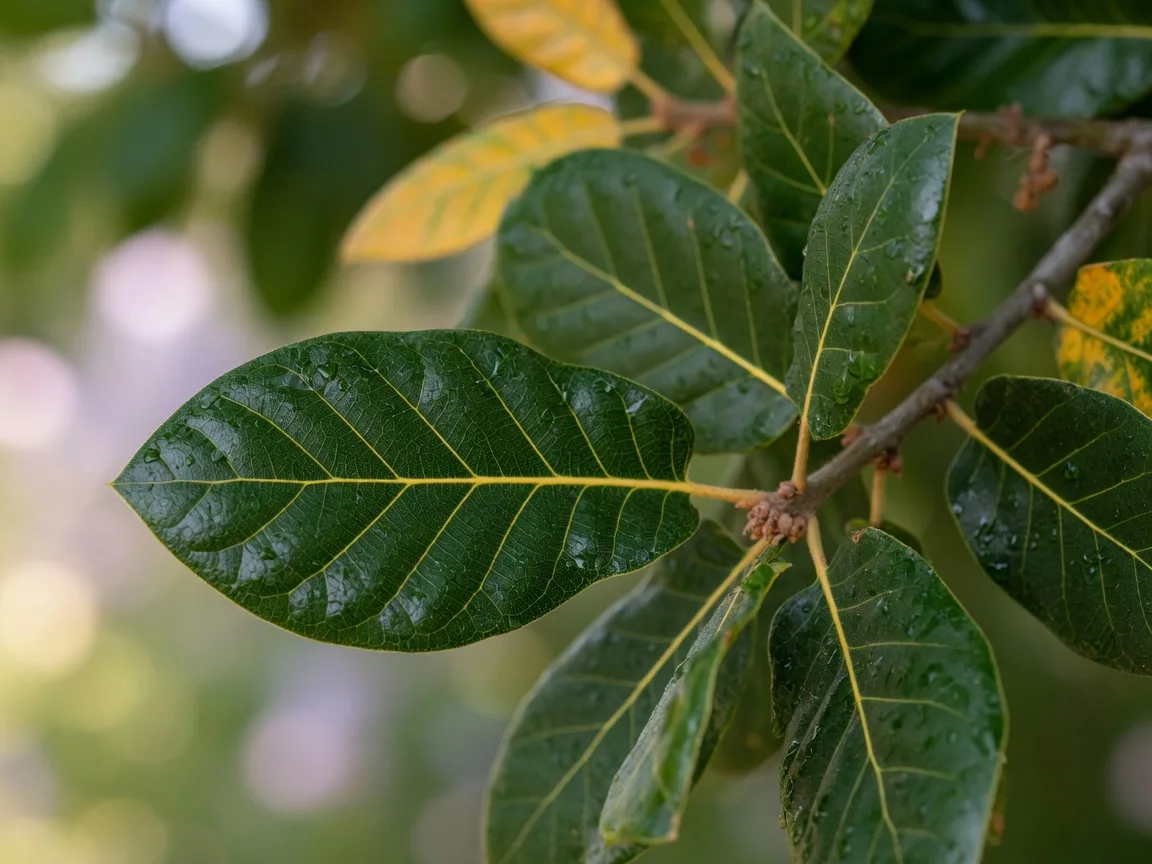
These are the signs to look for, but please treat them as an alert, not a verdict. Oak wilt shares symptoms with other diseases, drought stress, and physical damage, and Texas A&M recommends a laboratory diagnosis before acting [4]. In infected live oaks, the classic sign is veinal necrosis: the leaf veins turn yellowish, then brown, creating a pattern many describe as fishbone or a tie-dye on the leaf. Defoliation can be rapid, and dead leaves showing brown veins may remain beneath the tree for months. Other possible symptoms include vein banding, marginal scorch and tip burn, although veinal necrosis is the most characteristic foliar symptom in live oaks [4]. In red oaks, the leaves turn dull bronze or brown from the outer edge inward, the tree can look autumn-colored in July, and it typically dies within a few weeks [4]. Clusters of dead or dying trees with a clear boundary facing a healthy stand are a classic sign to stay alert for [1].
| Symptom | Live oak | Red oak |
|---|---|---|
| Leaf change | Veins yellow then brown, fishbone pattern [4] | Browning from edge inward, bronze autumn look in summer [4] |
| Speed | Most affected live oaks defoliate and die within roughly 3–6 months; some decline more slowly, and a few untreated trees may survive for years. | Often dies within a few weeks [4] |
| Spread pattern | Moves through roots to neighbors in a center | Can start new centers via beetles [1] |
| What to do | Alert a certified arborist, get lab diagnosis before acting | Same, but faster: call immediately [4] |
4.1 Don't Panic: Common Oak Wilt Look-Alikes
Several diseases and environmental injuries can resemble portions of the oak-wilt symptom pattern. None of the distinctions below should be used by itself to rule oak wilt in or out [4][10].
- Hypoxylon canker (Biscogniauxia atropunctatum): This opportunistic fungus primarily becomes destructive in severely stressed or weakened oaks and other hardwoods. Drought is a major predisposing stress, but root damage, soil compaction, excavation, herbicide injury, heat, flooding and other stresses can also contribute. When the disease advances, sections can slough away and expose fungus tissue that is sometimes silver-gray.
- Herbicide Drift: If you or a neighbor sprayed a broadleaf herbicide to clear brush or weeds during a windy spring day, the drift can cause oak leaves to curl, twist, and turn brown. Herbicide injury can produce distorted, curled, chlorotic or browned foliage, but the pattern varies with the chemical, dose, exposure and timing. Recent herbicide use on the property or nearby should therefore be part of the diagnostic history given to the arborist or laboratory.
- Anthracnose and Leaf Blister: Wet, cool Texas springs can trigger these fungal leaf spots. They cause distorted, puckered leaves with brown dead areas. While ugly, they rarely threaten the life of the tree and clear up as hot, dry summer weather sets in.
If a Red Oak Turns Bronze, Do This
This is the sequence that protects your other trees.
- 1 Don't panic, but move quickly: red oaks can die within weeks.
- 2 Photograph the leaves, branches, and trunk from several angles.
- 3 Call an ISA Certified Arborist with the Texas Oak Wilt Qualification (don't rely on a lawn or tree service without it).
- 4 Have the tree evaluated promptly by a qualified oak-wilt professional. If the diagnosis is uncertain, have properly selected samples submitted to the Texas Plant Disease Diagnostic Lab. Do not remove or treat a tree solely from a homeowner visual diagnosis, but do not unnecessarily delay management of a professionally diagnosed infected red oak while waiting for a laboratory result that the professional determines is not needed.
- 5 Follow the recommended containment and disposal steps, and paint any fresh wounds on surviving oaks immediately.
It can be tempting to study leaf drop and veinal necrosis in live oaks and conclude you have found the classic fishbone pattern yourself. The honest note here: this guide is not a diagnostic tool. Have a professional look before you cut anything down, because a tree removed based on a backyard diagnosis cannot be brought back.
Each Spring: A 10-Minute Oak-Wilt Walk
Return to this short checklist once a year in early spring, before the statewide recommended high-risk avoidance period begins, and keep a copy for each property you own or manage.
- Walk the property looking for scattered defoliation, bronzed red-oak canopies, veinal necrosis on live-oak leaves, and dead limbs.
- Note any fresh wounds from storms, mowing, construction, or clearing.
- Paint any fresh oak wounds immediately, regardless of season.
- Check whether any dead or dying oak should be sampled; the who-to-call section below has the lab details.
- Keep brief notes and photos each year so you can compare canopy trends over time.
5. What Not to Do
- Don't schedule routine oak pruning from February through June. If an immediate safety hazard requires cutting during that period, make only the necessary cuts and paint every fresh oak wound immediately. Regardless of season, paint fresh oak wounds as soon as they are made [2].
- Don't scrape, grade, or pile soil against oak trunks and roots; that kind of wounding opens the same entry points [5].
- Don't move or store unseasoned red-oak firewood from an oak-wilt infection center. Fungal mats can develop on logs, stumps and fresh firewood cut from infected red oaks; sap-feeding beetles can acquire spores from those mats and carry them to fresh wounds on healthy oaks. Purchase firewood locally and well seasoned, and follow Texas oak-wilt guidance for covering or disposing of suspect wood.
- Don't dismiss an unexplained dead oak as an isolated event. A dying red oak may be capable of producing fungal mats that establish a new infection center, while declining live oaks may indicate an existing root-transmitted center moving through interconnected trees [2].
- Don't improvise containment. Trench placement and fungicide-tree selection should follow a site-specific oak-wilt management plan; poorly located trenching can fail even when the trench itself is deep enough [6].
6. Treatment That's Honestly Worth It: Prevent, Contain, Treat
Successful oak-wilt management is usually an integrated effort rather than a single treatment. Texas guidance combines four approaches worth keeping distinct: preventing new beetle-transmitted infections above ground, interrupting underground root transmission between trees, protecting selected high-value oaks with preventive fungicide, and diversifying the landscape after losses so future disease cannot devastate a single-species canopy. Once oak wilt appears on your property, the options sort into three camps.
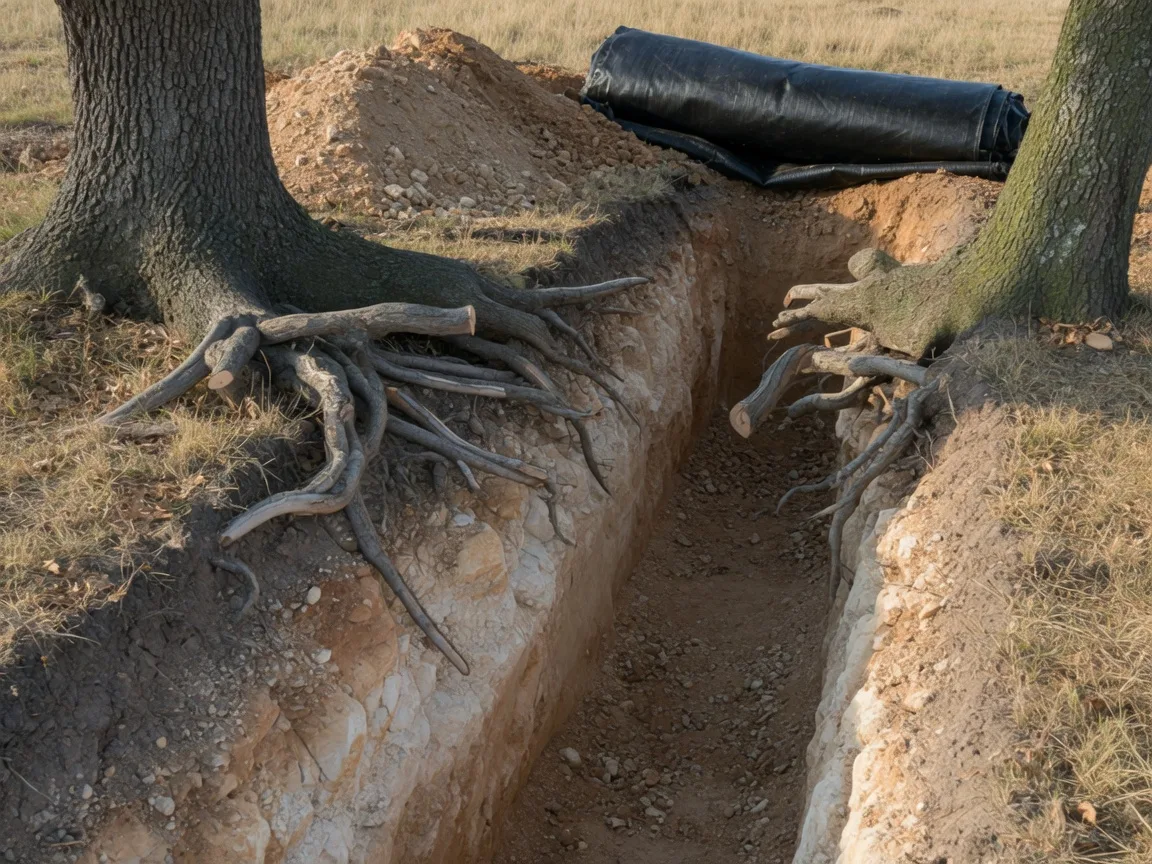
- Trenching. The most proven containment treatment for live oaks is a physical trench: dig a trench at least four feet deep between the diseased area and the healthy trees, cutting the root grafts so the fungus cannot travel underground [6]. Placement is just as important as depth. Texas guidance calls for the trench to be located at least 100 feet beyond the perimeter of the infection center or last symptomatic tree because the fungus may already be present in roots beyond the visibly declining canopy. It must be done carefully so you don't wound the protected trees, and trenching is the principal method used to interrupt root-to-root transmission by physically severing all interconnected roots. It is excavation-heavy, and for that reason the Forest Service's oak wilt cost-share program reimburses 50% of approved costs, up to $5,000 per cooperator per year for trenching, up to $7,500 per project per year for multi-cooperator trenching projects, up to $5,000 per cooperator per year for roguing or pushing diseased trees inside the trench, and up to $2,000 per cooperator per year for removal of qualifying infected red oaks [6]. These are maximum reimbursement limits, not automatic payments. Cost shares are limited to 50% of approved costs, qualifying work must meet Texas Oak Wilt Suppression Program requirements, and the application must be approved before any cost-shareable treatment begins.
6.1 What to Do When the Disease is on a Neighbor's Property
Because oak roots do not respect property lines, an infection center on a neighboring property can threaten healthy trees on yours. When coordinated treatment across both properties is not possible, a qualified oak-wilt professional may be able to design a containment trench entirely on your property. Whether that works depends on having enough room to place the trench at least 100 feet beyond the symptomatic disease perimeter, as well as utilities, easements, terrain, limestone and other site constraints. Trenching is not guaranteed to contain every infection center. Trees outside the treatment area should be monitored for several years; if symptoms appear beyond the barrier, additional trenching or other management may be necessary. Fungicide can protect selected injected trees, but it does not stop the fungus from continuing to move through connected roots.
- Fungicide injection. Propiconazole-based fungicide injected into the trunk is the common preventive for healthy high-value trees near a known center, and limited therapeutic success may be possible when a live oak is treated during the earliest stage of infection. Texas guidance indicates that treatment is unlikely to succeed once oak-wilt symptoms involve more than about 30% of the crown. It is not a cure for a sick red oak, and fungicide protects only the injected tree; it does not prevent or stop root-to-root transmission of the fungus [6][7]. Injection pricing varies by DBH, treatment method, tree condition, accessibility and provider. Ask for a written per-tree proposal and compare at least two qualified providers rather than treating a published per-inch figure as a market rate [7]. Treat that as a rough guide only, and ask for price quotes from two or three qualified oak-wilt providers; for fungicide application, verify the applicable Texas Department of Agriculture pesticide-applicator license as well as oak-wilt credentials.
- Red-oak removal and hazardous-tree removal. Infected red oaks require special attention because certain recently infected red oaks can produce fungal mats that allow beetles to spread oak wilt above the ground. Texas guidance recommends prompt disposal of qualifying infected red oaks by approved methods such as chipping, burning where lawful, or burial. Removing a symptomatic live oak, however, does not stop the fungus from continuing to move through interconnected roots; the root containment must be addressed separately.
One more piece of good news: the Forest Service also runs a cost-share program that partially reimburses qualified trenching and removal work [6]. Funding is limited, applications must be approved before eligible work begins, and the February 5, 2026 funding announcement confirms the increased program funding and that applications are accepted year-round [3]. Landowners should confirm current availability with their Texas A&M Forest Service forester before signing a treatment contract [6].
Executors keeping watch over a vacant, inherited Hill Country property should add tree health to their preservation checklist, right alongside the plumbing and roofing checks; a dead or dying oak on a property you manage from afar is one more thing to know about before it becomes an emergency. For probate property transitions, see texasprobatehomes.net.
6.2 The Post-Wilt Replanting Palette: What to Plant Next
If you have lost trees to an oak-wilt center, use the opportunity to diversify rather than simply recreate the same live-oak monoculture. Non-oak species cannot contract oak wilt and can be planted without creating another oak-to-oak pathway. More resistant white-oak species can also be considered, but they are not immune to oak wilt.
Non-oak choices
- Cedar elm
- Pecan, where site conditions provide adequate soil and moisture
- Texas redbud
- Mexican plum
- Texas mountain laurel
- Other locally adapted non-oak species recommended for the Edwards Plateau
More resistant oaks, not immune
- Mexican white oak (also called Monterrey oak)
- Bur oak
- Chinkapin oak
- Post oak where site conditions are appropriate
Texas Oak Wilt guidance says oaks can eventually be replanted in an affected area, but recommends waiting a few years before reintroducing oaks because new roots may graft with surviving infected root systems. Non-oak species can be planted immediately.
7. Property Values and Buyer Due Diligence
Forest Service estimates say a cluster of dead oaks cuts into a wooded lot's charm and its resale value, and unaddressed oak wilt is the kind of issue that turns a buyer's dream lot into a liability. Known oak wilt should be treated as a material disclosure issue, not something to leave for a buyer to discover. The Texas Oak Wilt Partnership states that knowingly failing to disclose oak wilt could violate the Texas Deceptive Trade Practices–Consumer Protection Act. Several TREC contract forms, including the Unimproved Property, Farm and Ranch, and certain New Home contracts, also specifically ask whether the seller is aware of oak wilt on the property. Sellers should use the disclosure documents applicable to their transaction and consult their broker or attorney when there is any uncertainty [11][12]. A documented diagnosis, treatment history and containment plan gives a buyer considerably more useful information than unexplained dead trees and no management records.
Texas A&M Forest Service has estimated that losses associated with oak wilt can reduce property values by approximately 15%–20% [5]. That figure should not be interpreted as an appraisal adjustment for an individual property, but it illustrates why the loss of a mature oak canopy can become a significant financial issue as well as a tree-health issue.
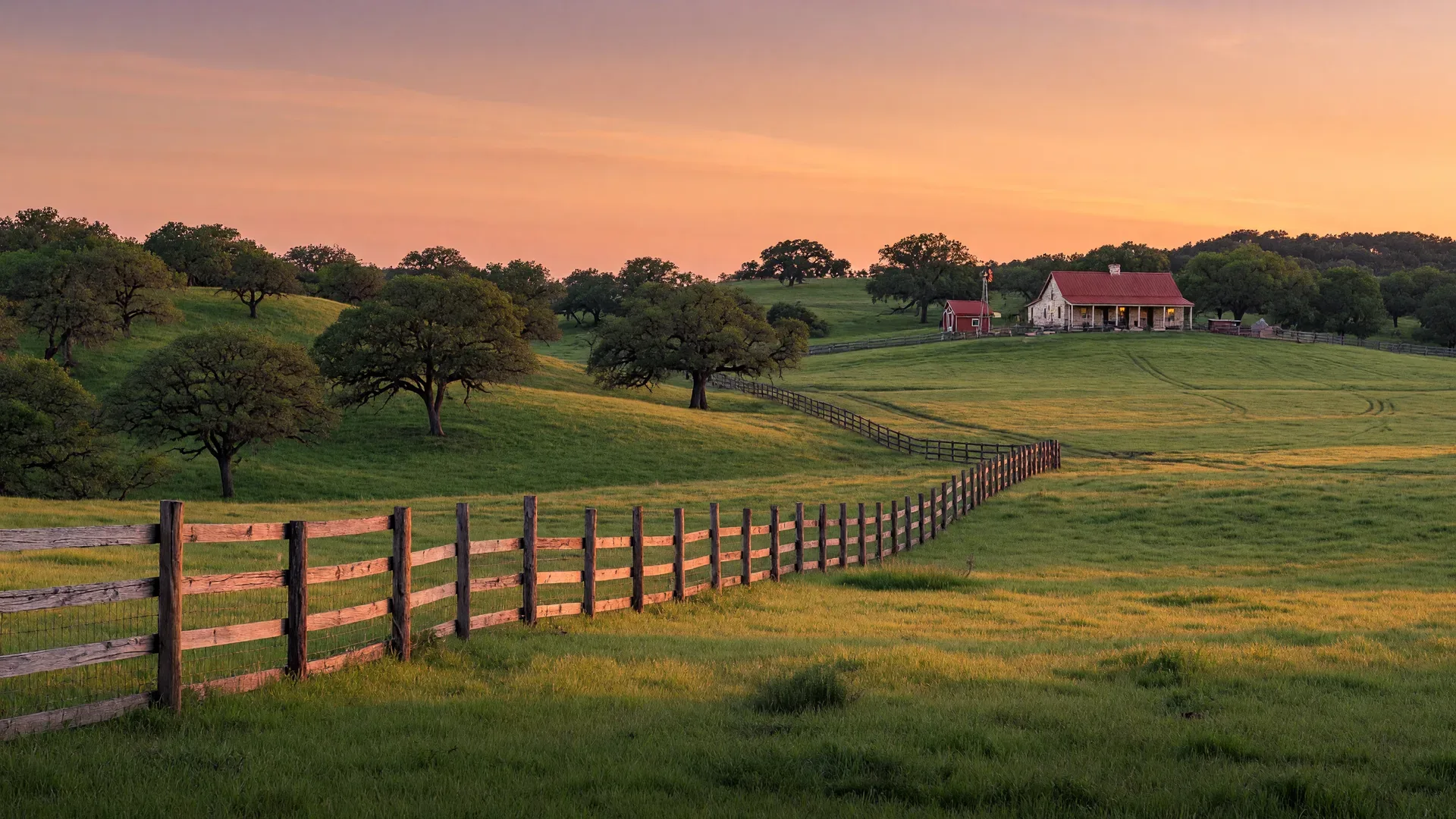
If you are buying, add this to the list: walk the property in late spring and summer, ask the owner and the listing agent directly whether any tree on the property has ever been diagnosed with oak wilt, ask whether any dead trees were removed and why, and On heavily wooded property or where suspicious mortality is visible, consider a separate evaluation by an ISA Certified Arborist with the Texas Oak Wilt Qualification rather than assuming a general home inspection will diagnose tree disease. Texas A&M Forest Service generally cannot enter property for a pre-purchase inspection at a buyer's request; the property owner must request the Forest Service to assist, and private qualified vendors can perform buyer-side evaluations. A single trenched center with treated live oaks is very different from an expanding center you would be paying closing costs on. The same due-diligence mindset applies to the other big rural property items in our on-lot guides, linked below: the real cost of owning acreage, the mistakes out-of-state buyers make on acreage, and for relocating readers, the Texas Hill Country landscape guide on movetotexas.net.
Keep a Permanent Oak-Wilt Property File
If oak wilt is or has been part of your property's history, keep every record in one permanent file. It documents what was done, when, and why, and it becomes a coherent due-diligence summary for any future buyer or estate transition.
- Diagnostic reports and laboratory results
- Arborist reports and trench maps
- Fungicide treatment records, tree removal records, and follow-up monitoring notes
- Photographs, invoices, municipal approvals, and cost-share documentation
8. Who to Call
- A certified ISA arborist with the Texas Oak Wilt Qualification, or a degreed forester [8].
- Texas A&M Forest Service regional office for your county [6], or your local Central Texas extension office.
- For laboratory confirmation, the Texas Plant Disease Diagnostic Lab accepts oak-wilt samples. Proper sampling matters: the lab requests symptomatic branches approximately 1–2 inches in diameter, kept cool and shipped promptly. Oak-wilt culture currently requires a minimum of about three weeks. Laboratory culture can confirm the presence of the pathogen, but an improperly collected or degraded sample can produce a false-negative result, so collection should follow the lab's current sampling instructions [17] or be handled by a qualified professional [4].
- In Boerne city limits, the City of Boerne urban forester and the Oak Wilt Prevention page, if you believe you have an infected red oak [8].
Inside Boerne city limits, the City's Oak Wilt Management Ordinance applies. Once the City's urban forester verifies an infected red oak, the property owner receives written notice stating the required methods and timing for removal and disposal, and the City's Oak Wilt Incentive Program can offset the cost of approved treatment performed by qualified local arborists [8][9]. Start with the Oak Wilt Prevention page so removal and disposal follow the notice before you spend [8].
Fair Oaks Ranch Has Stricter Local Rules
Fair Oaks Ranch has its own oak-wilt ordinance, and its requirements are more specific than the statewide prevention recommendations. Within Fair Oaks Ranch, all oak wounds must be painted immediately after trimming, cutting, pruning or trenching. The City's current guidance specifies black paint; latex, oil-based, spray-on, brush-on paint or wound dressing may be used. Routine oak-tree maintenance is limited to July 1 through January 31. Qualifying work during February 1 through June 30 requires an Oak Tree Maintenance Exemption submitted to the City's Environmental Program Manager before work begins. Work outside the routine period may only be the exempted qualifying work described above. Tree contractors working in the city must be registered with Fair Oaks Ranch. New planting of red-oak-group species is prohibited. Oak-wilt treatment providers must meet the city's notification and credential requirements [14].
Fair Oaks Ranch also operates an Oak Wilt Program that may reimburse eligible property owners for up to 50% of qualifying treatment costs, subject to program requirements and available funds, with a current maximum reimbursement of $1,500 per property per fiscal year. Eligible services include preventive or therapeutic injections, removal of diseased red oaks, and trenching [15].
San Antonio Has Its Own Oak-Wilt Rules Too
Inside San Antonio, the City advises minimizing oak pruning between February 1 and July 1, the period when the fungus is most active; that is a recommendation to minimize pruning, not a prohibition on pruning during those dates. The City requires fresh oak cuts and wounds to be painted within 30 minutes, and it requires tree-pruning contractors to hold a valid City issued tree-maintenance license. The City also restricts bringing firewood from oak-wilt-infected trees into San Antonio. See the City of San Antonio's oak-wilt guidance for the current details and code citations [16]. For disease centers documented near San Antonio and Bexar County, see the same county-map resource cited above [13].
Do not diagnose from this article or any web page. Use it to know when to have a tree looked at, and then have the tree looked at.
Questions to Ask a Tree Service Company
Not every company that chainsaws is qualified to diagnose oak wilt. Ask these before you sign:
- Are you or your lead technician an ISA Certified Arborist with the Texas Oak Wilt Qualification?
- How do you confirm an oak-wilt diagnosis before recommending treatment? When do you rely on field symptoms and disease-pattern evidence, and when do you submit samples to the Texas Plant Disease Diagnostic Lab?
- Have you installed oak-wilt containment trenches at least four feet deep, and how will you determine the required placement, generally at least 100 feet beyond the symptomatic infection perimeter, for this property?
- Do you follow Texas Oak Wilt Suppression Program guidelines for eligible work?
- Can you walk me through the City of Boerne Oak Wilt Incentive Program and the Forest Service cost-share paperwork, and do you handle it?
- Can you give me references from properties near my neighborhood that have gone through this?
- If fungicide injection is proposed, who will perform or supervise the application, and what is that person's current Texas Department of Agriculture pesticide-applicator license number?
Frequently Asked Questions
Q: Is oak wilt the same as just "sudden oak death"?
A: No. Sudden oak death and oak wilt are completely different diseases caused by different pathogens. Sudden oak death is caused by Phytophthora ramorum and is best known from the West Coast. Oak wilt is caused by the fungus Bretziella fagacearum and occurs in Texas as well as numerous other states. Both can kill oaks, but their biology, geographic distribution and management are different.
Q: How soon does an infected red oak die?
A: Red oaks often die within roughly four to six weeks after the first visible symptoms appear. During the growing season, an infected red oak can develop a conspicuous autumn-like bronze or red coloration while surrounding trees remain green. Because recently infected red oaks may later produce fungal mats capable of starting new infection centers, prompt professional evaluation matters [1][4].
Q: I cut a limb during the statewide recommended high-risk avoidance period. Am I in trouble?
A: Painting the fresh wound immediately with a wound or tree paint reduces the risk by keeping beetles off the cut. How much risk remains also depends on whether the disease is already active in your neighborhood [3]. The cut itself will not kill the tree, and the paint job should not wait.
Q: Can firewood spread oak wilt?
A: Unseasoned wood from an infected red oak can. Fungal mats may develop on recently cut red-oak logs, stumps or firewood and attract the sap-feeding beetles that carry oak-wilt spores. Infected red oaks should be chipped, burned where lawful, buried, or otherwise managed according to current Texas oak-wilt guidance. If suspect unseasoned red-oak wood cannot be disposed of immediately, Texas Oak Wilt recommends covering it completely with clear plastic and burying the plastic edges so insects cannot escape. Thoroughly seasoned wood does not present the same risk. Buy firewood locally and avoid transporting unseasoned red-oak firewood from an oak-wilt area [5].
Q: Will it kill all my oaks?
A: Not automatically. Red oaks are extremely susceptible, live-oak infection centers can expand rapidly through interconnected roots, and white-oak species vary considerably in susceptibility. Where root transmission is occurring, professionally planned containment trenching, generally at least four feet deep and at least 100 feet beyond the symptomatic infection perimeter, is the principal method used to interrupt interconnected roots. Prevention of new above-ground infections still depends on avoiding unnecessary spring wounding and immediately painting fresh oak wounds [1][4].
Q: Should I treat my trees before I have the disease?
A: Preventive propiconazole treatment may be appropriate for selected susceptible, high-value oaks near an expanding infection center. Texas guidance identifies healthy, non-symptomatic trees roughly 75–100 feet from symptomatic trees as the best candidates. Treatment decisions should be made tree by tree with a qualified oak-wilt professional because the fungicide protects the injected tree but does not stop the fungus from moving through interconnected roots [6][7].
Q: Does insurance cover oak wilt treatment?
A: Most homeowners policies do not cover a slow fungal tree disease or its removal; a few riders exist. Ask your representative, but the norm is that prevention is on the owner. That is a good reason to check the Boerne incentive program and the cost-share programs before you spend [6][9].
Sources
- Texas A&M Forest Service — "Texas Oak Wilt" — Overview of the disease, species susceptibility, root and beetle spread, and the 75 feet per year rate.
- Texas A&M Forest Service — "Prevent the Spread of Oak Wilt in Texas" (February 4, 2025) — The two-path spread: underground root grafts and airborne beetles on fresh wounds, the February-into-June pruning avoidance period and immediate wound painting, current Bretziella terminology, species susceptibility, the 75-foot average root spread, and the 15%–20% property-value estimate.
- Texas A&M Forest Service — "Texas A&M Forest Service Increases Funding to Combat the Spread of Oak Wilt" (February 5, 2026) — Dated funding announcement confirming the increased cost-share funding and that applications are accepted year-round, plus the February 1 through June 30 critical window and immediate wound painting.
- Texas Oak Wilt Partnership — "Identification" — The partnership's current identification section, covering veinal necrosis symptoms, the red oak mortality timeline, airborne visual symptoms, and the need for laboratory diagnosis.
- Texas A&M Forest Service — "Prevent the Spread of Oak Wilt in Texas" — Wounding risks from mowing, construction, and tire damage, firewood rules, and the agency estimate that oak wilt can reduce property values by approximately 15%–20%.
- Texas A&M Forest Service — "Oak Wilt Cost Share" — The current program page: trenching at 50% of approved costs up to $5,000 per cooperator per year, multi-cooperator projects up to $7,500 per project per year, roguing or pushing diseased trees inside the trench up to $5,000 per cooperator per year, and removal of qualifying infected red oaks up to $2,000 per cooperator per year. Minimum trench depth is four feet, trench placement is generally at least 100 feet beyond symptomatic trees, and prior approval is required before any cost-shareable treatment begins; see also the February 5, 2026 funding announcement above.
- We Love Trees ATX — "Oak Wilt Treatment Cost in Central Texas: A 2026 Pricing Guide" — A commercial Austin-area tree-care vendor's own pricing page; this is an example of one provider's published rates, not an independent Central Texas price survey.
- City of Boerne — "Oak Wilt Prevention and Management" — Ordinance and removal guidance.
- City of Boerne — "Oak Wilt Incentive Program" — Reimbursement eligibility for qualified local arborists.
- Texas Oak Wilt Partnership — "This Is Not Oak Wilt" — The partnership's look-alike material: drought, heat, lightning, herbicide damage, and other conditions that can mimic oak wilt symptoms.
- Texas Oak Wilt Partnership — "Frequently Asked Questions" — Disclosure guidance stating that knowingly failing to disclose oak wilt could violate the Texas Deceptive Trade Practices–Consumer Protection Act, plus replanting guidance and a management (trenching and injections) section.
- Texas Real Estate Commission — "TREC Form Changes Effective February 1, 2023" — Oak-wilt disclosure items added to the Unimproved Property, Farm and Ranch, and certain New Home contract forms.
- Texas Oak Wilt Partnership — "Oak Wilt County Maps" — County-level maps of oak-wilt mortality centers documented by Texas A&M Forest Service and published by the partnership, a useful check on whether known disease centers have been recorded near a property.
- City of Fair Oaks Ranch — "Oak Wilt" — The city's oak-wilt ordinance: the July 1 through January 31 routine maintenance period, the Oak Tree Maintenance Exemption for qualifying work from February through June, immediate wound painting, contractor registration, and red oak planting rules.
- City of Fair Oaks Ranch — "Oak Wilt Program" — Reimbursement of up to 50% of qualifying treatment costs, subject to program requirements and available funds, with a maximum of $1,500 per property per fiscal year.
- City of San Antonio — "Oak Wilt" — City guidance on minimizing pruning from February 1 through July 1, painting fresh wounds within 30 minutes, tree-pruning contractor licensing, and firewood restrictions.
- Texas Plant Disease Diagnostic Lab — "How to Sample for Oak Wilt Testing" — Sampling instructions: symptomatic branches about 1–2 inches in diameter, kept cool and shipped promptly; oak-wilt culture requires a minimum of about three weeks.
Last verified: September 7, 2026
Published September 7, 2026