
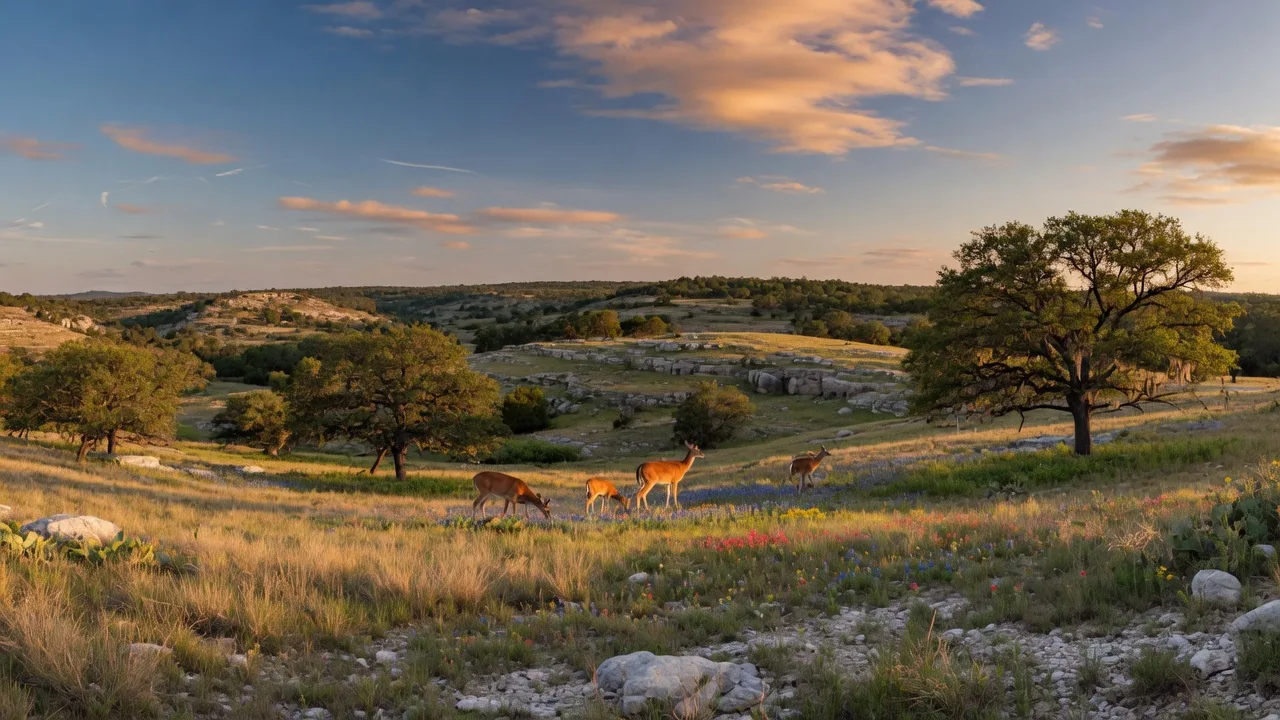
If you own acreage in the Texas Hill Country, the residence homestead exemption may not be the only property-tax provision available to you. Land that meets the statutory requirements may qualify for agricultural special appraisal, commonly called an "ag exemption," under Texas Tax Code Chapter 23. Wildlife management is not a separate exemption or valuation method; it is a qualifying agricultural use through which land already receiving qualifying open-space or timber appraisal may continue to receive productivity-based appraisal. These provisions may substantially reduce the land's appraised value, not the applicable tax rate.
Exemption, Appraisal and Land Use Are Not the Same Thing
| Term | What It Actually Means |
|---|---|
| Residence homestead exemption | A true exemption that removes part of a qualifying residence homestead's value from taxation |
| 1-d-1 open-space agricultural appraisal | A special appraisal of qualifying land based on agricultural productivity rather than market value |
| conventional agricultural use | A qualifying 1-d-1 use such as livestock production, crops, hay, orchards or qualifying beekeeping |
| Wildlife management use | A qualifying agricultural use under 1-d-1; it is not a separate exemption or independent valuation method |
| Ag/Timber Number | A separate sales-tax program that does not establish eligibility for 1-d-1 property-tax appraisal |
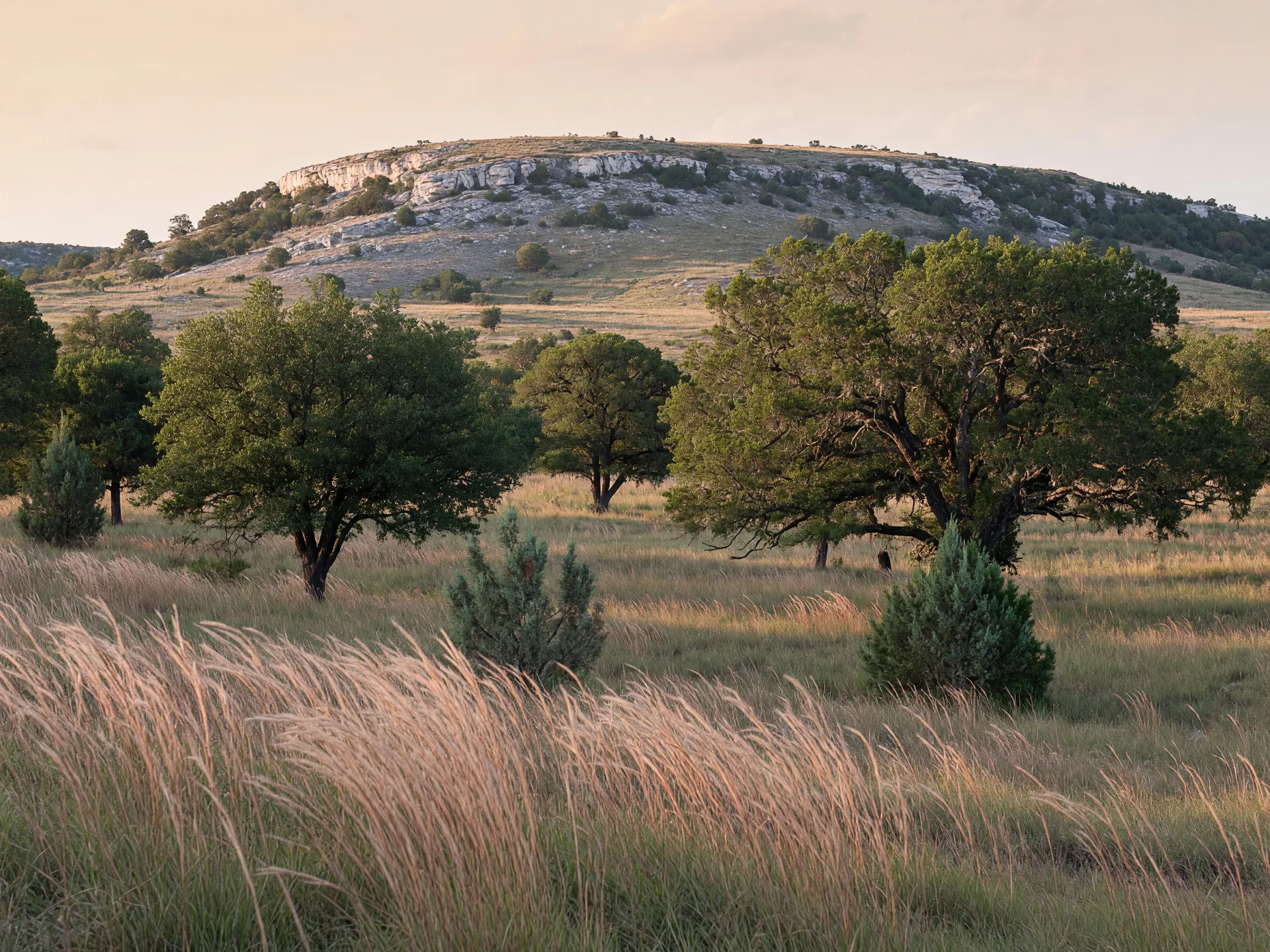
How 1-d-1 Agricultural Appraisal Works
The Basic Concept
Texas generally appraises taxable real property at market value. If an owner timely applies and the chief appraiser determines that the land qualifies, eligible agricultural land may instead be appraised according to its productive agricultural capacity. Improvements, residences, and portions of the property that do not qualify for special appraisal remain subject to ordinary appraisal rules.
The productivity value is not simply the owner's actual annual revenue. Appraisal districts generally develop land-category values from the five-year average net income that land would have generated under prudent management and divide that amount by the applicable capitalization rate.
When land receiving 1-d-1 open-space agricultural appraisal or qualified timberland appraisal changes to wildlife management, wildlife management becomes the qualifying use. The land is not reappraised according to the value of the wildlife or the cost of the management activities. Instead, it generally retains the productivity-appraisal category and valuation methodology that applied before the conversion, so the conversion itself is intended to be revenue-neutral. The property's productivity value may still change in later years as appraisal schedules and property conditions change.
The following is a hypothetical illustration only. Actual market values, productivity values, exemption amounts, and tax rates vary by property, appraisal district, and tax year.
Hypothetical example: Assume land has a market value of $150,000 and a productivity value of $15,000. At an illustrative combined tax rate of 2%, the tax attributable to the land would be approximately $300 under productivity appraisal rather than $3,000 at market value — a difference of approximately $2,700. This is an illustration only, not an estimate for any particular property.
For 2026, appraisal districts must use a 10.00% capitalization rate for agricultural or open-space land and 7.77% for timberland. The capitalization rate is only one part of the productivity-value calculation; land category, local income and expense data, soil, carrying capacity and other factors also matter.
Agricultural Appraisal (1-d-1)
1-d-1 is the agricultural appraisal used by most Texas farm, ranch and wildlife-management properties. To qualify, land generally must be currently and principally devoted to agricultural use to the degree of intensity accepted in the area and must have the required agricultural-use history.
Land within an incorporated city or town must satisfy the ordinary 1-d-1 requirements and at least one of the additional city-limits tests discussed below.
Potentially qualifying agricultural uses include:
- Cultivating crops
- Raising or keeping livestock for the production of food or another tangible product having commercial value
- Raising qualifying exotic animals for the production of food or another tangible product having commercial value
- Producing fiber crops
- Keeping bees on 5 to 20 acres for pollination or for producing human food or another tangible product having commercial value
- Using qualifying land for wildlife management after the required prior-year special appraisal
Qualified timberland is appraised under a separate statutory program and ordinarily uses Comptroller Form 50-167. Although timberland appraisal is not the same as 1-d-1 open-space agricultural appraisal, qualifying timberland may provide the required prior-year status for conversion to wildlife management.
Personal, recreational, or hobby use does not qualify merely because animals are present. Horses used only for recreation, riding, boarding, or personal enjoyment generally do not qualify. Equine breeding or another genuine production operation may qualify if it meets the appraisal district's degree-of-intensity standards.
The key requirement is that the land must have been used for agricultural purposes for at least five of the preceding seven years. New owners may need to submit a new application or confirm continued eligibility; contact the appraisal district for current filing requirements.
Wildlife Management as a 1-d-1 Agricultural Use
What is commonly called a "wildlife exemption" is wildlife management use under the 1-d-1 open-space appraisal. It is not a separate exemption or a second valuation method.
Wildlife management is available only if the land received 1-d-1 open-space agricultural appraisal or qualified timberland appraisal in the preceding tax year. Traditional 1-d appraisal does not provide the required prior qualification.
To continue receiving special appraisal through wildlife management, the land generally must:
- Have qualified for 1-d-1 open-space agricultural appraisal or qualifying timber appraisal in the preceding tax year
- Be used primarily and actively to sustain a breeding, migrating, or wintering population of indigenous wild animals for human use, including food, medicine, or recreation
- Implement at least three of the seven statutory wildlife-management practices
- Be managed with the same degree of intensity generally accepted in the area
- Have a written wildlife-management plan
- Satisfy any applicable acreage rule that arises because a previously qualifying tract was reduced in size
The owner must prepare and submit a wildlife-management plan. The chief appraiser determines whether the land and its use satisfy the legal requirements; TPWD does not preapprove individual property-tax applications.
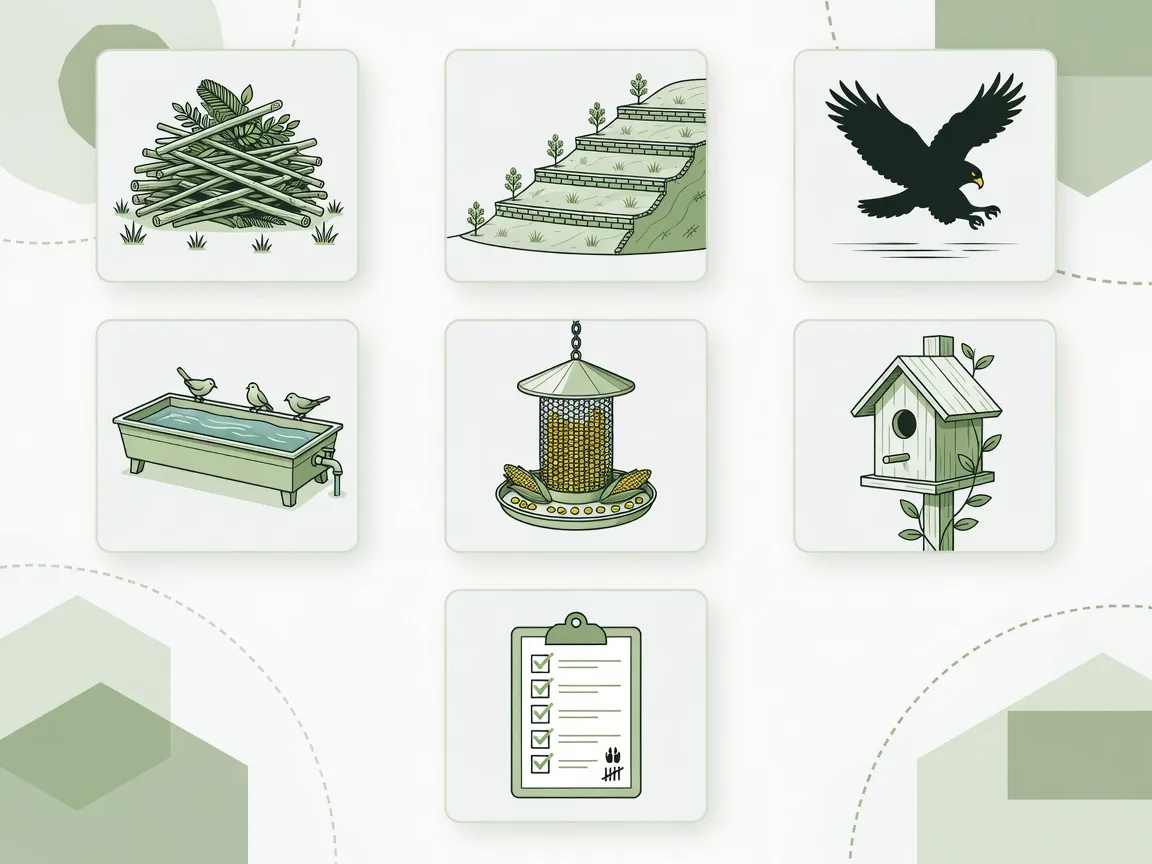
Texas recognizes seven categories of wildlife-management practices:
- Habitat control — managing brush, native grasses and vegetation
- Erosion control — stabilizing soil and protecting water sources
- Predator management — controlling predator populations when appropriate and lawful
- Supplemental water — installing, restoring or maintaining water sources for wildlife
- Supplemental food — establishing food plots or other appropriate supplemental food sources
- Supplemental shelter — creating or maintaining brush piles, nesting structures and other suitable shelter
- Census counts — conducting systematic surveys or counts of wildlife populations
To remain eligible, the land must be actively used through at least three of these seven practice categories. Owners should maintain contemporaneous annual records — such as dated photographs, receipts, maps, logs and census results — to substantiate continued compliance. Maintaining records is prudent even when the appraisal district does not require an annual report.
Wildlife Management Plans, Reports and Records
Use TPWD Form PWD-885 to prepare the wildlife-management plan. TPWD Form PWD-888 is the Wildlife Management Annual Report. Submit an annual report only when the chief appraiser or appraisal district requires it, and follow that district's deadline and submission instructions.
Confirm the local filing requirement and deadline directly with the appraisal district. Whether or not an annual report is required, retain dated photographs, receipts, maps, invoices, activity logs, census results and other records showing that the management plan was actually implemented.
County-by-County: What Actually Varies
Degree-of-intensity and acreage standards vary by appraisal district and by agricultural operation. The examples below are local guidance, not statewide rules. Standards may be revised, and the chief appraiser decides each application based on the property's facts. Confirm the current requirements directly with the appropriate appraisal district before purchasing livestock, beginning a qualifying use, subdividing land, or filing an application.
Kendall Appraisal District
Kendall Appraisal District evaluates agricultural applications according to the type, history, intensity, and extent of the operation. The district's public forms page does not publish one general acreage or animal-unit standard covering every agricultural operation. Before beginning an operation or relying on the property's existing appraisal, request the district's current written intensity requirements for the particular use, land type and acreage involved.
Phone: 830-249-8012
Forms: kendallad.org/forms/
Bexar Central Appraisal District
Bexar County uses operation-specific degree-of-intensity standards rather than one general 10-acre minimum. For livestock operations on properties of 20 acres or less, current published minimum examples include four animal units on 15 acres devoted to a cow/calf operation and three animal units on 10 acres devoted to a qualifying horse, sheep or goat operation. Properties larger than 20 acres are evaluated using the district's pasture- and soil-specific stocking ratios, but the resulting animal-unit requirement cannot be lower than the applicable published minimum. Beekeeping is limited by statute to 5–20 acres and is subject to Bexar's separate hive-count and management standards.
For a wildlife tract reduced from a previously qualifying property, Bexar currently publishes minimums of 14.3 acres for an individual tract and 11.1 acres for a tract participating in a qualifying wildlife association. Those minimums should not be described as applying to every unreduced wildlife-management tract. Bexar also requires an annual wildlife-management report by April 30.
Phone: 210-242-2432
Forms: bcad.org/forms/
Comal Appraisal District
Only the acreage actually devoted principally to a qualifying agricultural use receives special appraisal. Comal publishes operation-specific standards. Its livestock guidance uses animal-unit, fencing, water, acreage, and management requirements; its published recommendations vary according to forage quality and the type of operation. Those livestock requirements do not automatically apply to crops, hay, orchards, vineyards, beekeeping or wildlife management. Each of those uses is evaluated under its own published or operation-specific standards.
For wildlife tracts reduced from a previously qualifying property, Comal publishes minimums of 20 acres for an individual tract and 12.5 acres for a tract in a qualifying wildlife association. Those figures do not establish a minimum for every unreduced wildlife-management tract. Comal requires wildlife-management owners to file its annual reporting documentation.
Phone: 830-625-8597
Agricultural and wildlife information: comalad.org/agricultural-and-wildlife-special-appraisal/
Forms: comalad.org/forms/
Bandera Central Appraisal District
Bandera Central Appraisal District's published guidance describes 20 acres as a typical minimum for a livestock operation, depending on soil type, with a minimum intensity of three animal units. Other agricultural operations, including beekeeping, may be evaluated under different standards. Prospective buyers should confirm the applicable requirements before assuming that a property qualifies.
Phone: 830-796-3039
Agricultural-use information: bancad.org/agricultural-use/
County Comparison Table
| County | Published acreage/intensity guidance | Wildlife transition | Phone |
|---|---|---|---|
| Kendall | Operation-specific; verify current written standards with the district | Prior-year 1-d-1 open-space or qualified timberland appraisal required | 830-249-8012 |
| Bexar | Operation-specific; examples include 15 acres/4 AU for cow-calf and 10 acres/3 AU for certain qualifying horse, sheep, or goat operations | Prior qualification required; reduced-tract rules may apply | 210-242-2432 |
| Comal | Operation-specific; livestock guidance varies by forage and operation | Prior qualification required; reduced-tract rules may apply | 830-625-8597 |
| Bandera | Published guidance describes a typical 20-acre livestock minimum depending on soil, with at least 3 AU | Prior-year 1-d-1 open-space or qualified timberland appraisal required | 830-796-3039 |
These are abbreviated examples, not guarantees of eligibility. Obtain the current standards and forms from the appropriate appraisal district.
City Limits Can Change the Eligibility Test
Land within an incorporated city or town must meet the ordinary 1-d-1 requirements and at least one of the following additional conditions:
- The city or town does not provide the land with general governmental and proprietary services comparable to those provided in other parts of the municipality having similar features and population
- The land has been devoted principally to agricultural use continuously for the preceding five years
- The land has been devoted principally to agricultural use or timber production continuously for the preceding five years and is currently used for qualifying wildlife management
This issue is particularly important near Boerne, Fair Oaks Ranch, San Antonio and other municipal boundaries. Confirm whether the property is actually inside an incorporated municipality. Property located only within a municipality's extraterritorial jurisdiction, or ETJ, is not inside the city limits for this test.
The Application Process
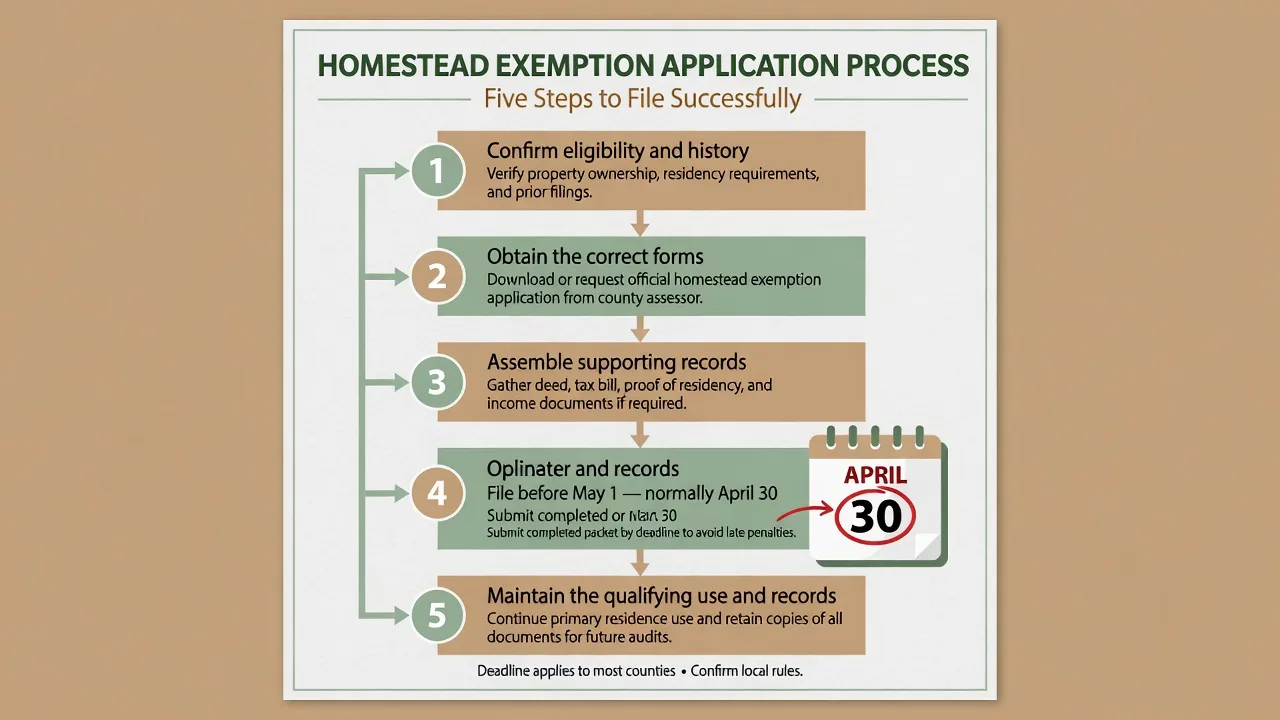
Step 1: Confirm That the Land — Not Merely the Acreage — Qualifies
Confirm all of the following before applying:
- The land is currently and principally devoted to a qualifying agricultural use
- The use is conducted to the degree of intensity generally accepted in the area
- The land has the required agricultural-use history — generally five of the preceding seven years outside an incorporated city or town
- The particular operation can satisfy the district's use-specific intensity standards
- The land is not disqualified by the city-limits provisions of Tax Code §23.56
- Only acreage devoted principally to a qualifying use is claimed. Residences, barns and other improvements are separately appraised at market value, while the appraisal district determines the amount of nonqualifying residential, commercial or other acreage. Certain appurtenances including qualifying fences, private roads, water wells, dams, reservoirs, canals, ditches and terraces may be treated as part of the agricultural land rather than as separately appraised improvements.
- The owner can document the use and its history
Purchasing land that already shows an agricultural appraisal does not eliminate these requirements. Agricultural history generally follows the land, but the new owner's application obligation and intended use must be evaluated separately.
Step 2: Use the Correct Forms
For 1-d-1 open-space agricultural appraisal, use Comptroller Form 50-129 unless the appraisal district provides an approved local version. Traditional 1-d appraisal remains available but is substantially narrower: it generally requires an individual owner whose primary occupation and principal source of income are agriculture, at least three years of qualifying use, and an annual application. Form 50-165 applies to that separate 1-d appraisal. For wildlife management, submit the appraisal district's required application materials together with a wildlife-management plan, commonly prepared on TPWD Form PWD-885.
Step 3: Prepare Your Documentation
The appraisal district may request records such as leases, receipts, livestock inventories, photographs, maps, management logs, or income and expense documentation. Required evidence varies with the operation and district.
Step 4: File by April 30 — and Understand the Late-Filing Rules
The ordinary filing deadline is before May 1 — normally April 30. For good cause, the chief appraiser may extend that deadline by no more than 60 days. A late application may otherwise be accepted only before the appraisal review board approves the appraisal records. The late-filing penalty is 10% of the difference between the tax imposed with the special appraisal and the tax that would have been imposed at market value.
Texas law also provides special late-filing protection in certain transfer and probate situations:
- If the land received 1-d-1 appraisal in the preceding tax year and ownership changed because an owner died during that preceding tax year, a late application may be filed by the surviving spouse, a surviving child, the decedent's executor or administrator, or a fiduciary acting on behalf of the surviving spouse or a surviving child. The application must be filed no later than the delinquency date for that year's taxes. If the statutory conditions are satisfied, the ordinary late-filing penalty does not apply.
- Effective January 1, 2026, a new owner may qualify for an extended, penalty-free filing window when the land received 1-d-1 appraisal in the preceding year, the new owner continues materially the same use, and that use is overseen or conducted by the same individuals. When the statutory conditions are met, the filing deadline is the later of the tax-delinquency date or the first anniversary of the transfer.
These exceptions are fact-specific. Owners should file promptly and obtain written guidance from the appraisal district rather than assuming an exception applies.
If Your Application Is Denied
If the chief appraiser denies the application, read the denial notice immediately. A written protest ordinarily must be filed with the appraisal review board within 30 days after the denial notice is mailed or delivered, subject to the instructions and deadline printed on the notice. Our Property Tax Protest Guide walks through the protest process step by step.
Step 5: Maintain the Use and Report Material Changes
Once 1-d-1 appraisal is approved, Form 50-129 ordinarily does not have to be filed every year. A new application may be required if eligibility ends, the chief appraiser requests one, or ownership changes in a manner not covered by the exceptions in Tax Code §23.54(e-1). An owner who receives a request for a new application must respond by the stated deadline even if the land's use has not changed.
An owner must notify the appraisal office in writing before May 1 after the land's eligibility ends or after the category of agricultural use changes. Failure to provide the required notice can result in a penalty equal to 10% of the difference between the taxes imposed in each year the property erroneously received special appraisal and the taxes that otherwise would have been imposed.
Rollback Taxes: What Actually Triggers Them
For land appraised under 1-d-1, rollback taxes generally arise when the owner changes the land's use to a nonagricultural use. A reduction in agricultural intensity, failure to file an application, sale of the property, or subdivision of the land may cause special appraisal to be denied or removed, but those events do not by themselves establish a rollback-triggering change of use. A subdivision can lead to rollback liability if part of the land is then physically converted to a nonagricultural use.
This section addresses 1-d-1 open-space appraisal under Tax Code Subchapter D. Traditional 1-d agricultural appraisal under Subchapter C has different rollback rules. Under §23.46, a sale or diversion to nonagricultural use can trigger additional taxes for the three preceding years, together with interest at the rate applicable to delinquent taxes. An owner whose property receives traditional 1-d appraisal should not rely on the 1-d-1 rules discussed below.
When a qualifying change of use occurs, the rollback calculation covers the three tax years preceding the year of the change. For each applicable year, the additional tax is generally the difference between the tax actually imposed under special appraisal and the tax that would have been imposed using market value.
For qualifying changes of use occurring on or after June 15, 2021, the 1-d-1 rollback calculation does not include a separate statutory interest charge. Once the resulting tax bill becomes delinquent, however, the ordinary penalties and interest imposed under Tax Code Chapter 33 may accrue.
A sale does not itself trigger rollback taxes. A buyer who continues the qualifying agricultural use may preserve special appraisal, subject to the application and transfer rules. Conversely, a physical conversion to a nonagricultural use may trigger rollback taxes even if ownership has not changed.
An owner who changes the agricultural use or knows that the land no longer qualifies must provide the chief appraiser written notice before May 1 following the change. Failure to provide the required notice may result in an additional penalty.
Events That Warrant Immediate Review
- Physical conversion of agricultural land to a commercial, industrial, or other nonagricultural use
- Beginning construction or development that physically changes land to a nonagricultural use
- Subdividing land followed by a physical nonagricultural conversion
- Ending or substantially changing the qualifying operation, which may cause loss of special appraisal even if it does not independently trigger rollback taxes
- Selling or transferring the land, which requires review of the current-year status and the applicable reapplication rules but is not itself a rollback trigger
The chief appraiser determines whether and when a change of use occurred and must provide notice. The owner may protest that determination. Because rollback liability is fact-specific and can attach as a lien against the land, obtain written guidance before changing the use.
For a deeper look at the five-of-seven-year rule and rollback calculations, see our Ag Exemption and Rollback Taxes Guide.
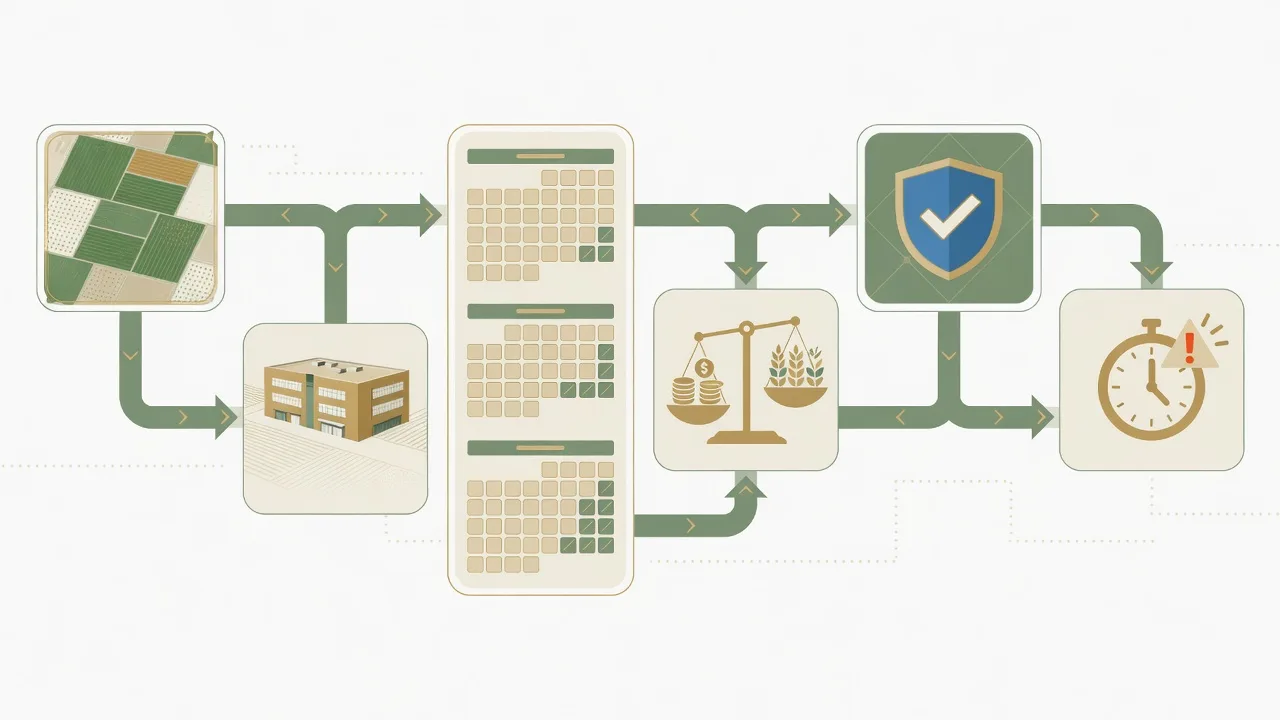
Conventional Agricultural Use vs. Wildlife Management: Which Is Right for You?
For many Hill Country landowners, the choice between agricultural and wildlife management valuation depends on how they actually use their land.
Choose a Conventional Agricultural Use When:
- The land is actively used for a qualifying livestock-production operation
- The land produces hay, crops, fruit, nuts, grapes or another agricultural commodity
- A qualifying agricultural lease or other genuine agricultural operation is the land's principal use
- The operation can meet the applicable local acreage, intensity, management and documentation standards
Choose Wildlife Management Use When:
- The land received qualifying open-space appraisal in the preceding year
- Wildlife management will be the land’s primary use
- You are prepared to implement at least three statutory practices at the required intensity
- You will manage for one or more indigenous target species under a written plan
- You will maintain records and file any annual report required by the appraisal district
The Conversion Path
If you currently have an agricultural valuation and want to switch to wildlife management:
- The land must have received 1-d-1 open-space agricultural appraisal or qualified timberland appraisal in the preceding tax year. Land appraised at market value or under traditional 1-d cannot convert directly to wildlife management.
- Submit a wildlife management plan to the appraisal district
- Begin performing at least three of the seven qualifying activities
- Document everything — the appraisal district may review the property, request records, or require updated application or reporting materials. Some districts require annual wildlife-management reports, while others request them only as needed.

Special Situations
Beekeeping on Small Acreage
Texas law permits beekeeping on 5 to 20 acres when the bees are used for pollination or for producing human food or another tangible product having commercial value. Honey is one qualifying example, but it is not the only qualifying purpose. State law does not say that honey must actually be sold in every case, although an appraisal district may request evidence showing a genuine agricultural operation conducted to the required degree of intensity.
The operation must satisfy the agricultural-history, principal-use and local degree-of-intensity requirements. Owning a few hobby hives does not automatically qualify the land. Hive counts, management practices and documentation vary by appraisal district.
Exotic Animals
Raising exotic animals may qualify when the animals are kept for the production of human food or another tangible product having commercial value and the operation satisfies the applicable degree-of-intensity standards. State law does not universally require proof that products have already been sold, but individual appraisal districts may require marketing records, sales evidence or other documentation showing that the operation is genuine and meets local standards.
Residence Homestead and 1-d-1 on the Same Property
A residence homestead may include the home and as much as 20 acres used for residential purposes when the acreage is used in a manner related to the owner's residential occupancy. Twenty acres is a maximum, not an automatic allocation. The appraisal district determines which acreage is residential, which acreage remains devoted principally to agriculture, and how the improvements and land are appraised.
There is no statewide rule automatically removing exactly one acre as a homesite. The amount treated as residential depends on the property's actual use and the appraisal district's allocation.
Claiming or using land as a residence homestead is not, by itself, treated as a change of use for the 1-d-1 rollback provision. Other physical conversion of agricultural land to nonagricultural use may still affect special appraisal or create rollback liability.
Note: the 20-acre maximum in the statutory residence-homestead definition is a separate legal concept from the 100-acre/200-acre rural homestead that shields a home from certain creditors under Texas Property Code and constitutional law. That broader creditor-protection homestead does not increase the acreage eligible for the property-tax homestead exemption.
Building a Residence on 1-d-1 Land
A residence and its homesite are ordinarily appraised at market value, while the remaining qualifying land may continue under 1-d-1 appraisal. The amount of land classified as homesite or residential land is determined by the appraisal district; Texas law does not impose a universal one-acre homesite rule.
Building a home does not automatically trigger a rollback tax. Tax Code §23.55(i) provides that claiming land as part of the owner's residence homestead does not by itself constitute a change of use. The residence, improvements and acreage actually converted to residential or another nonagricultural use must still be identified and appraised appropriately. Because grading, roads, additional homesites, commercial development or conversion of acreage beyond the residence-homestead use may produce a different result, obtain written guidance from the appraisal district before construction begins.
The Ag/Timber Number Is Not the Same Thing
1. 1-d-1 agricultural appraisal, including qualifying wildlife management use, is a property-tax appraisal administered by the county appraisal district. It may lower the taxable value attributable to qualifying land, but it does not change the taxing units' tax rates.
2. A Texas Ag/Timber Number is issued by the Texas Comptroller and is used to claim sales- or use-tax exemptions on qualifying purchases for an eligible agricultural or timber operation. It is not a blanket exemption for everything used on rural property. Many otherwise taxable items must be used exclusively in producing agricultural or timber products for sale, and some items (such as certain animal feed) may be exempt under separate rules without an Ag/Timber Number.
The programs are legally independent. Possessing an Ag/Timber Number does not establish eligibility for 1-d-1 appraisal, and receiving 1-d-1 appraisal does not automatically establish eligibility to use an Ag/Timber Number.
Source: comptroller.texas.gov/taxes/ag-timber/
A sale or other transfer does not automatically create a rollback tax. The appraisal for the year of transfer is generally determined from the property's January 1 status. For a later year, do not assume that every transfer requires an entirely new application.
Effective January 1, 2026, ownership is not treated as changed for the ordinary reapplication rule when the land received 1-d-1 appraisal in the preceding year, the agricultural use remains materially the same, and the use is overseen or conducted by the same individuals who oversaw or conducted that use during the preceding tax year. The chief appraiser may nevertheless request a new application.
This exception removes the ownership-change reapplication requirement when all statutory conditions are satisfied; it does not waive the land's other eligibility, principal-use or intensity requirements.
For a qualifying same-use transfer covered by the 2026 law, a late application may be filed by the later of the property-tax delinquency date or the first anniversary of the transfer, without the ordinary late-filing penalty.
If the land received 1-d-1 appraisal in the preceding tax year and ownership changed because an owner died during that preceding tax year, a late application may be filed by the surviving spouse, a surviving child, the decedent's executor or administrator, or a fiduciary acting on behalf of the surviving spouse or a surviving child. The application must be filed no later than the delinquency date for that year's taxes. If the statutory conditions are satisfied, the ordinary late-filing penalty does not apply.
Because the result depends on the date and manner of transfer, the prior appraisal, and whether the agricultural use and operators remain the same, contact the appraisal district promptly after a sale, inheritance, trust transfer, or probate event.
The Recreational Horse Pitfall
Keeping pleasure or recreational horses on acreage does not ordinarily qualify the land for 1-d-1 appraisal. A qualifying equine operation generally must involve genuine breeding, production or another recognized farm or ranch use and must satisfy the appraisal district's acreage, animal-unit, management and documentation requirements. Horse boarding, riding, showing, racing and stand-alone training are generally recreational or service uses and do not qualify by themselves. Training that is merely incidental to a bona fide breeding operation does not necessarily disqualify that operation.
Before Buying Land Advertised as ‘Ag Exempt’
Request and verify:
- The current appraisal record showing market value, productivity value, qualifying acreage and land category
- At least seven years of appraisal history
- The most recent Form 50-129 and county supplements
- Agricultural leases, production records and evidence of the current operation
- The wildlife management plan and annual reports, if applicable
- The acreage excluded for the residence, homesite and improvements
- Whether the tract was recently divided or reduced
- Whether the buyer will continue materially the same use with the same operators
- Whether the buyer’s intended use meets current county intensity standards
- Any prior notice of denial, change of use or rollback determination
- Written guidance from the appraisal district before the option period expires
A listing statement that land is ‘ag exempt’ describes the seller’s current appraisal record, not a guarantee that the buyer’s plan will qualify.
Frequently Asked Questions
How much can I save with an ag or wildlife management use?
The savings cannot be estimated reliably from acreage alone. Calculate the difference between the property's market value and proposed productivity value, multiply that difference by the combined local tax rate, and then account for exemptions and other adjustments. Ask the appraisal district for the property's current and historical values before purchasing.
Can I get an ag valuation on 5 acres in Kendall County?
Possibly, but the statutory minimum is five acres actually used for the qualifying beekeeping operation — not merely a five-acre gross parcel. If part of the property is allocated to a residence, homesite, commercial use or another nonqualifying use, fewer than five qualifying acres may remain. The operation must also satisfy Kendall Appraisal District's current hive-count, agricultural-history, principal-use and degree-of-intensity requirements. Obtain a written determination from the district before relying on beekeeping for a five-acre property.
What if I missed the April 30 deadline?
A late 1-d-1 application may ordinarily be accepted only before the appraisal review board approves the appraisal records — not until July 25 or roll certification. The ordinary penalty is 10% of the difference between the tax imposed using special appraisal and the tax that would have been imposed at market value. Good-cause extensions and special transfer or death-related deadlines may apply.
Do I need to have livestock to qualify?
No. Livestock is only one possible qualifying use. Depending on the property and local standards, qualifying uses may include crops, hay production, orchards, vineyards, beekeeping on 5–20 qualifying acres, a genuine agricultural lease or wildlife management after the required prior-year appraisal. Personal riding horses and recreational horse use do not qualify. A genuine equine breeding, production or farm/ranch operation may qualify if it satisfies the appraisal district's acreage, animal-unit, management and intensity standards.
What happens if I sell my property with an ag valuation?
A sale does not itself trigger rollback taxes. The appraisal for the year of sale is generally based on the property's January 1 status. Future treatment depends on whether the agricultural use continues and whether a new application is required under the ownership-transfer rules.
Can I have both a homestead exemption and an ag valuation?
Yes, a property can include both a qualifying residence homestead and acreage receiving 1-d-1 appraisal. They operate differently: the homestead exemption removes a specified amount or percentage from the taxable value of the qualifying residence homestead, while 1-d-1 changes the appraisal method for land devoted principally to a qualifying agricultural use. The appraisal district determines the residential acreage, qualifying agricultural acreage and treatment of improvements. The benefits do not automatically overlap on every acre, and the combination does not guarantee a particular or ‘maximum’ tax savings.
How do I document my wildlife management activities?
Maintain contemporaneous records for each management practice, including dated photographs, receipts, invoices, maps, maintenance logs, contractor records, water-use or feeder logs, planting records and wildlife census results. Organize the records by tax year and identify which of the seven statutory practice categories each activity supports. Keep the original wildlife-management plan, later revisions and every annual report submitted to the appraisal district. A certified wildlife biologist is not legally required to prepare the plan, although professional assistance may be useful for complicated habitat or species-management issues.
Related Reading
For more on property taxes and acreage in the Hill Country, see these related articles:
- Protesting Your Property Tax Appraisal
- Boerne Property Tax Guide
- Texas Homestead Exemption Guide
- Boerne Homes with Acreage
- Real Cost of Owning Acreage in the Hill Country
- Before You Buy Texas Acreage
- California vs. Texas Tax Comparison
- Probate and Property Tax
Sources
- Texas Comptroller — Agricultural, Timberland and Wildlife Management Use Special Appraisal. Source: comptroller.texas.gov
- Texas Comptroller — 2026 Capitalization Rates. Source: comptroller.texas.gov
- Texas Tax Code, Chapter 23 — Appraisal Methods and Procedures. Source: statutes.capitol.texas.gov
- Texas Tax Code §11.13(j)(1) — Residence Homestead Definition. Source: statutes.capitol.texas.gov
- Texas Parks and Wildlife Department — Legal Summary of Wildlife Management Use Appraisal. Source: tpwd.texas.gov
- Texas Parks and Wildlife Department — Wildlife Planning Guidelines and Forms (PWD-885, PWD-888). Source: tpwd.texas.gov
- Texas Comptroller Form 50-129 — Application for 1-d-1 Open-Space Agricultural Appraisal. Source: comptroller.texas.gov
- Texas HB 3833 (87th Legislature, 2021) — Elimination of 1-d-1 rollback interest for changes of use on or after June 15, 2021. Source: capitol.texas.gov
- Texas HB 1244 (89th Legislature, 2025) — Transfer and late-application rules effective January 1, 2026. Source: capitol.texas.gov
- Texas SB 1191 (88th Legislature, 2023) — Death and probate application provisions. Source: capitol.texas.gov
- Kendall Appraisal District — Forms. Source: kendallad.org/forms/
- Bexar Central Appraisal District — Agricultural, Wildlife and Land. Source: help.bcad.org
- Bexar Central Appraisal District — Forms. Source: bcad.org/forms/
- Bexar Central Appraisal District — Livestock Intensity Standards. Source: help.bcad.org
- Bexar Central Appraisal District — Wildlife Management Eligibility Requirements. Source: help.bcad.org
- Bexar Central Appraisal District — Agriculture, Wildlife and Rollback FAQ. Source: help.bcad.org
- Texas Comptroller — Agricultural and Timber Sales-Tax Exemptions. Source: comptroller.texas.gov
- Texas Comptroller — Agriculture and Timber FAQ. Source: comptroller.texas.gov
- Comal Appraisal District — Agricultural and Wildlife Special Appraisal. Source: comalad.org
- Comal Appraisal District — Open Space Guidelines and Standards. Source: comalad.org
- Bandera Central Appraisal District — Agricultural Use. Source: bancad.org/agricultural-use/
This article provides general information about Texas property tax valuations. It does not constitute tax or legal advice. Requirements vary by county and change over time. Consult your county appraisal district and a qualified tax professional for advice specific to your situation.
Last verified: August 15, 2026
Published August 15, 2026
Updated August 15, 2026