
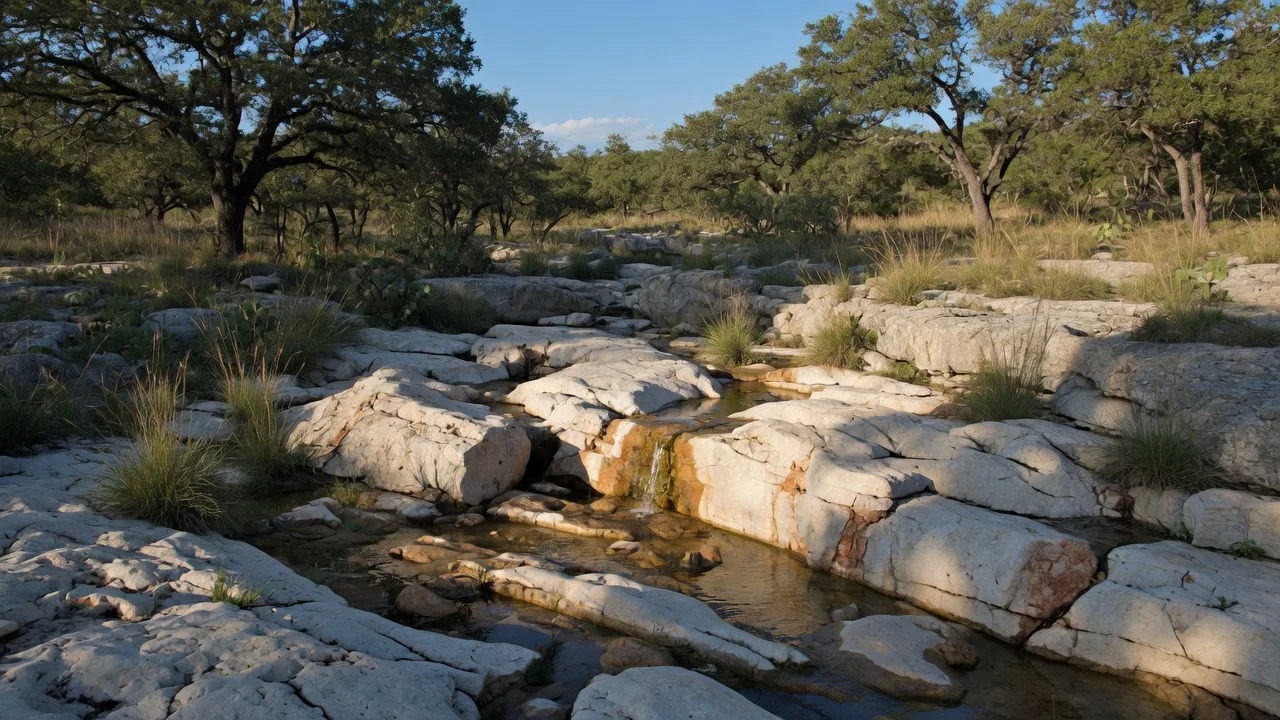
If you are looking at property within the Edwards Aquifer region of the Texas Hill Country, particularly in Bexar, Comal, Hays, Travis, or Medina counties, you will eventually hear about the TCEQ Edwards Aquifer Protection Program. It goes by several names - the EAPP, the WPAP requirement, or simply the Edwards rules. What matters is what the program actually requires and how it affects your ability to develop, build on, or sell the land you are considering buying.
I have worked with enough buyers who discovered these rules during the due diligence period - or, worse, after closing - to know that the time to understand the program is before you make an offer, not after the contract is signed. Kendall County infrastructure due diligence is a key part of what I review for every property in this region. Here is what the program covers, which properties it affects, and what every Hill Country buyer should verify before purchasing land in the Edwards Aquifer region.
What the Edwards Aquifer Protection Program actually does
The Texas Commission on Environmental Quality (TCEQ) administers the Edwards Aquifer Protection Program (EAPP) under 30 Texas Administrative Code Chapter 213 [1]. The program's stated purpose is to prevent pollution of the Edwards Aquifer by regulating certain activities within defined zones around the aquifer. For property buyers and sellers, the practical effect is that development on properties within the regulated zones requires additional permitting, site planning, and compliance documentation that does not apply to properties outside those zones.
The program applies to eight counties: Bexar, Comal, Hays, Travis, Williamson, Medina, Kinney, and Uvalde [1]. Notably, Kendall County - where Boerne is located - is not one of the eight counties subject to the TCEQ EAPP. However, properties in Kendall County may still be subject to separate Edwards Aquifer Authority (EAA) rules, and the distinction matters depending on where the property is located relative to the aquifer's recharge and contributing zones [2].
EAPP Regulatory Zones at a Glance
| Zone | Definition | Permitting Required | Counties Covered |
|---|---|---|---|
| Recharge Zone | Area where the Edwards formation is exposed at the surface, allowing rainwater to directly enter the aquifer | WPAP required for regulated activities disturbing 5+ acres | Bexar, Comal, Hays, Travis, Medina, Kinney, Uvalde |
| Contributing Zone | Area draining surface water into the recharge zone but where the Edwards formation is not directly exposed | Contributing Zone Plan (CZP) for regulated activities disturbing 5+ acres | Bexar, Comal, Hays, Travis, Williamson, Medina, Kinney, Uvalde |
| Transition Zone | Area between the contributing zone and the Trinity Aquifer outcrop | Transition Zone Plan for regulated activities disturbing 5+ acres | Bexar, Comal, Hays, Travis, Williamson, Medina |
Source: TCEQ, Edwards Aquifer Protection Program - What Plans You Might Need [1]. A regulated activity includes construction, excavation, land clearing, or any other earth-disturbing activity. If a site is partially on the recharge zone and partially on the contributing zone, the entire site must be treated as recharge zone under TCEQ rules.
The Water Pollution Abatement Plan (WPAP): what it requires
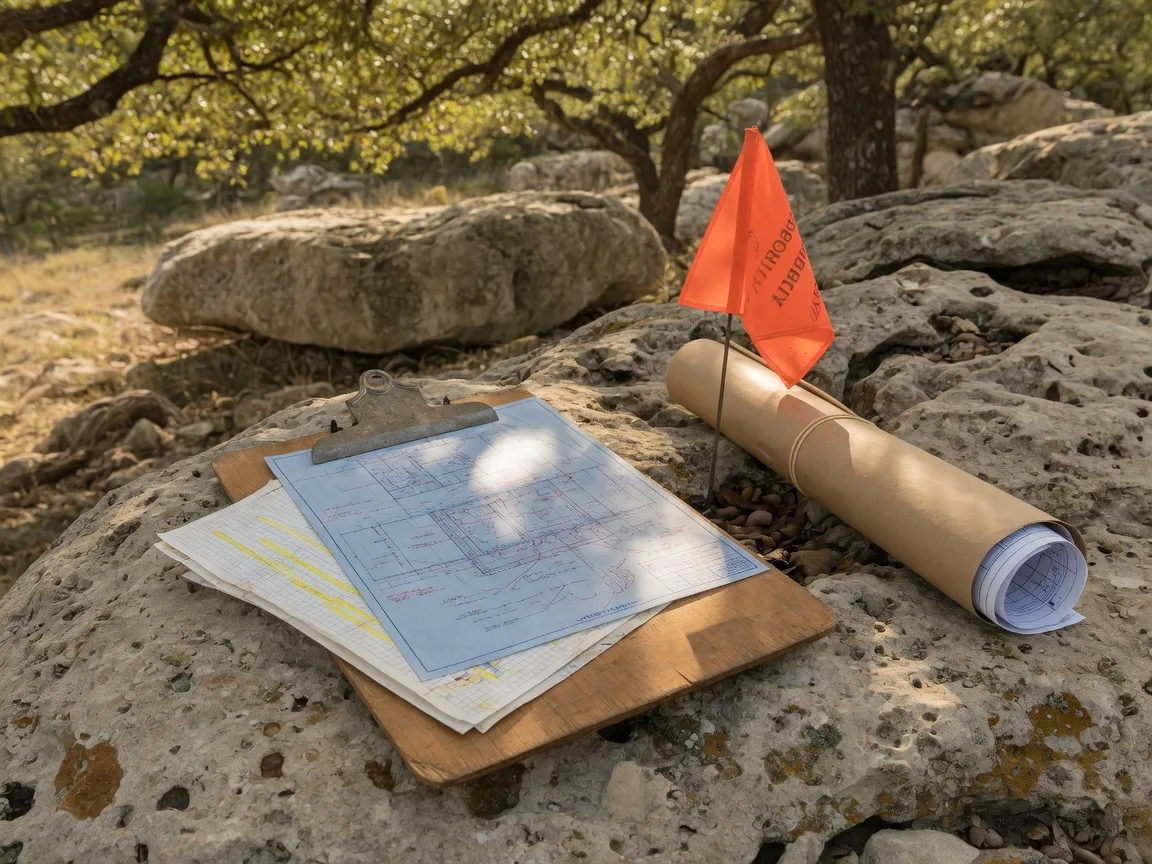
For properties located in the recharge zone, the key compliance document is the Water Pollution Abatement Plan, or WPAP [3]. A WPAP is required for any regulated activity - including construction, excavation, land clearing, or grading - that disturbs 5 or more acres, or is part of a larger plan of development or sale that may disturb 5 or more acres [3]. The plan must be prepared by a licensed professional engineer, registered professional geoscientist, or other qualified professional and must certify that the activity will not pollute the aquifer.
The WPAP must address specific best management practices (BMPs) including sediment and erosion control during construction, spill prevention and containment measures, stormwater management, and post-construction water quality controls [3]. The plan is submitted to the TCEQ and, once approved, expires two years after the date of issuance unless substantial construction - defined as more than 10 percent of the project - has commenced [3].
For buyers, the practical takeaway is this: if you are purchasing 5 or more acres on the recharge zone with plans to build, subdivide, or clear land, you need a WPAP approved before you begin work. The cost for a WPAP typically runs $3,000 to $8,000 depending on the complexity of the site and the extent of regulated activity, plus the cost of any required water quality monitoring [3]. The timeline for TCEQ review and approval is typically 60 to 90 days, though complex projects can take longer.
Contributing Zone and Transition Zone requirements
Properties in the contributing zone and transition zone are subject to less restrictive requirements, but they are not exempt from regulation. A Contributing Zone Plan (CZP) is required for regulated activities disturbing 5 or more acres in the contributing zone [4]. The TCEQ may accept a Stormwater Pollution Prevention Plan (SWPPP) as part of the CZP submittal, which reduces duplication for projects that already require a Construction General Permit (CGP) under the Clean Water Act [4].
The Transition Zone Plan applies to regulated activities in the transition zone and generally follows the same framework as the CZP [1]. Properties outside all three zones - those located entirely on the Trinity Aquifer, for example, or in areas where the Edwards formation is not present - are not subject to EAPP requirements, though they may still be subject to county-level development regulations and TCEQ septic system permitting.
Key Regulatory Decision Points for Property Buyers
| If Your Property Is... | You Need... | Estimated Cost |
|---|---|---|
| On the recharge zone, 5+ acres, planning to build | WPAP approved by TCEQ before construction | $3,000 - $8,000 |
| On the contributing zone, 5+ acres, planning to build | CZP (may accept SWPPP in lieu) | $1,500 - $4,000 |
| On the transition zone, 5+ acres, planning to build | Transition Zone Plan | $1,500 - $4,000 |
| Less than 5 acres, any zone | Individual lot exemption may apply | Check with county or TCEQ |
| In Kendall County (not in EAPP jurisdiction) | EAA rules may apply separately | Varies |
Source: TCEQ, Edwards Aquifer Protection Program Workflow [1]. Cost estimates are for professional consulting fees and do not include construction costs for required BMPs. Properties under 5 acres and single-family homes on individual lots may qualify for exemptions, but site-specific verification with TCEQ or a licensed professional is recommended.
Impervious cover limits that affect buildable area
Beyond the WPAP and CZP requirements, properties in the Edwards Aquifer recharge zone within the City of San Antonio's extraterritorial jurisdiction (ETJ) are subject to strict impervious cover limits under the City's Aquifer Protection Ordinance, administered by the San Antonio Water System (SAWS) [5]. These limits directly affect how much of the property can be covered by buildings, driveways, patios, and other impermeable surfaces.
In Category 1 areas - properties within the San Antonio ETJ and on the recharge zone - the maximum impervious cover is 15 percent for single-family and multi-family residential use [5]. For Category 2 areas (within San Antonio city limits), the limit is 30 percent for single-family and 50 percent for multi-family residential [5]. Floodplain preservation areas on the recharge zone carry additional restrictions on impervious cover and allowable activities.
These limits are not abstract regulatory concepts. On a 2-acre lot (87,120 square feet) in a Category 1 area, 15 percent impervious cover equals 13,068 square feet. A 2,500-square-foot house, a 500-square-foot garage, a 600-square-foot driveway, and a 400-square-foot patio add up to 4,000 square feet - well within the limit. But on a half-acre lot (21,780 square feet), 15 percent equals 3,267 square feet, and a typical 2,500-square-foot house with a two-car garage and driveway consumes most of the available allocation [5].
Advocacy groups including the Greater Edwards Aquifer Alliance have recommended stricter limits of 10 percent impervious cover on the recharge zone and 15 percent on the contributing zone, along with preservation of native vegetation within 300 feet of known cave openings, karst features, springs, and faults [6]. These are not currently mandated by the City, but they reflect the direction of regulatory discussion and suggest that limits may become more restrictive over time.
What buyers should verify before making an offer
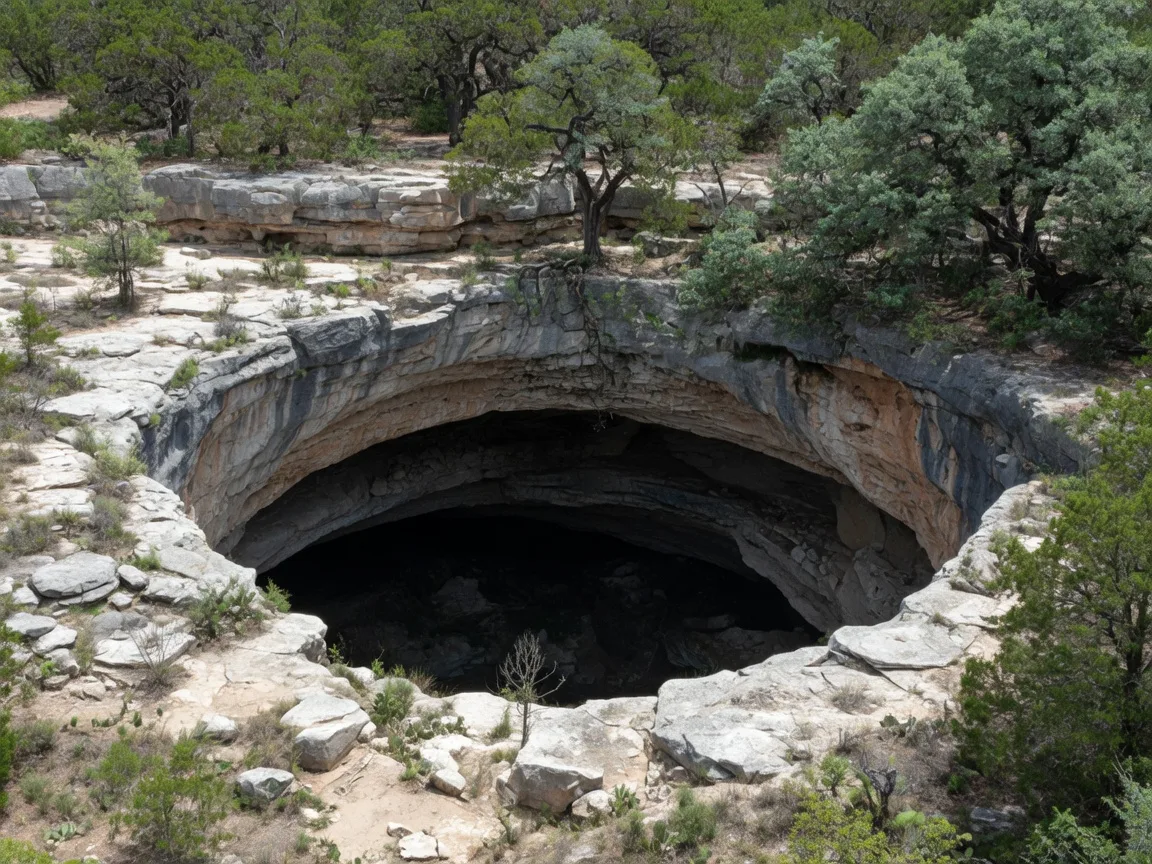
The most important step is determining where the property sits relative to the Edwards Aquifer regulatory zones. The TCEQ maintains detailed maps showing the recharge, contributing, and transition zone boundaries for each of the eight covered counties [1]. These maps are available through the TCEQ website and can be searched by address or parcel ID.
Here is the checklist I walk through with every client considering property in Bexar, Comal, Hays, Travis, or Medina counties:
Confirm the zone designation. Pull the TCEQ Edwards Aquifer map for the county where the property is located. If the property falls within the recharge zone, a WPAP will be required for any development beyond a single-family home on an individual lot. If it falls within the contributing zone, a CZP or SWPPP may suffice. If it is outside all three zones, no EAPP plan is needed [1].
Check the acreage threshold. The 5-acre threshold applies to the total disturbed area, not the lot size. A 10-acre tract where you plan to build a house on 1 acre and leave the rest undisturbed may still trigger the requirement if the access road, utility trenching, and building pad together exceed 5 disturbed acres. The TCEQ evaluates the entire project scope, not the individual building footprint [3].
Check for existing approved plans. If the seller or a previous owner obtained an approved WPAP or CZP for the property, determine whether it is still valid and whether it covers the activities you plan to undertake. An approved plan that has expired (more than two years without substantial construction) will need to be updated or reissued [3].
Verify local overlay requirements. The TCEQ EAPP is a state-level program. Some cities and counties in the region - including San Antonio through its SAWS-administered ordinance - have adopted additional aquifer protection rules that may impose stricter requirements than the TCEQ baseline [5]. Check both state and local requirements before closing.
Build the compliance timeline into your schedule. If a WPAP is required, the approval process takes 60 to 90 days minimum. Factor this into your construction timeline and closing conditions. A buyer who discovers the WPAP requirement after closing and immediately begins clearing faces TCEQ enforcement action, including potential fines and orders to cease activities [1].
Edwards Aquifer Protection Due Diligence Checklist
Zone Determination
Pull TCEQ map for the county. Is the property in the recharge, contributing, transition zone, or none of the above? The answer determines everything that follows.
Planned Disturbance
Will your project disturb 5 or more acres (including access roads, utility trenches, building pads, and clearing)? If yes, a plan is required regardless of the zone.
Existing Plan Status
Has a previous owner obtained an approved plan? If so, is it still valid? Does it cover your planned use? Verify the expiration date and current status with TCEQ.
Local Overlay Rules
Does the city or county where the property is located have additional aquifer protection rules? Check with the local planning department, not just the state.
Impervious Cover Budget
If the property is in the San Antonio ETJ on the recharge zone, calculate your impervious cover allocation (15 percent in Category 1). Does it accommodate your planned house, driveway, and improvements?
Professional Consultation
Before closing, consult a licensed professional engineer or geoscientist with EAPP experience to review the property's status and identify any red flags. The cost of this consultation ($500 to $1,500) is trivial compared to the cost of discovering a compliance issue after closing.
What the program does not cover
The EAPP is not a blanket development prohibition. It is a pollution prevention program that requires planning, documentation, and best management practices. A property on the recharge zone with an approved WPAP can be developed the same way an equivalent property outside the zone can be developed - the difference is that the development must follow a plan that prevents contaminants from entering the aquifer through the fractured limestone surface [1][3].
The TCEQ does not enforce the City of San Antonio's impervious cover limits or any local zoning regulations. Those are separate requirements administered by the municipality or county. Buyers of property within the San Antonio ETJ should check both the TCEQ zone designation and the City's zoning and subdivision regulations, which may impose additional restrictions independent of the aquifer protection program [5].
The EAPP also does not apply to properties that are entirely outside the three regulated zones. A property located solely on the Trinity Aquifer in Kendall County, for example, is not subject to TCEQ EAPP requirements, though it may be subject to Edwards Aquifer Authority groundwater production rules and county-level development standards [2]. Understanding which regulatory framework applies to your property requires knowing both the geological zone and the jurisdiction.
Why this matters for property value and marketability
The presence of EAPP regulations affects property value in two directions. For informed buyers who understand the requirements and are willing to follow them, the program provides assurance that neighboring properties are also subject to water quality protections, which preserves long-term land and water quality. For buyers who are unaware of the requirements, the discovery of WPAP obligations after closing can feel like an unexpected tax on development.
In my experience, the most common scenario is a buyer purchasing 3 to 10 acres on the recharge zone with plans to build a single-family home and perhaps a workshop or barn. If the total disturbed area stays under 5 acres, and the property is within San Antonio city limits, an individual lot exemption may apply, and no full WPAP is required [3]. But every county handles exemptions differently, and the determination depends on the specific site plan, not the general assumption.
For sellers, having a current, approved WPAP or CZP in place at the time of listing can be a competitive advantage. It removes the uncertainty for buyers and provides documented proof that the property is developable within the regulatory framework. Conversely, a seller who cannot produce a zone determination or who has performed unpermitted clearing on the recharge zone may face an expensive remediation requirement before the property can be sold [1].
For deeper context on how the Edwards Aquifer system works and how it affects property values across the Hill Country, see our guide to the Edwards Aquifer and property values and our Edwards Aquifer fundamentals guide. Information about Hill Country infrastructure and land can also help frame your property search.
Not sure whether a property falls in a regulated zone?
I pull the TCEQ maps and zone determinations for every property my clients are considering in the Edwards Aquifer region. Knowing the regulatory status before you make an offer prevents surprises and keeps your development timeline realistic. No generic advice - just the actual status for the specific property you are evaluating.
Contact Bill Ross | Infrastructure & LandFrequently asked questions
Does the Edwards Aquifer Protection Program apply to every property in the Hill Country?
No. The TCEQ EAPP applies only to properties in the Edwards Aquifer recharge, contributing, and transition zones within eight specific counties: Bexar, Comal, Hays, Travis, Williamson, Medina, Kinney, and Uvalde [1]. Properties in Kendall County (where Boerne is located), Bandera County, and Kerr County are not covered by the TCEQ EAPP, though they may be subject to separate Edwards Aquifer Authority rules for groundwater production or local county development standards [2].
How do I find out if a property is in the Edwards Aquifer recharge zone?
The TCEQ maintains downloadable maps showing the boundaries of the recharge, contributing, and transition zones for each of the eight covered counties [1]. You can search by the property's address or parcel ID through the TCEQ website or the county appraisal district's map viewer. A licensed professional engineer or geoscientist can also perform a site-specific zone determination as part of due diligence.
What happens if I build on the recharge zone without a WPAP?
Unauthorized regulated activity on the recharge zone may result in TCEQ enforcement action, including notices of violation, administrative orders to cease activity, and potential civil penalties [1][3]. The TCEQ can also require remediation of any pollution that has occurred or restoration of the site to its pre-disturbance condition. If you discover that a previous owner performed unpermitted work on the recharge zone, consult a qualified environmental attorney or TCEQ-authorized consultant before proceeding.
Does a single-family home on a 1-acre lot on the recharge zone need a WPAP?
If the total disturbed area for the home, driveway, septic system, and utility connections is less than 5 acres, an individual lot exemption may apply, and a full WPAP is not required [3]. However, the exemption applies only to single-family homes on individual lots that are not part of a larger plan of development or sale. Buyers should confirm the exemption status with the TCEQ or a licensed professional before beginning construction, as the determination depends on site-specific conditions and county-level interpretation.
Does a WPAP expire, and what happens when it does?
A WPAP approved by the TCEQ expires two years after the date of issuance unless substantial construction (more than 10 percent of the project) has commenced [3]. If construction has started within the two-year window, the plan remains valid through the completion of the project. If the plan has expired, the property owner must submit a new or updated WPAP for re-approval before continuing regulated activities. An expired plan is treated the same as no plan at all.
Can I sell a property on the recharge zone without a WPAP?
Yes. The EAPP is a development and construction regulation, not a title or property transfer restriction. A property can be sold without an approved WPAP. However, the buyer inherits the compliance obligation. As a seller, providing a current zone determination and any existing permits or plans at the time of listing removes uncertainty for the buyer and is generally considered a competitive advantage. A buyer who discovers the compliance obligation after closing has no recourse against the seller under the EAPP itself, though the absence of a required disclosure under the Texas Seller's Disclosure Notice could be a separate legal issue.
Are properties in Kendall County completely free of Edwards Aquifer regulations?
Kendall County is not within the eight-county jurisdiction of the TCEQ EAPP, but properties there may still be subject to Edwards Aquifer Authority (EAA) rules governing groundwater production from the Edwards formation [2]. The EAA regulates well permits, pumping limits, and groundwater conservation in the Edwards Aquifer region, including portions of Kendall County. If you are buying acreage in Kendall County, the well permitting process runs through the EAA or the Cow Creek Groundwater Conservation District, not through the TCEQ EAPP. The distinction matters for compliance, but the end result is that groundwater use remains regulated regardless of which agency administers the program.
- TCEQ, Edwards Aquifer Protection Program: What Plans You Might Need. Official program summary, regulatory zone definitions, WPAP, CZP, and Transition Zone Plan requirements, and exempted activities. tceq.texas.gov
- Edwards Aquifer Authority, Groundwater Management. EAA jurisdiction, well permitting, and pumping limits in the Edwards Aquifer region, including portions of Kendall County. edwardsaquifer.org
- TCEQ, Water Pollution Abatement Plan (WPAP) Requirements. Detailed requirements for WPAP preparation, submittal, approval, expiration, and renewal under 30 TAC Chapter 213. tceq.texas.gov
- TCEQ, Contributing Zone Plan Requirements. Requirements for Contributing Zone Plans and SWPPP acceptance. tceq.texas.gov
- San Antonio Water System (SAWS), Aquifer Protection Ordinance. City of San Antonio impervious cover limits for the Edwards Aquifer Recharge Zone, Category 1 and Category 2 area definitions, and permit requirements. saws.org
- Greater Edwards Aquifer Alliance, Recommended Impervious Cover Limits. Advocacy position on stricter impervious cover limits and vegetation buffer requirements for the recharge and contributing zones. aquiferalliance.org
- TCEQ, Edwards Aquifer Rules and Technical Guidance. Complete regulatory text under 30 TAC Chapter 213, including definitions, plan standards, and enforcement provisions. tceq.texas.gov
- The Nature Conservancy, Edwards Aquifer Protection Program. Overview of land conservation efforts above the Edwards Aquifer, including acquisition of over 101,000 acres in protected status since 2000. nature.org
Last verified: July 27, 2026. Edwards Aquifer zone designations, impervious cover limits, and local overlay requirements are subject to change. Buyers should confirm current requirements with TCEQ, the relevant county appraisal district, and the local planning department before relying on any information in this article.
Published: July 27, 2026
Updated July 27, 2026