
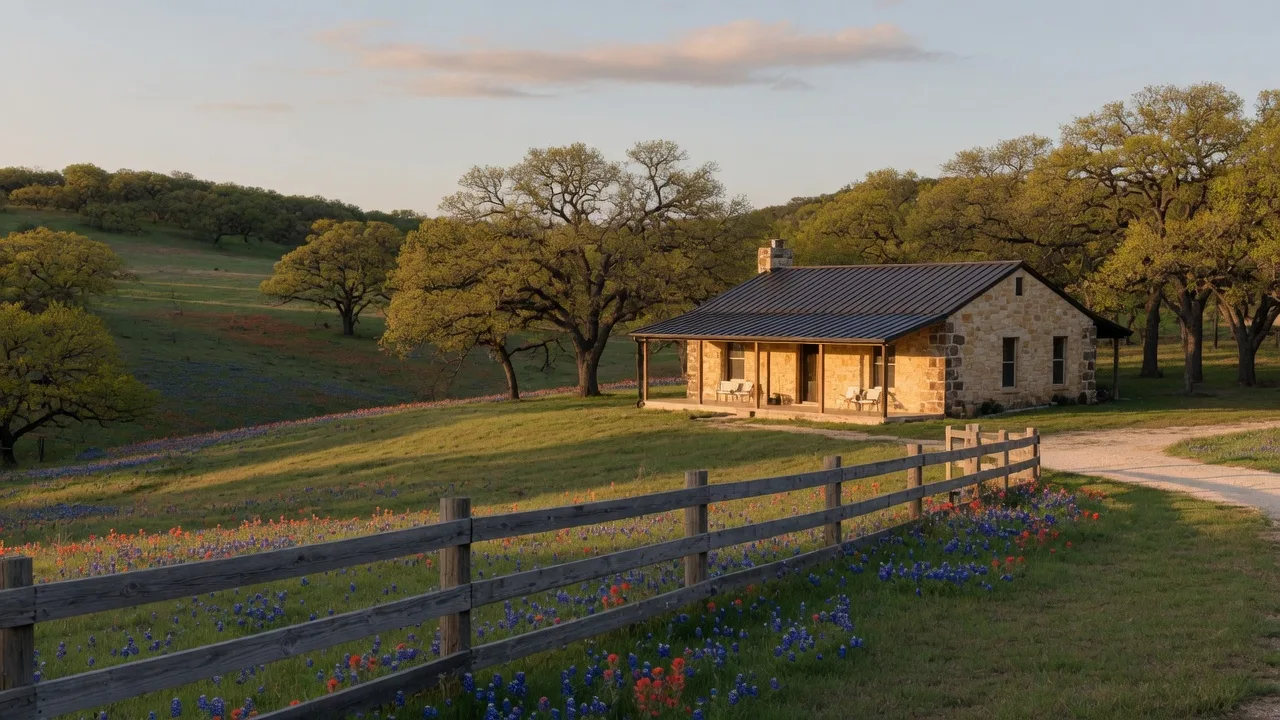
This is the timing question I hear more than almost any other, from a family moving to Boerne and wondering whether to rent for a year, from a Fair Oaks Ranch seller deciding when to list, and from California owners trying to time a cross-country move. The short answer is that the Texas Hill Country follows a recognizable seasonal rhythm: the spring-to-early-summer window tends to favor sellers, and the late-fall-to-winter window tends to favor buyers. But the calendar is only one input, and in a slower, higher-priced market like Boerne it matters a little less than it does in San Antonio proper. Here is how the cycle actually works, what the local data shows, and how to time a buy or a sale around the things that matter more than the month on the calendar [1][4][8].
Let me be clear about what this post is and is not. It is not a promise that one month guarantees a better price. It is the framework I use with clients: the national and local research on seasonality, the month-by-month shape of the San Antonio and Hill Country markets, and the caveats that matter more than the calendar, especially mortgage rates and the specific community you are looking at. Where numbers matter, I cite the source so you can check me [1][3][8].
How the Hill Country cycle compares to the national pattern
The national housing market has a well-documented seasonal swing, and Texas follows the same broad shape. The National Association of Realtors finds that homes tend to be roughly 16 percent more expensive in June than in the winter months of December through February, and that homes sit longer in winter, around a median of 49 days on market versus about 31 days in June [1]. In other words, the seller gets the best combination of price and speed in the spring and early summer, and the buyer gets the most leverage in the winter [1].
When you narrow that to a specific week, Realtor.com identifies the spring as the strongest selling window, with homes listed in mid-April selling faster and closer to asking [3]. For buyers, the national sweet spot for value falls in late September and early October [2]. These are national averages, and the Hill Country and San Antonio markets have their own flavor, but the underlying rhythm is the same, so the national research is a fair starting point before you add local color [1][2][3].
The spring-to-summer selling window in San Antonio and the Hill Country
In San Antonio, the peak selling season runs from spring through early summer. The San Antonio Board of Realtors attributes much of this to families moving while school is out and to the military Permanent Change of Station season that brings a steady stream of relocating households through the summer [8]. Buyer activity typically builds between March and June, and June is often the highest-volume month of the year [8].
The price data shows the same shape. In the San Antonio metro, the median single-family price bottomed near $289,995 in February 2025, then climbed through the spring, reaching $315,499 in March and peaking around $330,000 in July before easing in the fall [4][5][15]. Boerne follows the same seasonal direction but with a more muted swing, because it is a smaller, slower, more balanced market where homes take longer to sell [13][14].
The late-fall-to-winter buying window
For buyers, the leverage shows up in the fall and winter. Activity cools from late summer through the end of the year, and sellers respond with more price reductions and more willingness to negotiate [6][15]. In the San Antonio metro, the median eased to about $305,000 in October 2025 and sat near $315,000 in November, with days on market climbing back toward the mid-80s [6][7]. October is widely cited as a strong time to buy in the Boerne and Fair Oaks Ranch area, because competition has thinned out and motivated sellers are more flexible [15].
The trade-off for a winter buyer is a smaller selection. Inventory is thinner in the off-season, so you may see fewer homes than you would in April, and the homes that are available may sit longer for a reason. That is exactly why the winter buying window rewards a buyer who has already done their homework and can move quickly on the right property [2][6].
The month-by-month picture
The table below summarizes how the market typically behaves through the year in the San Antonio metro and, with a more muted swing, in Boerne and the surrounding Hill Country. The median figures are from SABOR monthly data for 2025, and the descriptions reflect the pattern across recent years [4][5][6][7][8][15].
| Season | Months | Buyers | Sellers |
|---|---|---|---|
| Winter | Dec, Jan, Feb | Strongest leverage; prices at the annual low, median bottomed near $289,995 in Feb 2025 [4] | Slowest activity; homes sit longest; least favorable time to list [1][4] |
| Spring | Mar, Apr, May | Most competition; prices climb, median reached $315,499 in Mar 2025 [5] | Best time to list; buyer activity builds into the peak [8] |
| Early summer | Jun, Jul | Fiercest competition; June often the highest-volume month [8] | Peak volume and prices; median peaked near $330,000 in Jul 2025 [15] |
| Late summer | Aug, Sep | Competition eases; more price reductions appear [15] | Still active, but momentum starts to cool [6] |
| Fall | Oct, Nov | Strong buying window; median eased to about $305,000 in Oct 2025 [6][7] | More negotiation and price cuts as the year winds down [15] |
Figures are San Antonio metro medians from SABOR. Boerne and Fair Oaks Ranch follow the same direction with a more muted swing and higher price points.
What matters more than the calendar: rates, inventory, and your micro-market
The season matters, but three things move the needle more than the month on a calendar. The first is the mortgage rate environment. Rates are the single biggest swing factor in Texas housing activity, because they change the monthly payment directly, and they shape how strong the spring surge is. In a typical year the spring and summer months account for about 30 percent of Texas home sales, but when rates rise, that seasonal surge is muted [9]. Rates climbed sharply in September 2026, pushing the 30-year fixed average toward 7 percent and above, which is a one-year high, and that kind of move cools demand and adds inventory across the board [11][12].
The second is inventory in your specific price band. A market with tight inventory behaves differently from one with months of supply, and that matters more than whether it is March or October. The third is your micro-market. Boerne is a slower, more balanced market than San Antonio proper, with a median near $606,500 in August 2025 and roughly 96 average days on market in the fourth quarter of 2025, while Fair Oaks Ranch sits in a higher price band with its own character [13][14]. A seasonal rule that works in one community may not transfer cleanly to another. For a neighborhood-by-neighborhood view, my guide to Hill Country micro-market trends covers which areas are appreciating fastest and where inventory is tightest [13][14].
If you are weighing new construction against an existing home, seasonality shows up differently too. Builders often offer incentives in the slower months to move inventory, which can offset some of the spring timing advantage. My guide to new construction versus resale lays out how builder timelines and lot premiums change the total cost picture [9].
A practical strategy: sell in spring, buy in winter, or time both on purpose
For a seller, the cleanest play is to list in the spring, ideally between March and May, when buyer activity is building and homes move fastest [8]. The national data supports this: spring listings tend to sell faster and closer to asking than winter listings [1][3]. The trade-off is more competition, because every other seller is doing the same thing, so pricing and presentation matter more.
For a buyer, the cleanest play is to look in the fall and winter, especially October through February, when leverage is highest and prices tend to be at their softest [2][6]. The catch is thinner inventory, so a winter buyer needs to be ready to act. If you are a relocation family coordinating a California sale with a Texas purchase, seasonality collides with the practical reality of a multi-state closing, and timing on the calendar has to fit the tax and contract timeline you can actually execute. That is the subject of my guide to coordinating a multi-state closing, which covers bridge financing and timing contingencies [1][6].
The most common mistake I see is treating the calendar as a guarantee. A well-priced home can sell quickly in October, and an overpriced home can sit through June. Seasonality shifts the odds, it does not decide the outcome. What actually protects you is understanding your market, pricing honestly, and being ready to move when the window opens, whether that is spring or winter [1][15].
The Boerne and Fair Oaks Ranch nuance
If you are looking specifically at Boerne or Fair Oaks Ranch, the seasonal swing is real but softer. These are higher-priced, more balanced markets than San Antonio proper, and homes there already take longer to sell, so the difference between a spring listing and a fall listing is narrower [13][14]. Boerne homes in particular tend to move fastest in the spring, when families are trying to close before the new school year, but the market stays active year-round and motivated sellers negotiate in the slower months [13][14].
My Boerne housing market update and the Boerne and Fair Oaks Ranch community guides give a closer look at how these local markets behave, and the neighborhood fit framework helps you weigh school priorities, commute tolerance, and lot size alongside timing [13][14].
Frequently asked questions
What is the best month to sell a home in the Hill Country?
The best time to sell is spring, roughly March through May, when buyer activity builds toward the summer peak and homes tend to sell faster [1][8]. Early summer also works, since June is often the highest-volume month, but you face more competition [8]. Winter is the least favorable time to list, because buyer activity is lowest [1][4].
What is the best month to buy in the Hill Country?
The best value tends to come in the fall and winter, with October through February the strongest window for leverage [2][6]. October is widely cited as a good time to buy in the Boerne and Fair Oaks Ranch area, because competition has thinned and motivated sellers are more flexible [15]. The trade-off is a smaller selection of homes.
Does Boerne follow the same seasonal pattern as San Antonio?
Yes, but with a more muted swing. Boerne is a slower, more balanced, higher-priced market, and homes there already take longer to sell, so the seasonal difference between spring and fall is narrower than in San Antonio proper [13][14].
How much can timing change the price?
Nationally, NAR data shows homes tend to be about 16 percent more expensive in June than in the December-to-February window, with homes sitting about 49 days on market in winter versus about 31 days in June [1]. That is the broad spread; the exact difference depends on your price band and community [13][14].
Should I wait for lower mortgage rates before buying?
Rates matter more than the calendar, because they change your monthly payment directly and they drive how strong the spring surge is [9]. Rates climbed sharply in September 2026 to a one-year high near 7 percent [11][12]. If rates fall, demand returns and inventory tightens; waiting has an opportunity cost, so the decision is about your payment and your timeline, not just the month [9][10].
Is it better to buy in winter even though there are fewer homes?
It depends on your priorities. Winter gives you the most negotiating leverage and the softest prices, but the smallest selection [2][6]. If you are flexible on the exact home, winter is often the better value. If you need a specific floor plan or school boundary, the wider spring inventory may be worth the extra competition [8][13].
The bottom line
Seasonal timing in the Texas Hill Country is real but it is a tilt, not a guarantee. Spring and early summer favor sellers, fall and winter favor buyers, and the local market in Boerne and Fair Oaks Ranch follows that rhythm with a softer swing [1][8][13]. What moves the outcome more than the month on the calendar are the mortgage rate environment, the inventory in your price band, and the specifics of your community. Understand those, price and present honestly, and be ready to act when your window opens, and the season becomes a useful tool rather than a reason to wait [1][9][15]. If you want to talk through your timing, reach out any time through the contact page, and I will give you a direct read on your situation.
Sources
- National Association of Realtors, Economists' Outlook: Navigating the Housing Market, A Seasonal Perspective. National data showing homes about 16 percent more expensive in June than in December through February, and homes sitting roughly 49 days on market in winter versus about 31 days in June. nar.realtor
- NAR Real Estate News, The Best Time to Buy for 2026 (Realtor.com analysis). Identifies the late September and early October week as the national best time to buy, when inventory and competition favor the buyer. nar.realtor
- Realtor.com Best Time to Sell 2025 (via The News Tribune). Spring listings, with the mid-April week selling roughly $27,000 above average, about 9 days faster, and drawing more buyer views per listing. thenewstribune.com
- San Antonio Board of Realtors, January 2025 Market Stats. San Antonio metro median single-family price near $295,475 with about 83 average days on market in January 2025. sabor.com
- SABOR March 2025 Market Trends (Kimberly Howell Properties). San Antonio metro median near $315,499 with about 87 average days on market in March 2025, showing the spring climb. kimberlyhowell.com
- SABOR October 2025 Market Stats Press Release. San Antonio metro median near $305,000 with about 83 average days on market in October 2025, reflecting the fall easing. sabor.com
- SABOR November 2025 Market Stats Press Release. San Antonio metro median near $315,000 with about 86 average days on market in November 2025. sabor.com
- San Antonio Express-News, San Antonio home sales (SABOR June report). The spring-to-summer peak, June as a high-volume month, and the role of family moves and military PCS season. expressnews.com
- Texas Real Estate Research Center (TRERC), Texas Housing Insight, May 2026. Seasonal patterns in Texas home sales, the role of mortgage rates, and how rate moves shape the spring surge. trerc.tamu.edu
- TRERC, 2026 Texas Real Estate Forecast. Projections for Texas home sales and the effect of the rate environment on the buying season. trerc.tamu.edu
- Forbes Advisor, Mortgage Rates Today, September 16, 2026. The 30-year fixed rate climbing to roughly 7.08 percent, a one-year high, in mid-September 2026. forbes.com
- Bankrate, Current Mortgage Rates. The 30-year fixed rate environment in September 2026, near 7 percent. bankrate.com
- MySA / SABOR, Boerne and Fair Oaks Ranch home prices. Boerne median near $606,500 in August 2025, with Fair Oaks Ranch in a higher price band. mysanantonio.com
- SABOR Q4 2025 Kendall County Report (Summers Real Estate). Boerne median near $627,900 with about 96 average days on market in the fourth quarter of 2025. summersre.com
- San Antonio Express-News, San Antonio real estate agents interpret the signs for 2026. Local seasonal context, the fall and winter buying window, price reductions, and San Antonio median peaking near $330,000 in July 2025. expressnews.com
This article is general market education, not financial or investment advice. Market data, median prices, and mortgage rates change, and the figures here reflect the sources as of their publication. Confirm the current numbers for your specific community and price band before you list or buy.
Last verified: September 17, 2026
Published: September 17, 2026
Updated September 17, 2026